Retina-Inspired Sensor Lifts Blurry-Image AI Recognition from 47% to 97%
A retina-inspired semiconductor sensor reportedly lifts AI recognition of blurry images from 47% to 97%, shifting blur tolerance from software into the sensing hardware itself.
- By
- Sophie Lindqvist
- Filed
- Channel
- Semiconductors
- Read
- 3 min read
A retina-inspired semiconductor sensor has raised AI recognition accuracy on blurry images from 47% to 97%, according to a report from finance.biggo.com. That jump — roughly doubling performance on degraded visual input — is the central claim of the development, and it positions the device among a growing class of sensors that process visual information closer to how biological vision works.
What does the sensor actually do?
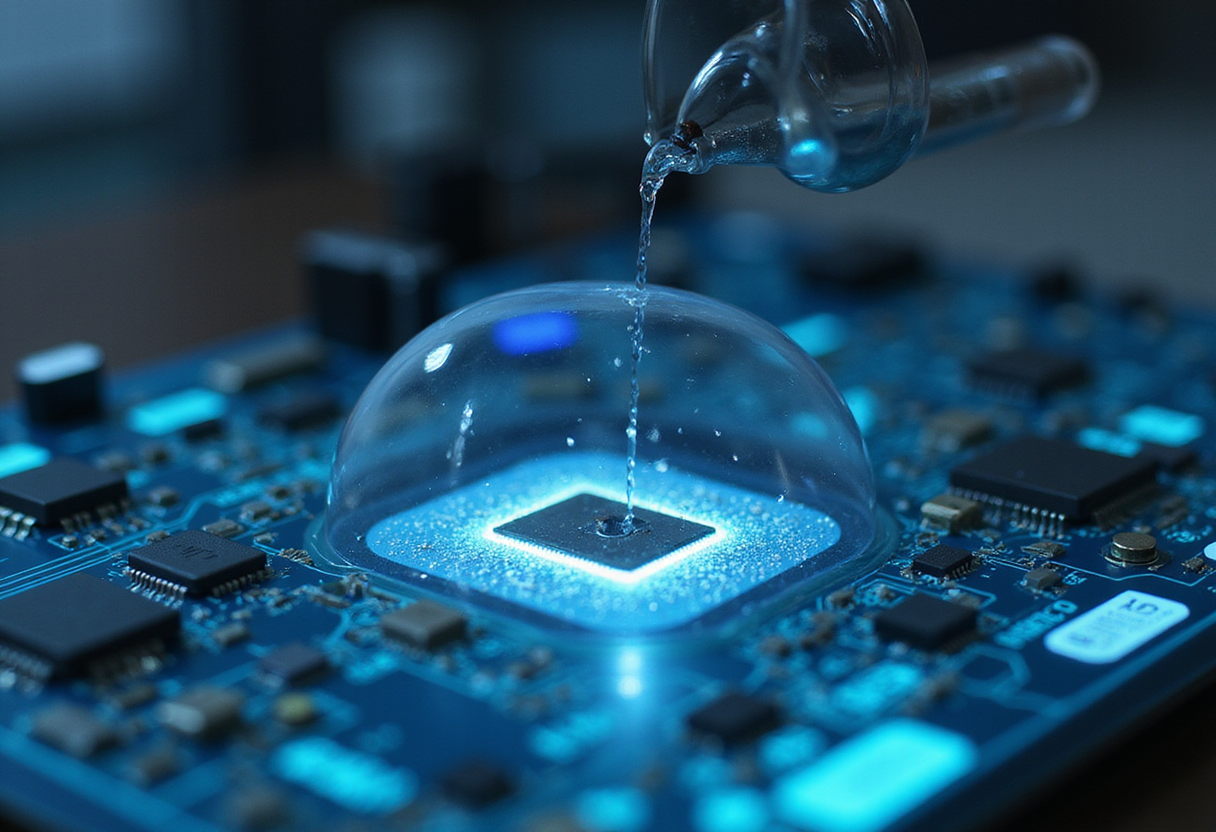
The reported device mimics the retina, the light-sensitive tissue at the back of the eye that converts photons into neural signals before the brain interprets them. Conventional image sensors capture raw pixel data and hand everything off to downstream processors. A retina-inspired design instead builds some of that early-stage filtering and adaptation directly into the sensing hardware.
The headline result concerns blur. When an image is out of focus or motion-smeared, standard AI vision pipelines lose accuracy because the neural networks downstream were trained on sharp, well-exposed data. The new sensor's reported numbers — 47% recognition accuracy before, 97% after — suggest the bio-inspired front-end compensates for degradation at the point of capture rather than in software.
That distinction matters commercially. Software-based image restoration adds latency, power draw and compute cost. A sensor that handles blur tolerance in silicon could simplify vision systems in domains where sharp focus is unreliable — fast-moving objects, low-cost optics, or cameras that cannot afford heavy post-processing.
Why blur tolerance is a hardware problem
Blur is one of the hardest failure modes for machine vision. Training datasets rarely cover the full range of real-world defocus, and networks that perform well on benchmarks often degrade sharply once input quality drops. The 47% baseline figure cited in the report is consistent with that pattern: conventional systems effectively lose half their recognition capability on blurry input.
Recovering nearly all of that loss — to 97% — in the sensing layer itself would shift the burden away from GPUs and vision processors. For edge devices, where power and thermal budgets are tight, moving that function into the sensor can be the difference between a viable product and an over-specced one.
How solid are the numbers?
The 47%-to-97% figures come from the single published report, and it does not specify the test dataset, the comparison baseline, or the recognition task involved. Recognition accuracy claims are highly sensitive to methodology: a 97% result on a constrained benchmark does not automatically transfer to open-world conditions. Until the developers publish peer-reviewed results or independent evaluations, the numbers should be read as an early demonstration rather than a validated product specification.
What is clear is the direction. Retina-inspired and other neuromorphic sensing approaches have attracted growing research interest precisely because they promise robustness that pure software pipelines struggle to match, at lower energy cost.
What comes next
If the reported accuracy gains hold up under independent testing, the technology's next milestones will be fabrication at scale, integration with standard camera interfaces, and cost parity with conventional CMOS sensors — the hurdles that determine whether a bio-inspired design moves from laboratory demonstration to commercial deployment.
Source: Google News: semiconductors
More from Sophie Lindqvist
Related articles
sony-and-tsmc-are-pouring-billions-into-next-gen-image-sensors-e84efecb
Sony and TSMC Are Pouring Billions Into Next-Gen Image Sensors
kaist-stacks-memory-and-logic-to-build-ai-chip-that-tracks-time-b86f00cc
KAIST Stacks Memory and Logic to Build AI Chip That Tracks Time
microsoft-bets-on-ai-vision-with-premium-surface-laptop-d734edfd
Microsoft bets on AI vision with premium Surface laptop
sony-semiconductor-orders-8-000-staff-back-to-offices-in-ai-drive-6fc89bd4
Sony Semiconductor Orders 8,000 Staff Back to Offices in AI Drive