Tech BusinessLOT 261122 · 4 min read
S&P 500 Logs Worst Week Since April 2025 as AI Trade Unravels
The S&P 500 fell 8.6%, its worst week since April 2025, as Anthropic's $81.34 billion IPO failed to stem a global sell-off and Nvidia lost $811 billion in seven days.
Key takeaways
- S&P 500 fell 8.6% for the week, worst since April 2025; Nasdaq lost about 10%, worst in over six years
- Anthropic priced its IPO at $83, raising $81.34 billion, and closed day two at $88.30
- Nvidia fell about 14% Friday on reports of an SEC accounting probe, erasing $811 billion in seven days
- Taiwan's Taiex lost a record 17.5% for the week; STOXX 600 fell 5.8%, worst since March
- Bitcoin fell below $60,000 for the first time since July as Fed officials pushed for more rate increases
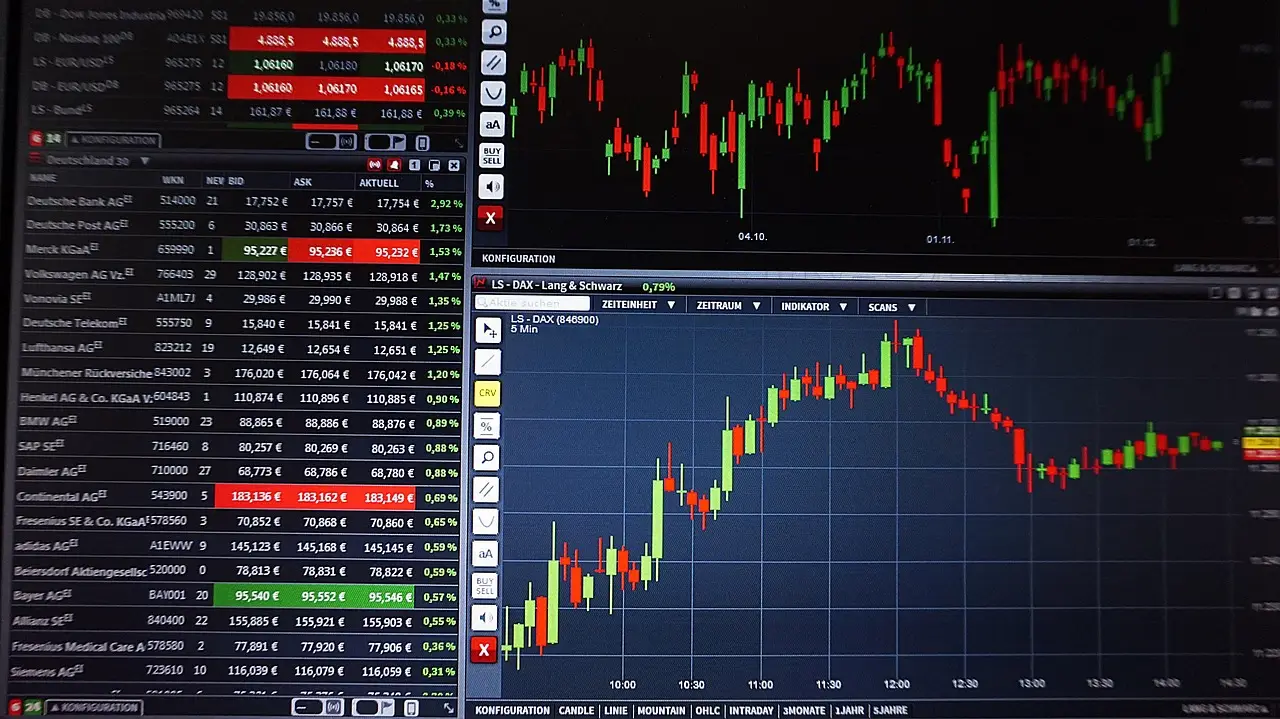
The S&P 500 fell 8.6% for the week ended Nov. 20, 2026, its worst stretch since April 2025, and the Dow dropped 8%, its worst since March 2020, as the AI trade cracked from Taipei to Frankfurt. The Nasdaq lost about 10%, its largest one-week pullback in more than six years, CNBC reported. Both the S&P 500 and the Dow closed Friday in correction territory, 10% below their records.
The selling started Monday in chip stocks and never stopped. The Nasdaq fell 2.49% to 24,509.76, the S&P 500 1.92% to 7,416.59, and the Dow 739.38 points to 51,608.17, with Nvidia down 4.1%. Tuesday took another 848.75 Dow points; Salesforce fell 9.45% and ServiceNow 6.51%. The Cboe Volatility Index closed Tuesday at 25.46, Thursday at 28.44, and broke above 30 early Friday for the first time since March. Friday was the worst: the S&P 500 fell 3.7% to 6,910.39, the Nasdaq 5.28% to 22,617.73, and the Nasdaq-100 entered a bear market intraday, 20% below its recent high. Defensive names held up — Walmart rose more than 1%, with Costco, Johnson & Johnson and Procter & Gamble each gaining about 1%.
Could Anthropic's debut turn the market?
No. Anthropic priced its IPO Wednesday night at $83 a share, above the marketed $70 to $78 range, selling 980 million shares in an $81.34 billion deal, its final prospectus shows. The stock opened Thursday at $111.50, touched $115.10 and closed at $97.17, up 17.1% — and the market averages hit their session lows just after trading began. "Today doesn't matter," Baird tech strategist Ted Mortonson told CNBC. "It's a blink of an eye of their journey." On Friday the shares closed at $88.30, down 9.1% from Thursday, after trading as low as $83.05. Underwriters bought all 147 million extra shares under their option, lifting gross proceeds to about $93.5 billion. Reuters reported that Morgan Stanley, the stabilization agent, closed its support position by exercising that option — removing the buyer of last resort below $83. Singapore's DayOne put its US IPO of up to $5 billion on hold amid the sell-off, Bloomberg reported.
What happened to Nvidia?
Nvidia fell about 14% Friday after Reuters reported, citing two people briefed on the matter, that SEC enforcement staff are scrutinizing potential accounting issues; the SEC declined to comment. The stock posted its longest weekly losing streak since 2008 and slipped behind Alphabet to become the fourth-most valuable US company, Reuters reported, citing LSEG data. MarketWatch said Nvidia has erased $811 billion in market value in seven days.
The company reported quarterly revenue of $115.8 billion, up 103% year over year, and guided to $130.0 billion for the fourth quarter, plus or minus 3%. It didn't help. Nvidia is also navigating life after Jensen Huang, who resigned as CEO on Nov. 12; finance chief Colette Kress is interim CEO. Chair Harvey Jones said the board does not intend to reinstate Huang. Huang will testify publicly before the Senate Banking Committee, a spokesperson for Chairman Tim Scott said Friday, and has agreed to a closed-door interview with three House committees on Dec. 1.
How far did the damage spread?
Asia's chip markets took the worst of it. Taiwan's Taiex lost a record 17.5% for the week, falling 6.23% on Friday alone to 36,033.29, Focus Taiwan reported; Taiwan tightened short-selling curbs after Thursday's 4.4% drop. Japan's Nikkei 225 lost 7.7% for the week and 5.06% Friday; the Kospi fell 5.21%. In Europe, the STOXX 600 fell 5.8% for the week — its worst since March — closing Friday down 2.0% at 625.65, with ASML down 8.7% and Germany's DAX off more than 7%. Gold headed for a 9% weekly loss, its worst week in eight months, as the dollar sat near a 19-month high. Bitcoin fell below $60,000 for the first time since July, trading at $58,966.58 on Friday afternoon, CNBC reported.
Fed officials spent the week arguing for more rate increases: Governor Christopher Waller said the Fed may need to "shock people" with a half-point move in December, and Governor Lisa Cook said waiting risks getting behind the curve. "The AI boom is contributing to the potential of overheating," Chicago Fed President Austan Goolsbee said. President Trump added policy risk Friday, saying US companies building data centers abroad would face "tremendous penalties," without describing a mechanism. With Tokyo reopening Tuesday and the FOMC meeting Dec. 8-9, the question hanging over next week is whether the AI repricing Richard Saperstein of Treasury Partners described — slowing data center buildouts and reduced AI funding — deepens or stabilizes.
mlq.ai (Source)
More from Rebecca Stone
Show full bio
Correspondent covering technology and product news in Semiconductors, chip manufacturing, hardware, AI compute at Chip Dispatch.
1,245 articles