Samsung Flags $80 Billion Profit Quarter on AI Demand
Samsung says AI demand drove roughly $80 billion in quarterly profit, a figure it calls the highest of any tech company, as memory pricing power returns.
- By
- Tom Whitfield
- Filed
- Channel
- Memory & Storage
- Read
- 2 min read
Samsung says the AI boom has carried it to roughly $80 billion in quarterly profit — a figure it flags as the highest quarterly result for any technology company.
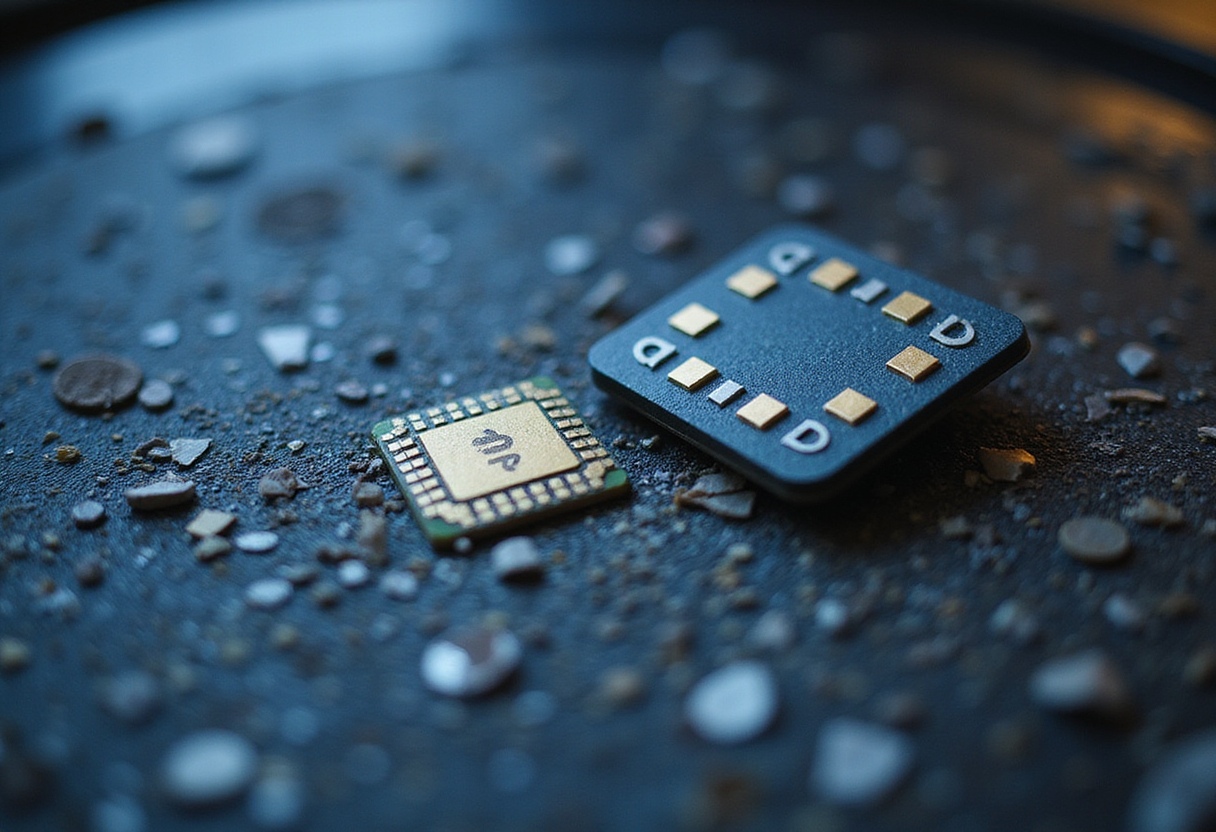
The South Korean conglomerate, the world's largest maker of memory chips, attributed the result to surging demand for the high-bandwidth memory (HBM) and conventional DRAM and NAND products that feed AI datacenters. AI accelerators from Nvidia and its rivals consume large volumes of HBM stacked alongside logic dies, and Samsung sits among the few suppliers worldwide able to produce that class of memory at scale.
The announcement cements memory's reversal of fortune. Two years ago, DRAM and NAND makers were cutting output and posting losses after a post-pandemic glut crushed prices. The generative-AI buildout has flipped that dynamic: datacenter operators are buying high-margin HBM and premium DRAM ahead of conventional products, tightening supply across the broader memory market and lifting pricing for everything from server DIMMs to smartphone storage.
Samsung's scale makes its results a bellwether for the wider electronics supply chain. The company supplies memory to nearly every major cloud and handset player, runs leading-edge logic fabs through its Samsung Foundry unit, and competes with SK hynix and Micron in the AI memory race — a rivalry that has become one of the sharpest competitive fronts in semiconductors.
What does an $80 billion quarter signal?
For Samsung's suppliers and customers, the number signals that AI infrastructure spending has not yet crested. Memory makers have guided capital spending toward HBM capacity for successive quarters, and record profits at the top of the market typically fund the next round of fab and packaging investment.
For buyers, the message is less comfortable. Record memory profits reflect pricing power, and equipment makers, smartphone vendors and PC OEMs have already flagged rising component costs as AI demand crowds conventional supply.
Can the run continue?
Samsung itself framed the result around the AI boom, and the durability of that boom is the open question. Datacenter construction schedules, the pace of HBM qualification with major accelerator vendors, and the response of SK hynix and Micron on capacity will shape whether record quarters become the norm or mark a cyclical peak — the same question that has preceded every memory upturn in the industry's history.
Source: Google News: AI chips
More from Tom Whitfield
Show full bio
Staff writer covering consumer brands and retail at Chip Dispatch.
298 articles
Related articles
samsung-eyes-record-80bn-quarterly-profit-on-ai-memory-demand-d7765f16
Samsung Eyes Record $80bn Quarterly Profit on AI Memory Demand
ai-chip-boom-lifts-samsung-to-record-80-billion-profit-b7486f9e
AI Chip Boom Lifts Samsung to Record $80 Billion Profit
samsung-posts-783-profit-jump-to-record-80-billion-on-ai-chip-boom-0f5b131f
Samsung Posts 783% Profit Jump to Record $80 Billion on AI Chip Boom
samsung-reports-ninefold-profit-jump-in-q3-on-ai-chip-demand-ac38675b
Samsung Reports Ninefold Profit Jump in Q3 on AI Chip Demand