Samsung to Build Starlink Chips in Austin in $1.9 Billion Fab Push
Seoul Economic Daily reports a $1.9 billion Austin expansion to build ST's 18nm STM32V8 for Starlink lasers, backed by CHIPS Act funding and a 2030 target.
- By
- Tom Whitfield
- Filed
- Channel
- Chip Manufacturing
- Read
- 3 min read
Samsung Electronics plans a $1.9 billion expansion of its Austin, Texas, fab to make chips for SpaceX's Starlink satellites, according to a Seoul Economic Daily report published Nov. 15 that cites chip industry sources and US Commerce Department disclosures. The paper put the investment at about 2.7 trillion won.
The part at the center of the plan is the STM32V8, a microcontroller from STMicroelectronics built on an 18-nanometer fully depleted silicon-on-insulator (FD-SOI) process that Samsung and ST developed together. Samsung would take over Austin production of volumes now made in France, the report said. The company declined to confirm the deal. Samsung told the paper it cannot officially confirm contracts with individual customers, and SpaceX has not commented.
What does the chip do?
ST launched the STM32V8 in November 2025 as the first 18nm microcontroller. It pairs an Arm Cortex-M85 core running at up to 800 MHz with a hardened design fit for harsh environments.
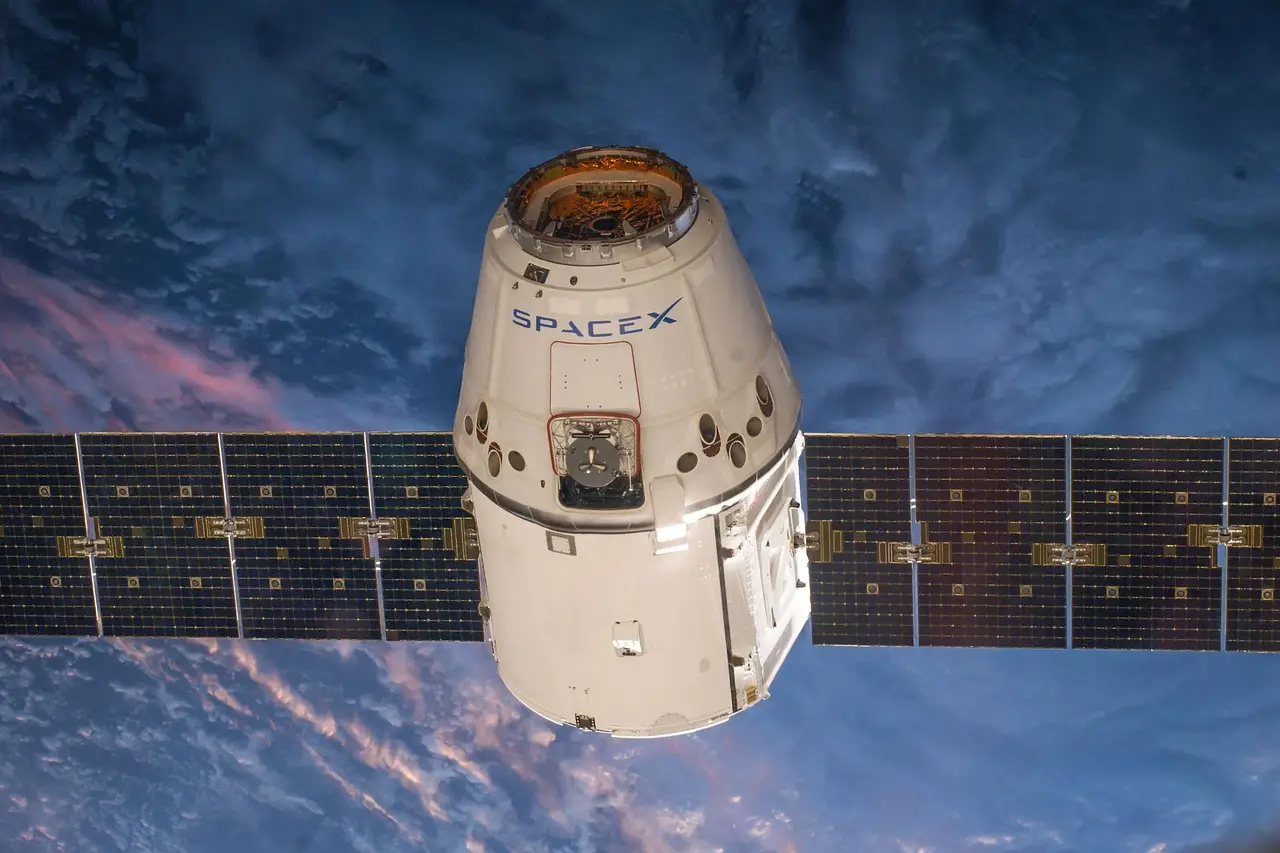
SpaceX was the part's first named customer. The company uses the radiation-harded device in a mini laser on Starlink satellites, which link to each other by laser rather than through ground stations.
The takeaway: this is a mid-range embedded controller, not an advanced AI accelerator, and its value lies in volume and reliability rather than raw performance.
Where would Samsung build it?
Samsung's Austin fab runs mature processes from 65nm down to 14nm, Seoul Economic Daily reported. The 18nm FD-SOI line would sit inside that envelope rather than push the leading edge.
Capacity pressure is one driver. An industry official told the paper that Samsung's foundry lines in Korea are running at full capacity, which is pushing the company to move faster on the US plant, and that Starlink chips could be made in Austin if the customer asks.
Operations at the expanded Austin lines are targeted to begin by 2030, according to the report. That date is a plan, not a confirmed production start.
How does the CHIPS Act fit in?
The Austin FD-SOI project was already part of Samsung's CHIPS Act award. The Commerce Department's NIST said in 2024 that up to $6.4 billion in direct funding would support Samsung's Taylor, Texas, project and an expansion of the Austin site to make FD-SOI chips for aerospace, defense and automotive customers, with commitments to work with the Department of Defense.
The reported Starlink work would fit that defense-adjacent profile. Samsung's US foundry business already makes or is set to make AI chips for customers including Tesla, Nvidia and AMD, according to the paper. The Starlink deal would add space and defense silicon to that mix.
In plain terms: Washington money helped shape this fab plan, and a US government-backed line making parts for an American satellite network is the commercial logic behind it.
What remains unconfirmed?
Three points anchor the story but rest on a single outlet's reporting. First, the $1.9 billion figure comes from Seoul Economic Daily's industry sources, not from Samsung filings. Second, neither Samsung nor SpaceX has publicly confirmed the manufacturing arrangement. Third, the 2030 operations target is a roadmap item rather than a firm schedule.
What is confirmed independently: ST's STM32V8 exists, launched in November 2025 on an 18nm FD-SOI process co-developed with Samsung, and SpaceX is its first named customer. The Commerce Department's 2024 NIST disclosure of up to $6.4 billion for Taylor and Austin FD-SOI capacity is also on the record.
If the report holds, Samsung gains a defense-qualified FD-SOI volume base in Texas at a moment when its Korean lines are full — and ST gains a second, US-based source for a part that Starlink's laser-linked constellation consumes in growing quantities.
Source: mlq.ai
More from Tom Whitfield
Show full bio
Staff writer covering companies, deals and strategy in Semiconductors, chip manufacturing, hardware, AI compute at Chip Dispatch.
1,002 articles
Related articles
tesla-and-spacex-reportedly-plan-their-own-chip-factory-a4ffc91f
Tesla and SpaceX Reportedly Plan Their Own Chip Factory
samsung-units-lead-11-million-round-in-korean-npu-startup-deepx-c5122f2c
Samsung Units Lead $11 Million Round in Korean NPU Startup DeepX
samsung-posts-record-80b-q3-profit-on-ai-chip-demand-5722af55
Samsung Posts Record $80B Q3 Profit on AI Chip Demand
inside-samsung-s-massive-new-semiconductor-hub-in-taylor-texas-76785071
Inside Samsung's Massive New Semiconductor Hub in Taylor, Texas