SemiconductorsLOT 261122 · 3 min read
Semis Lead Nasdaq 100 Into Washout Territory: SOXX Down 17.4%
QQQ fell 10.5% to 608.45 and SOXX dropped 17.4% as Nasdaq new lows hit 690 against 9 highs. VIX at 35.89 with backwardation since Tuesday signals washout stress, but no release signal has fired yet.
Key takeaways
- QQQ fell 10.5% on the week to 608.45, closing about 11% below its 200-day average of 683.1.
- SOXX dropped 17.4% and the FinViz Semiconductors industry fell 19.7% as chips led the selloff.
- Friday saw 9 Nasdaq new highs against 690 new lows, near the 1:100 washout extreme.
- VIX closed at 35.89; VIX/VIX3M at 1.160 in backwardation since Tuesday; VVIX touched 146.55 intraday.
- Only about 14% of Nasdaq 100 stocks held above their 20-day average, down from 50.5%.
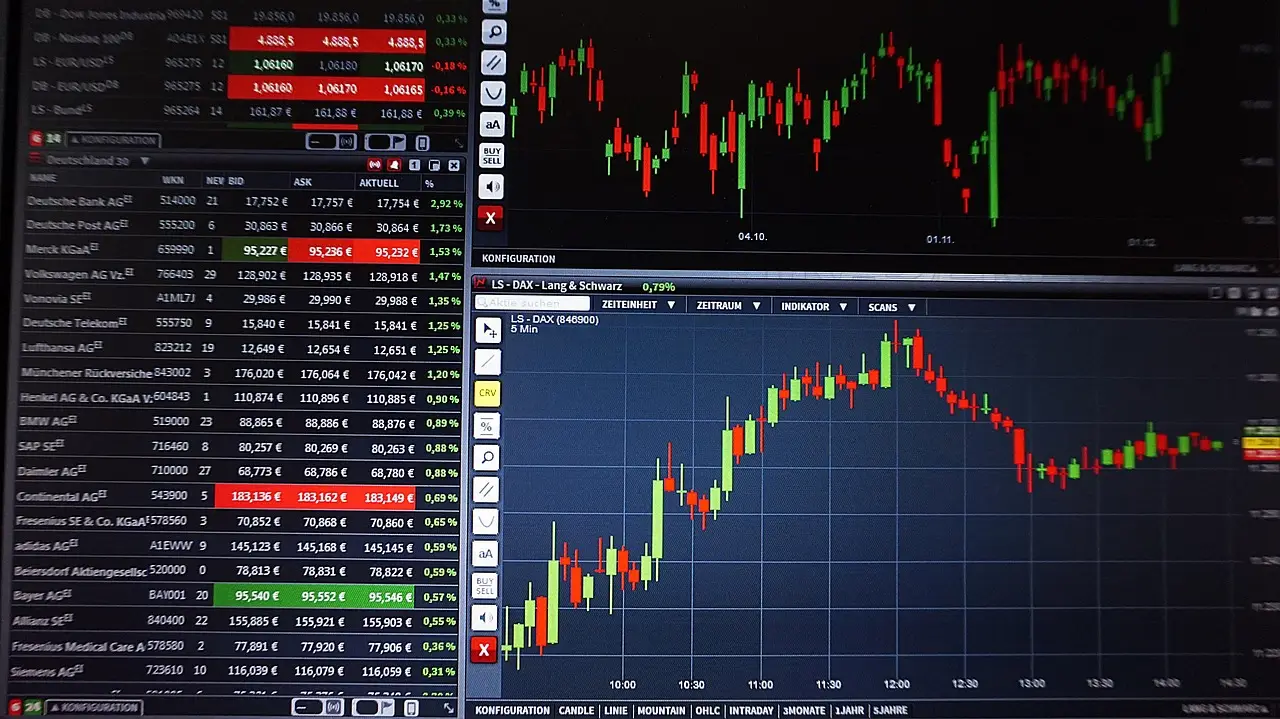
The Nasdaq 100 fell 10.5% last week to 608.45, with semiconductor stocks driving the decline: the SOXX ETF dropped 17.4%, and the FinViz Semiconductors industry group lost 19.7%. Friday alone took QQQ down 5.7%. The index closed below every moving average it tracks, roughly 11% beneath its 200-day average of 683.1, and its 150-day average has now turned down. By the analysis's own framing, the long-term trend has rolled over.
What do the internals show?
Breadth data places the market at a near-panic extreme. On Friday, Nasdaq issues recorded 9 new highs against 690 new lows — a ratio near 1:77, approaching the framework's 1:100 washout threshold. A week earlier the count stood at 22 highs against 295 lows, so the deterioration was rapid. Only 20% of Nasdaq issues advanced on Friday, and 82% of volume went into declining stocks, the highest reading of the week.
Participation inside the Nasdaq 100 collapsed in step. The share of index members above their 20-day average fell from 50.5% to about 14%. The share above the 200-day average dropped from 55.4% to roughly 35%. When price, participation and leadership all break at once, the analysis argues, the result is a broken trend rather than a pause. The prior week's bounce in chips and hardware has fully reversed.
How stressed is volatility?
The volatility complex shows acute stress. VIX closed Friday at 35.89 after an intraday high of 40.03. The VIX-to-VIX3M ratio stood at 1.160, in backwardation since Tuesday — a structure that typically appears when traders price near-term risk above longer-term risk. VVIX, the volatility of volatility, touched 146.55 intraday, above the 140 line the framework treats as a panic marker, and closed at 138. Friday's session printed what the analysis calls a white flag.
What is the working thesis?
The analysis describes an acute, semiconductor- and AI-led liquidation in the Nasdaq. The new-lows count and the collapse in participation sit at levels that often appear near washouts. However, no release signal has fired yet, so the washout condition is necessary but not sufficient for a bottom call.
Four conditions would validate the bearish thesis:
- Nasdaq new lows stay in the hundreds while new highs stay in single digits.
- Nasdaq 100 participation remains depressed, below 20% of members above their 20-day average.
- QQQ fails to reclaim its 20-day average, near 679, on rebounds, and QQQ/SPY stays below all of its averages.
- VIX/VIX3M remains above 1.0.
What would signal a turnaround?
The bullish release case requires VIX/VIX3M to fall back below 1.0 while VIX sits under 30 — the framework's long signal. Supporting evidence would include a sharp contraction in Nasdaq new lows, a broad Nasdaq reversal day, or a 90% up-volume day. Price repair would begin with QQQ reclaiming its 20-day average near 679, followed by the 200-day at 683.
The bearish continuation case has its own checklist: Nasdaq new lows expanding above 700, a VVIX close above 140, VIX holding above 35, or the Nasdaq printing its first 90% down-volume day. Until one of those two branches triggers, the analysis treats the market as suspended between washout conditions and fresh deterioration. The next signal, per the framework, will come from the volatility term structure and the new-lows count rather than from price alone.
tradingview.com (Source)
More from Tom Whitfield
Show full bio
Staff writer covering companies, deals and strategy in Semiconductors, chip manufacturing, hardware, AI compute at Chip Dispatch.
1,200 articles