SK Hynix Asks Washington to Let It Grow China Output While Building US NAND Fab
SK Hynix has asked Washington for approval to expand chip production in China while planning a new NAND flash fab in the United States, threading US export controls and Chinese demand.
- By
- Nathan Brooks
- Filed
- Channel
- Chips & Policy
- Read
- 3 min read
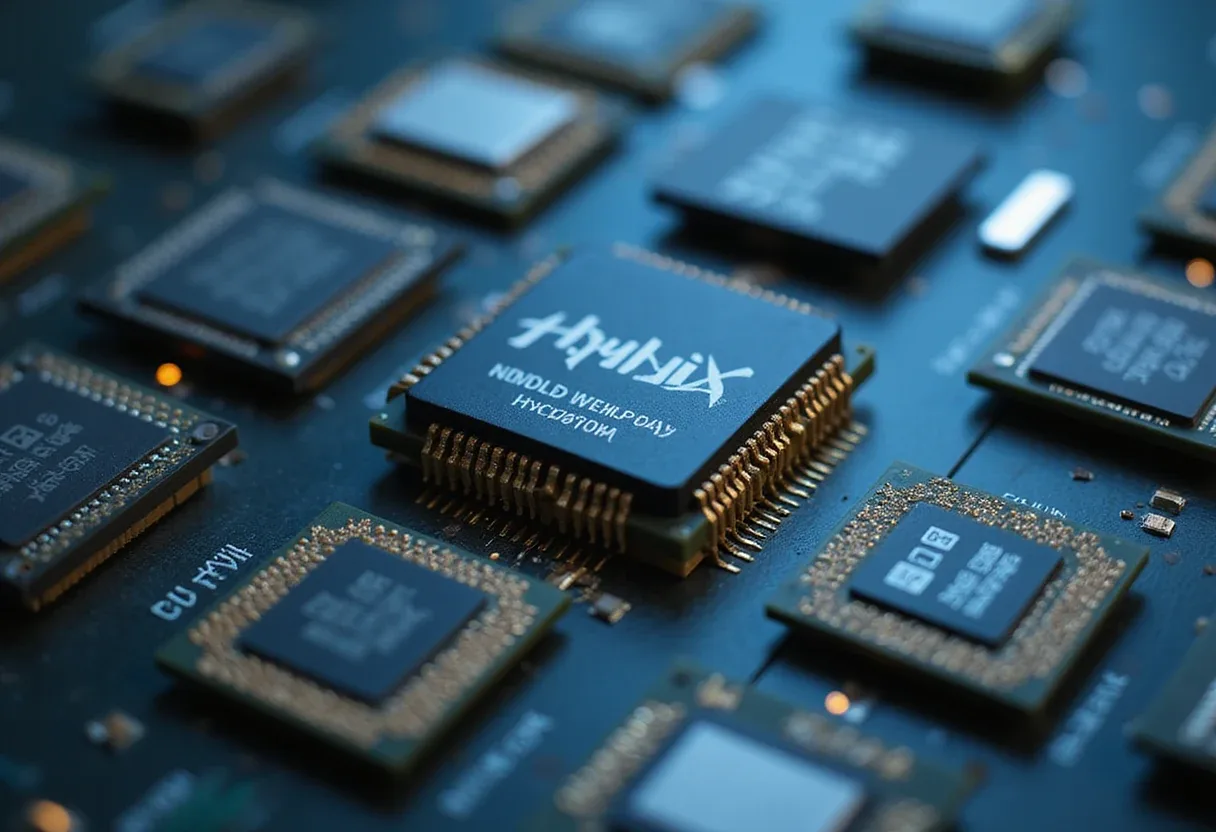
SK Hynix has asked the United States for permission to expand its chip production in China, even as it prepares to build a NAND flash factory on American soil. The dual move, reported by Tekedia, frames the Korean memory maker's attempt to satisfy both Washington's export controls and its own commercial base in China.
The request matters because SK Hynix operates major fabrication capacity inside China. Its Wuxi site produces DRAM, and any expansion there now requires a green light from the US government under rules introduced in October 2022. Those controls restrict American persons, equipment and technology from supporting advanced semiconductor work at Chinese facilities owned by companies based in South Korea and Taiwan. SK Hynix received a one-year waiver at the time, later extended, but the clock keeps running.
Why does a Korean company need US approval for a Chinese plant?
The answer sits in the tool chain. Korean fabs run on lithography, deposition and etching equipment supplied largely by American firms such as Applied Materials and Lam Research. Washington treats that dependency as leverage. If the US Commerce Department says no, SK Hynix cannot legally service, upgrade or expand its Chinese lines with US-origin tools.
The company has not disclosed the size of the proposed expansion or the process node involved. What is confirmed is the direction: more output in China, pending approval, rather than a retreat from it.
What is the American NAND factory about?
At the same time, SK Hynix is planning a NAND flash plant in the United States. The company already owns US NAND capacity through its acquisition of Intel's Dalian fab, completed in 2021, but the new project would be a fresh build rather than an inherited one. No site, investment figure or timeline has been announced.
The logic is straightforward. Building in America buys political goodwill in Washington and hedges against any future tightening of the rules that govern its Chinese operations. Memory makers learned this lesson the hard way; Washington's stance can change the commercial picture overnight.
NAND, the flash memory used in phones, laptops and data center drives, has faced weak pricing for two years. SK Hynix trails Samsung and the Kioxia-W Western Digital duo in NAND share, and a new fab would be a long-horizon bet on demand recovery rather than an answer to today's oversupply.
Who benefits if Washington says yes?
Approval would let SK Hynix keep serving Chinese customers, who account for a substantial share of its revenue, without violating US law. Refusal would push the company toward an awkward choice: freeze its Chinese footprint or risk sanctions. Rivals in China, notably YMTC, would welcome any constraint on the Korean competitor.
The US fab plan, meanwhile, aligns SK Hynix with the Biden administration's push for domestic memory supply, a push that already drew commitments from Samsung in Taylor, Texas, and from Micron in Idaho and New York.
Neither the US approval request nor the NAND factory carries a public date. The next signal will be the Commerce Department's decision, and after that, a shovel and a state for the American site.
Source: Google News: chip factory investment
More from Nathan Brooks
Show full bio
Senior reporter covering people, launches and day-to-day practice in Semiconductors, chip manufacturing, hardware, AI compute at Chip Dispatch.
584 articles
Related articles
sk-hynix-asks-washington-to-let-it-send-more-chip-tools-to-china-8184c714
SK Hynix Asks Washington to Let It Send More Chip Tools to China
sk-hynix-links-new-us-fab-plans-to-china-equipment-approvals-892f70e5
SK Hynix Links New US Fab Plans to China Equipment Approvals
sk-hynix-reportedly-ties-us-3d-nand-fab-to-china-equipment-exports-d1d8ec0e
SK hynix Reportedly Ties US 3D NAND Fab to China Equipment Exports
sk-hynix-offers-us-nand-plant-in-exchange-for-china-output-leeway-38aae5b4
SK Hynix Offers US NAND Plant in Exchange for China Output Leeway