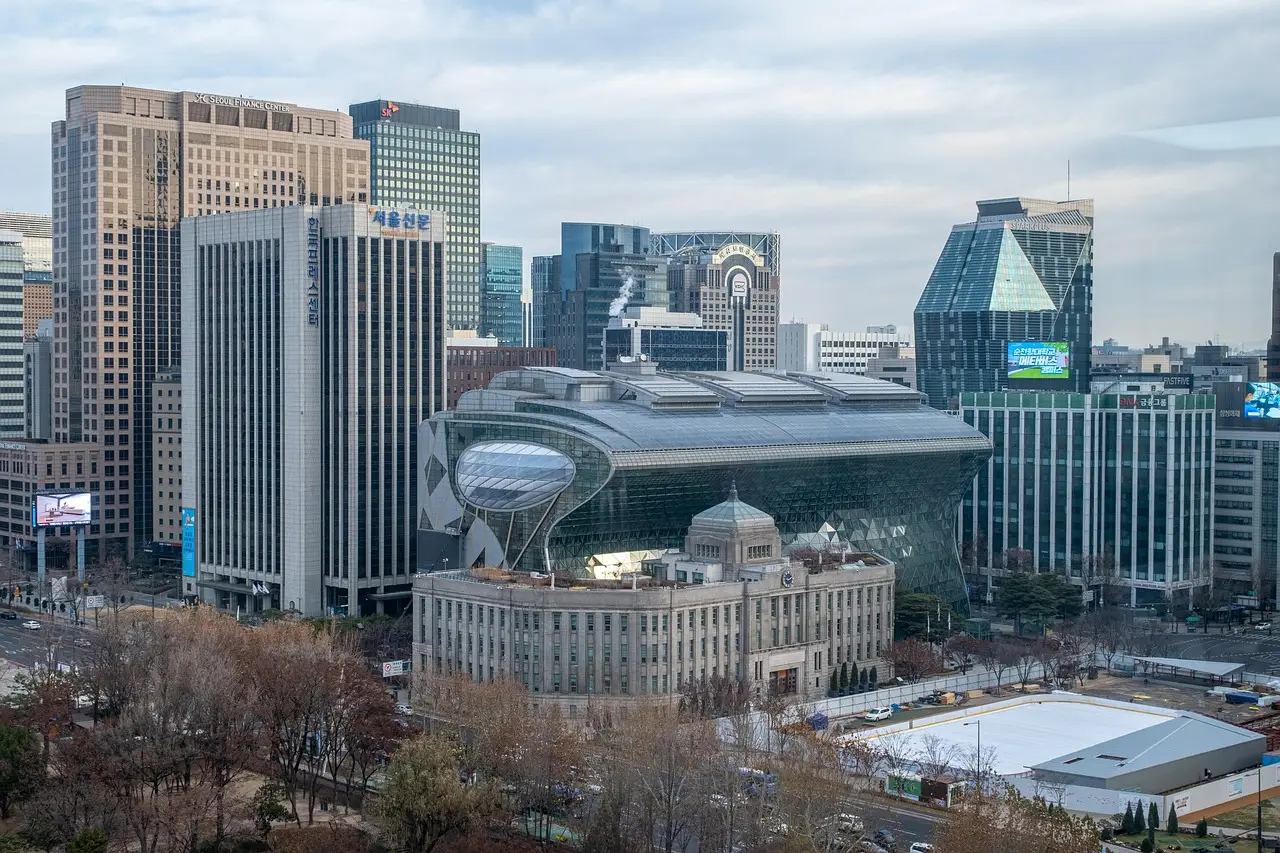
South Korea's Finance Minister: Chip Demand Stays Solid Through Next Year
South Korea's finance minister says the semiconductor market will remain solid "at least through next year," backing the AI-driven memory upcycle.
- By
- Rebecca Stone
- Filed
- Channel
- Semiconductors
- Read
- 3 min read
South Korea's finance minister expects the semiconductor market to stay solid "at least through next year," putting the weight of Seoul's economic planning behind the view that the current chip upcycle has real runway left.
It's a short phrase with long consequences. When the finance minister of the country that hosts Samsung Electronics and SK Hynix — the world's dominant memory suppliers — speaks publicly about chip demand, markets listen. The remark, made in comments reported by CNBC, amounts to an official read on the durability of an AI-driven boom that has filled Korean memory fabs and lifted national export figures for quarters.
What does the minister's timing signal?
The minister's language — solid "at least through next year" — reads as a deliberate hedge against the recession talk that has circled the semiconductor industry since memory prices climbed so steeply through this cycle. Analysts and investors have repeatedly asked whether AI infrastructure spending has peaked. Seoul's answer, at least from the finance ministry's vantage point, is: not yet.
That matters for three reasons.
- Korea's economy is chip-levered. Semiconductor exports are the single largest driver of South Korea's trade account, so a finance minister's demand outlook doubles as a growth forecast for the whole economy.
- Memory pricing follows sentiment. Public confidence from a fiscal authority in a supplier country tends to anchor expectations among DRAM and NAND buyers negotiating long-term supply.
- **It sets a benchmark." If demand disappoints before "next year" runs out, the minister's own words become the yardstick against which the downturn gets measured.
Why Seoul's voice carries weight in chips
South Korea isn't a bystander in the semiconductor market; it's one of the three poles, alongside Taiwan's foundries and America's equipment and design ecosystem. Samsung and SK Hynix together supply the majority of the world's DRAM, and HBM — the high-bandwidth memory stacked beside AI accelerators — has become the most contested corner of that market.
So when the finance minister talks about the market holding firm, he's effectively describing order books at the two companies that anchor Korea's industrial base. His ministry watches those books monthly through export data. A public statement of confidence usually means the numbers haven't cracked yet.
What could still break the forecast
The minister's phrasing leaves room for doubt, and that's the honest part. "At least through next year" is a floor, not a ceiling — but it's also an implicit admission that visibility gets fuzzy beyond that horizon.
The industry has been here before. Chip cycles turn fast, and memory has always been the fastest-turning segment: today's shortage becomes next year's inventory glut when buyers over-order and then pause. AI capex from the major cloud and model companies has so far absorbed nearly everything the memory makers can ship, which is precisely why the minister can project solidity with a straight face.
His comment doesn't price in a crash in 2027. It doesn't have to. For a finance ministry, a one-year horizon of confirmed demand strength is already an unusually comfortable position to hold — and for Korean chipmakers planning fab utilization and capex through the coming quarters, it's the green light they were looking for.
Source: Google News: semiconductors
More from Rebecca Stone
Show full bio
Correspondent covering technology and product news in Semiconductors, chip manufacturing, hardware, AI compute at Chip Dispatch.
602 articles
Related articles
korea-s-chip-boom-drives-2026-tax-revenue-to-record-high-ee66502a
Korea's Chip Boom Drives 2026 Tax Revenue to Record High
semiconductor-boom-lifts-korea-s-tax-revenue-forecast-by-63-2-trillion-won-9015b283
Semiconductor Boom Lifts Korea's Tax Revenue Forecast by 63.2 Trillion Won
korea-s-chip-exports-surge-170-9-in-first-ten-days-of-january-f7c26f20
Korea's Chip Exports Surge 170.9% in First Ten Days of January
korea-s-september-exports-hit-record-120-9-billion-c2ccfab3
Korea's September Exports Hit Record $120.9 Billion
![[Breaking] Korea's exports hit an 'all-time high' again this month... Semiconductors up 170.9% in Jan. 1-10 - 아시아경제](/media/2026/10/5f2a2e94b8ea7167.1280.webp)