Taiwan Funds $4 Billion Texas AI Complex With Nvidia Among Partners
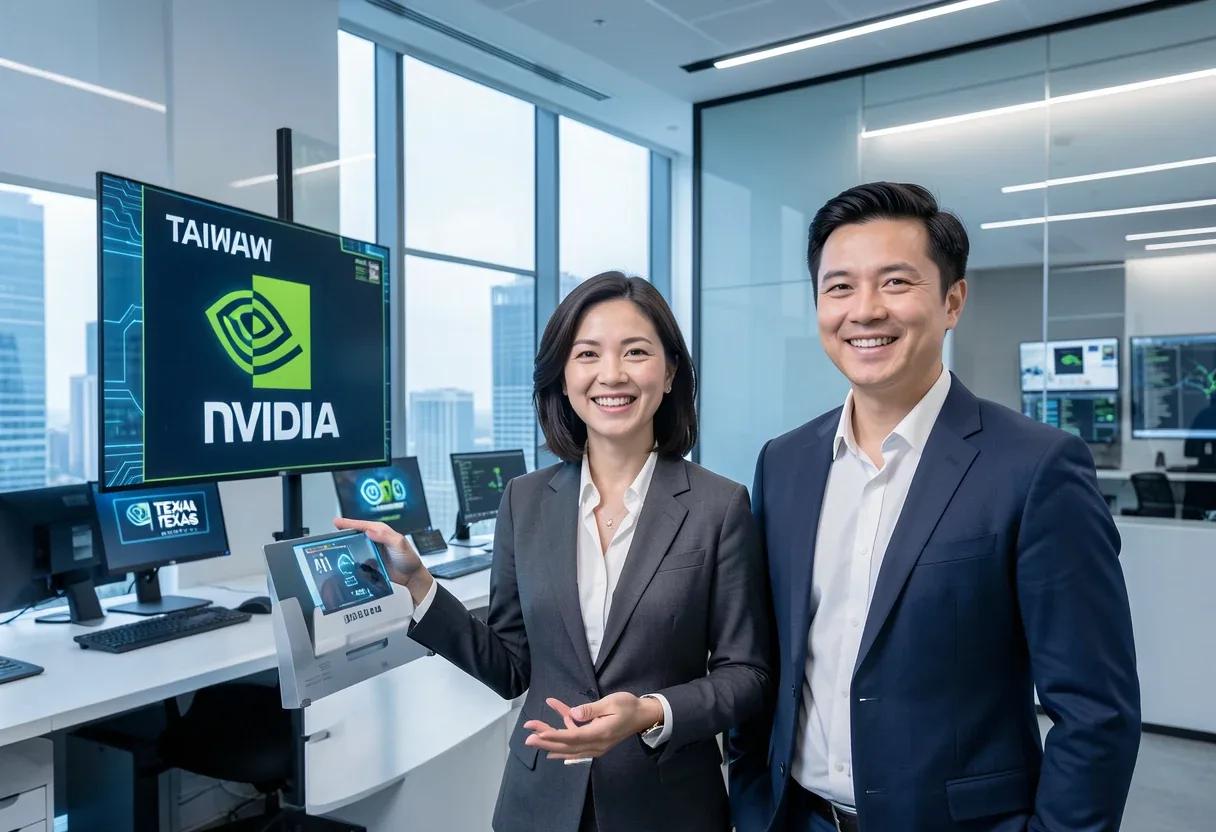
Taiwan has earmarked $4 billion for an AI semiconductor complex in Texas, with Nvidia among the named partners, per Insurance Journal. The sovereign commitment ranks among the larger state-backed allocations to a single US AI site.
- By
- Nathan Brooks
- Filed
- Channel
- AI & Compute
- Read
- 3 min read
Taiwan has earmarked $4 billion for an AI semiconductor complex in Texas, with Nvidia among the named partners, according to Insurance Journal. The figure lands among the larger sovereign commitments to a single US AI site.
The money flows from Taipei rather than a private operator. That detail is the most interesting part of the announcement. Federal CHIPS Act grants and corporate capital have done most of the heavy lifting in US fab construction since 2022, with sovereign allies contributing only occasionally and modestly.
Why the Texas angle
Texas has become a credible secondary hub for US semiconductor activity, behind Arizona and Ohio. The state offers cheaper power, available land, and tax terms that California cannot match. Adding a Taiwan-funded AI complex would deepen the existing cluster and give AI chip designers a domestic production option outside the traditional hubs.
The geographic spread matters. Concentrating advanced fabs in a single region concentrates the risks of power outages, water shortages, and seismic events. Texas offers a different risk profile.
Where Nvidia fits
Nvidia designs the accelerators that define the current AI compute cycle but does not operate its own fabs. The company depends on foundry partners for manufacturing capacity, and any leverage over a new production line is valuable. A partnership role in a Texas AI complex would extend that leverage without forcing capital expenditure on Nvidia's balance sheet.
This arrangement suits both parties. Nvidia gains influence over a new production line. The site gains an anchor customer before the first tool is installed. The structure resembles a soft offtake agreement dressed in different clothing.
What this means for the supply chain
A Taiwanese-funded Texas site would formalize a measure of decoupling between AI chip design and Asian fabrication. The arrangement would let US firms source AI silicon from American soil, even if the underlying intellectual property and process know-how remained in Taiwan.
This configuration is unusual but not unprecedented. The US has accepted similar compromises in other critical technology sectors for decades, from rare earths to pharmaceuticals.
The execution risks
A $4 billion headline figure does not always translate to a $4 billion finished fab. Cost overruns, permitting delays, and tooling bottlenecks have slowed several high-profile US semiconductor projects since 2023. Texas complexes announced today face the same execution risks.
The commercial case also depends on demand holding. AI accelerator orders have outrun supply for two consecutive years. That gap should narrow by 2026 as new capacity comes online from established players, which could leave a Texas site announced in 2024 competing in a softer market than the one that justified the original investment thesis.
What to watch
The $4 billion figure will need confirmation from official Taiwanese and Texan sources. Equity terms, construction start dates, and Nvidia's precise role remain unspecified. Until those details emerge, the project sits closer to a memorandum than a finished plan.
The most that the headline data justifies is a simple observation. Taipei is putting real money on the table. Nvidia has agreed to lend its name. Texas has landed another semiconductor asset. Whether the chips ship on schedule will determine whether the $4 billion becomes an investment or a cautionary tale. The industry has seen both outcomes from similarly large headlines.
Source: Google News: AI chips
More from Nathan Brooks
Show full bio
Senior reporter covering people, launches and day-to-day practice in Semiconductors, chip manufacturing, hardware, AI compute at Chip Dispatch.
619 articles
Related articles
tsmc-reportedly-eyes-fresh-texas-investment-to-expand-us-output-c99d3c8b
TSMC Reportedly Eyes Fresh Texas Investment to Expand US Output
taiwan-eyes-4-billion-texas-industrial-park-for-ai-chip-suppliers-65eb09d2
Taiwan Eyes $4 Billion Texas Industrial Park for AI Chip Suppliers
tsmc-reportedly-weighing-additional-texas-investment-to-lift-us-chip-output-d1b58a02
TSMC Reportedly Weighing Additional Texas Investment to Lift US Chip Output
taiwan-weighs-4-billion-texas-complex-for-nvidia-ai-supply-chain-59d26bfd
Taiwan Weighs $4 Billion Texas Complex for Nvidia AI Supply Chain