Chips & Policy · 4 min read
Taiwan nuclear referendum puts chipmakers’ power needs before voters
Taiwan’s Nov. 28 nuclear referendum needs a yes majority and yes votes from at least 25% of eligible voters. The result could advance restarts at Kuosheng and Maanshan as AI power demand grows.
Key takeaways
- The Nov. 28 referendum requires yes votes to exceed no votes and reach at least 25% of roughly 20 million eligible voters.
- A 2025 Maanshan measure won 4.34 million votes to 1.51 million but missed a roughly 5 million yes-vote threshold.
- Taiwan has had no nuclear generation since Maanshan’s second reactor stopped on May 17, 2025.
- Lai said Kuosheng and Maanshan restarts would be evaluated if safety, waste disposal and public consensus conditions were met.
- Taipower absorbed nearly NT$600 billion (US$18.9 billion) in generation costs over three years, while the referendum cost about NT$800 million.
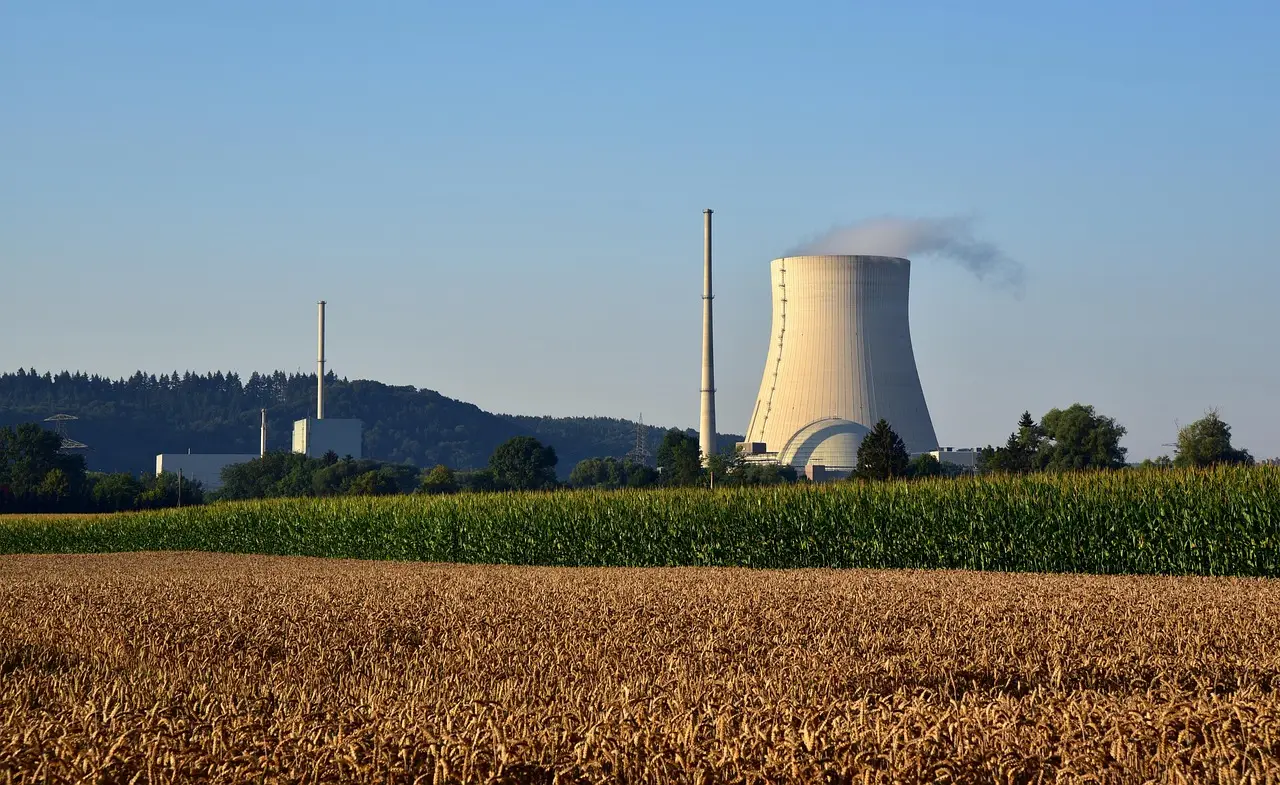
About 20 million eligible voters can decide Taiwan’s nuclear-power referendum on Nov. 28. Approval requires valid “yes” votes to outnumber valid “no” votes and reach at least one-quarter of all eligible voters, a hurdle that defeated a 2025 Maanshan measure even though its supporters held a clear majority.
Polls open at 8 a.m. and close at 4 p.m. local time, equivalent to 01:00–09:00 CET. Roughly 20 million people qualify for the referendum, whose voting age is lower than for local elections.
About 19.58 million people, roughly 85% of the population, can vote in the local races. Local results are expected Saturday evening, with the referendum count possibly finishing later.
What does the ballot ask?
The ballot asks whether voters support reviving the economy with nuclear energy and abolishing Taiwan’s “nuclear-free homeland” policy. The opposition Kuomintang’s legislative caucus proposed it, and the Legislative Yuan approved it on Aug. 14 by 59 votes to 51. It is Taiwan’s fourth nuclear referendum since 2018.
DPP’s Chen Pei-yu said approval would still require legal amendments and that any return depends on assessments by the Nuclear Safety Commission and state utility Taipower. A “yes” result would add pressure on the government, but it would not authorize an immediate reactor restart.
Why did the 2025 Maanshan vote fail?
The 2025 referendum on keeping the Maanshan plant operating if confirmed safe drew 4.34 million “yes” votes and 1.51 million “no” votes. The yes total fell below the roughly five million votes then needed to reach one-quarter of eligible voters. President Lai Ching-te had urged voters to reject that measure.
Taiwan has had no nuclear generation since the second reactor at Maanshan stopped on May 17, 2025. The earlier result shows that a pro-nuclear majority can still fail the separate yes-vote threshold, making that threshold as important as the yes-no margin.
Can nuclear power secure electricity for chips and AI?
In March, President Lai signaled a more open position, citing rising electricity demand from AI. He said the government would evaluate restarts at the Kuosheng and Maanshan plants if safety, waste-disposal and public-consensus conditions were met. This is a review commitment, not a confirmed restart date or added generation capacity.
The KMT’s Niu Hsu-ting argues that nuclear generation offers steady baseload power for semiconductor and AI operations while reducing dependence on imported fuel. He said shipments of liquefied natural gas are vulnerable to a maritime blockade, whereas nuclear fuel is easier to stockpile. “Nuclear power and renewable energy should be developed in parallel,” he said.
The commercial mechanism is direct: nuclear plants could provide steady baseload power and reduce fuel-import exposure. The proposal supplies no restart schedule, output figure or cost estimate for either plant, so it cannot yet support a firm capacity or pricing forecast.
The governing Democratic Progressive Party takes a different position. Chen Pei-yu called the referendum “unnecessary,” arguing that lawmakers could amend the law directly. She cited government projections showing enough electricity for peak nighttime demand in 2035 without nuclear generation. Those figures are forecasts rather than operating commitments.
Chen also said Taipower absorbed nearly NT$600 billion (US$18.9 billion) in generation costs over three years to stabilize prices, and she put the referendum’s cost at about NT$800 million. Until the reviews and amendments occur, nuclear power remains a policy option rather than available capacity.
What is at stake in the local elections?
More than 11,000 local government posts are being contested across 8,906 electoral districts. The election uses 18,244 polling stations and more than 300,000 election workers. These administrative votes will run alongside the national nuclear referendum.
- Six special municipalities—Taipei, New Taipei, Taoyuan, Taichung, Tainan and Kaohsiung—elect mayors. Mayors or magistrates in 16 other cities and counties, 919 city and county council seats and 7,780 borough chiefs are also on the ballot.
- In Taipei, KMT Mayor Chiang Wan-an faces DPP legislator Puma Shen.
- In Kaohsiung, DPP candidate Lai Jui-lung and KMT candidate Ko Chih-en are competing to succeed DPP Mayor Chen Chi-mai.
- The KMT won 14 of 22 mayor and magistrate races in 2022, with the DPP taking five, the Taiwan People’s Party one and independents two.
The local results will show the current balance between the KMT and DPP, but the nuclear referendum has its own 25% threshold.
How does China’s activity affect the energy debate?
Days before the vote, China staged floating-bridge landing drills opposite Taiwan, while Taipei said it faced millions of Chinese cyberattacks a day, MLQ.ai reported. The report did not identify an energy interruption; its relevance lies in the maritime vulnerability of LNG routes that Niu cited.
The decisive signal for chipmakers is not the referendum result alone, but whether the yes total reaches roughly five million and leads to safety, waste and legal approvals for Kuosheng or Maanshan. Without those steps, the government’s 2035 no-nuclear projection will carry more weight than any claim of new baseload capacity.
mlq.ai (Source)
More from Tom Whitfield
Show full bio
Staff writer covering companies, deals and strategy in Semiconductors, chip manufacturing, hardware, AI compute at Chip Dispatch.
1,331 articles