Semiconductors · 4 min read
Taiwan's Taiex Falls 4.8% as Asian Chip Stocks Reverse Tuesday Rally
Taiwan's Taiex dropped 4.80% to 38,195.43 on NT$1.19 trillion turnover, while the Nikkei closed at 57,011.62 as SoftBank fell 16.1% and Samsung and SK hynix lost more than 6.5%.
Key takeaways
- Taiwan's Taiex closed down 1,926.92 points, or 4.80%, at 38,195.43 on Nov. 25, after Tuesday's 9% gain.
- The Nikkei 225 closed at 57,011.62, down from 58,644.63, with SoftBank off 16.1% and Kioxia off 15.4%.
- Samsung Electronics fell 6.71% and SK hynix fell 6.56% in Seoul; the Kospi triggered a sell-side sidecar at 9:09 a.m.
- Australia's S&P/ASX 200 closed down 0.4% at 8,692 after CPI accelerated to 4.9% in October.
- Nvidia fell 5.86% and the Nasdaq Composite fell 1.48% in Tuesday's US session, setting the tone for Asia.
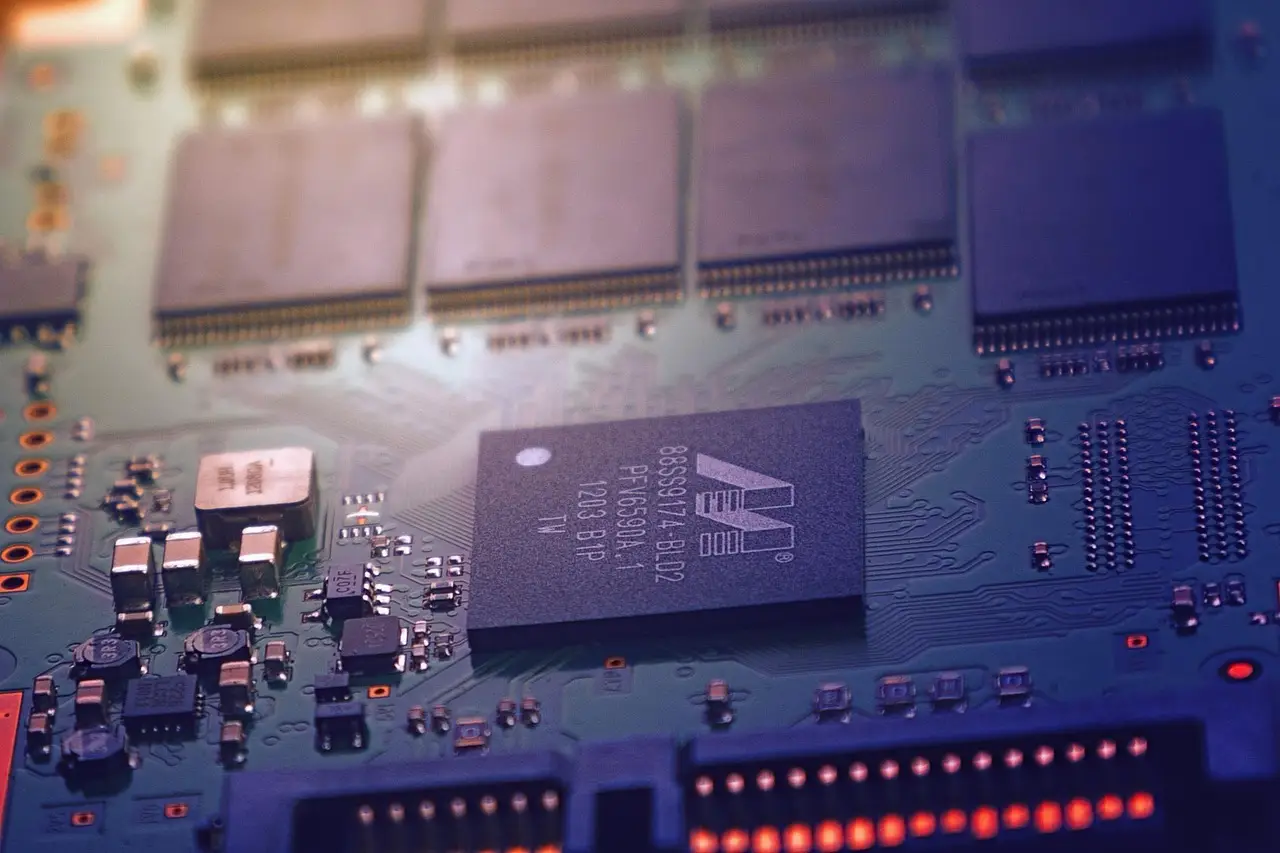
Taiwan's Taiex closed down 1,926.92 points, or 4.80%, at 38,195.43 on Wednesday, Nov. 25, as chip and AI-linked shares across Asia gave back much of the previous session's rally, Central News Agency reported. The index had closed up 9% on Tuesday. Turnover on the Taiwan exchange reached NT$1.19 trillion, equivalent to US$36.10 billion.
The selling was regional and largely synchronized. In Tokyo, the Nikkei 225 closed at 57,011.62, down from Tuesday's 58,644.63 close, with an intraday low of 56,502.97, according to Yahoo Finance historical data. In Seoul, the Kospi stood at 4,699.10 in delayed data stamped 3:26 p.m., against Tuesday's close of 5,006.03, after hitting a session low of 4,672.55. A closing report from the exchange or Yonhap had not yet appeared.
Wall Street set the tone overnight. The Nasdaq Composite fell 1.48%, and Nvidia dropped 5.86% in Tuesday's US session, a decline that carried straight into Asian chip names.
How bad was the damage in chip stocks?
The worst moves were concentrated in Japan's technology investors and memory makers in Korea. At 1:05 p.m. Tokyo time, SoftBank Group was down 16.1% and Kioxia down 15.4%, the Associated Press reported. SoftBank's fall alone erased a large share of the Nikkei's decline for the day.
In Seoul, Samsung Electronics fell 6.71% and SK hynix fell 6.56% early in the session, Korea JoongAng Daily reported. The Kospi opened 3.94% lower and stood at 4,777.46 at 9:15 a.m., down 228.57 points, or 4.57%, at that point. The selling was sharp enough to trigger an exchange control: the Korea Exchange activated a sell-side sidecar at 9:09 a.m. Seoul time, suspending program-trading buy orders for five minutes.
The takeaway: a single weak US session was enough to unwind a large part of a 9% one-day gain in Taipei and push two of Asia's biggest memory makers down more than six and a half percent.
Did the broader markets hold up better?
Outside the chip complex, the damage was milder. At the midday break, the Nikkei was down 3.30%, or 1,934.20 points, at 56,710.43, Jiji Press reported, and it recovered some ground by the close. The yen barely moved, trading at 159.29 per dollar from 159.26.
Australia's S&P/ASX 200 closed down 0.4% at 8,692 points, with miners and banks weighing on the index, ABC News reported. The Australian dollar fell 0.7% to 65.91 US cents at 4:10 p.m. AEDT.
The currency market added its own signal of pressure. The Korean won weakened to 1,345.8 per dollar at 9:15 a.m. Seoul time, 2.8 won softer than Tuesday's close.
What role did economic data play?
Two inflation prints shaped trading outside the chip story. In Australia, the Bureau of Statistics said consumer prices rose 4.9% in the 12 months to October, up from 4.3% in September, a hotter reading that weighed on the ASX. In Japan, the Bank of Japan said services producer prices rose 4.2% in October from a year earlier, keeping pressure on the central bank's policy calculations.
Neither figure caused the chip sell-off, but both raised the cost of money at the margin, and that matters for capital-heavy semiconductor investment.
Which markets were still trading?
Hong Kong, Shanghai, Shenzhen and India were still open when the regional picture was assembled at about 7:45 a.m. CET. At 4:10 p.m. AEDT, ABC's market snapshot showed the Hang Seng up 0.2% and the Shanghai Composite down 1.0%. Closing figures for those exchanges were expected in a later update.
The divergence is worth watching: mainland Chinese and Hong Kong markets, less exposed to the AI supply chain than Taiwan, Korea and Japan, held steadier while the chip complex sold off.
The pattern of a 9% rally followed by a near-5% reversal in Taipei suggests the market has not settled on a view of AI hardware demand, and the next US close will likely decide whether Wednesday's retreat extends or stabilizes.
mlq.ai (Source)
More from Tom Whitfield
Show full bio
Staff writer covering companies, deals and strategy in Semiconductors, chip manufacturing, hardware, AI compute at Chip Dispatch.
1,282 articles