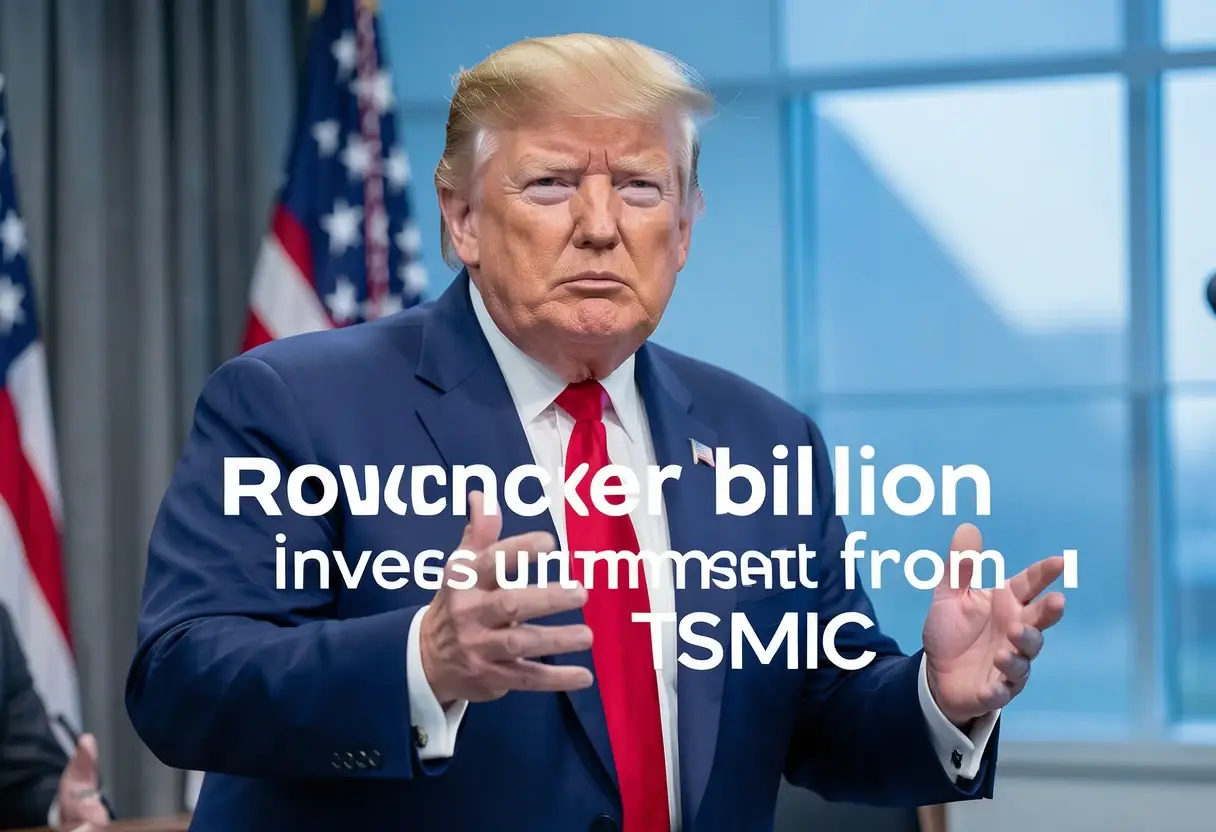
TSMC Commits $100 Billion to New U.S. Investment, Trump Says
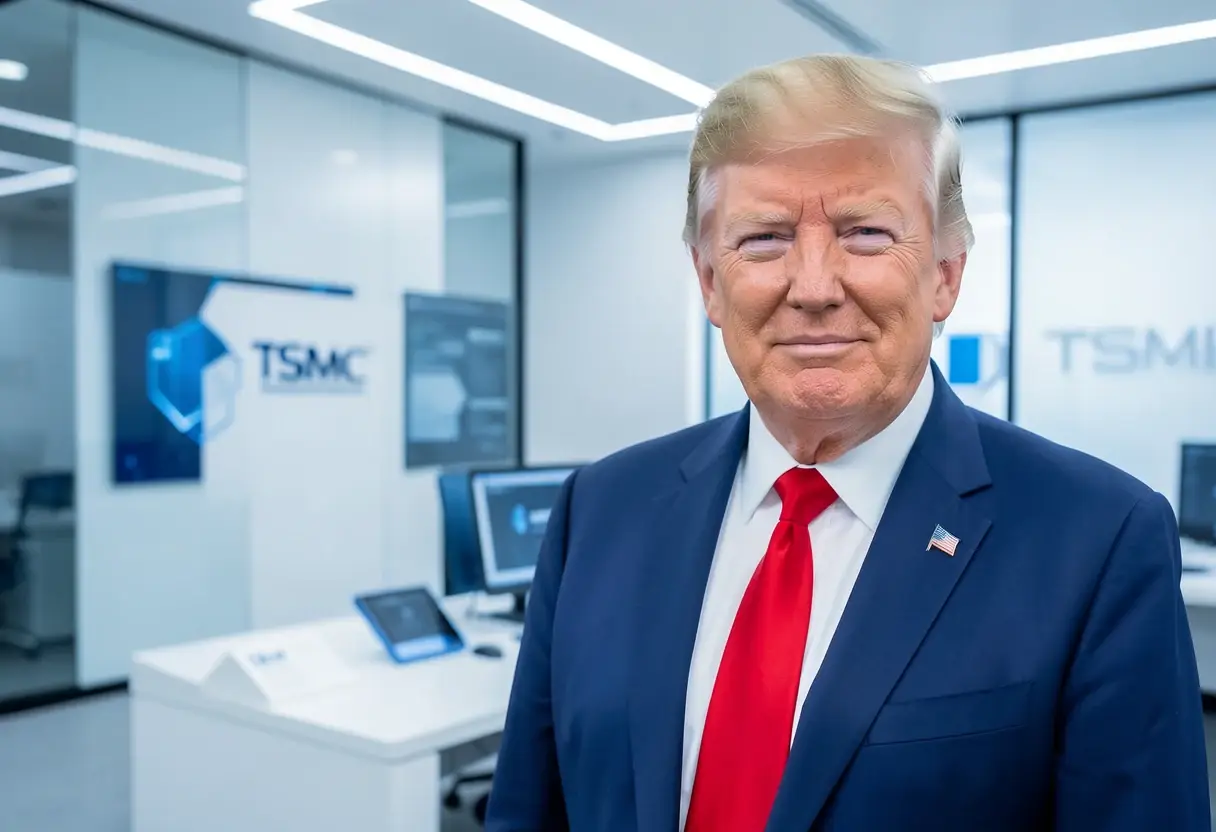
Trump announced a $100 billion TSMC investment in the United States and called the chipmaker the world's most powerful company. The confirmed details end there.
- By
- Sophie Lindqvist
- Filed
- Channel
- Chip Manufacturing
- Read
- 4 min read
TSMC will put $100 billion into additional investment in the United States, President Donald Trump announced, calling the Taiwanese chipmaker the most powerful company in the world. The figure, disclosed by CNBC on Monday, represents one of the largest single foreign manufacturing commitments ever pitched to a U.S. administration.
The announcement came from the White House. Trump praised TSMC in unusually strong terms, saying: it is the most powerful company in the world. The claim is rhetorical, not financial. But the $100 billion number is concrete. It stands on its own.
What do we actually know?
Confirmed facts are few. The source report establishes three things.
- TSMC intends to invest $100 billion in the United States.
- Trump announced the figure himself.
- He labeled TSMC the most powerful company in the world.
That is the full confirmed record. The announcement did not, according to the available reporting, specify a timeline, a site list, a process node, or a wafer allocation. Anyone projecting Arizona, Texas, or any specific fab location is reading beyond the source. I will not do that here.
Why the number demands scrutiny
A $100 billion commitment is a headline, not a construction schedule. Semiconductor announcements have a long history of inflation. Promised figures routinely exceed delivered capital expenditure by wide margins. Some projects stall. Some are restructured. Some are quietly resized.
TSMC already operates a substantial U.S. expansion program at its Arizona site. The company has previously raised its American commitment in stages, each increase announced with political ceremony. Monday's figure may extend that pattern. Or it may repackage previously disclosed spending under a larger umbrella. The source report does not distinguish between new money and cumulative totals. That gap matters.
Trump has an evident incentive to claim the largest possible number. TSMC has an incentive to stay in favor with Washington, given tariff threats and export control policy that directly affect its business. Both parties benefit from a large announcement. Neither benefits from explaining its composition. Readers should treat the $100 billion as a stated intention, attributed to the president, until TSMC files the corresponding capital expenditure plans.
What is not said
The report is silent on several points a serious analyst would want.
- No breakdown between fabs, packaging facilities, and research spending.
- No dates for groundbreaking, tool installation, or volume production.
- No statement on which process nodes the money would fund.
- No confirmation from TSMC's own filings or investor communications quoted in the report.
- No employment figures attached to the commitment.
Silence on node selection is the most telling omission. Advanced logic capacity in the United States depends less on dollar totals than on which technology lands on American soil. A $100 billion program spread across trailing-edge capacity serves a different strategic purpose than one built around leading-edge lithography. The announcement, as reported, does not say.
The geopolitical frame
TSMC sits at the center of the global chip supply chain. It manufactures the majority of the world's most advanced logic wafers, and its home island of Taiwan carries risk that Washington policymakers discuss openly. Every U.S. investment announcement from the company plays against that backdrop.
Trump's embrace of TSMC marks a shift in tone. His first administration pressured Taipei over defense spending and semiconductor dependence. The current framing casts TSMC as a partner worth $100 billion of American accommodation. The commercial logic and the political theater arrive together. That is normal for this industry.
For TSMC, the calculation is straightforward. Access to U.S. customers, U.S. subsidies, and U.S. policy goodwill requires visible American spending. The company's Arizona project already proved the template: announce, expand, announce again. Monday's figure follows the sequence at a larger scale.
What to watch next
Verification will come from TSMC, not the White House. The company reports quarterly results and holds investor calls where capital expenditure by geography is disclosed in detail. Those filings will show whether $100 billion represents fresh allocation, an aggregation of prior commitments, or a multi-decade aspiration without a binding schedule.
Watch also for state-level announcements. If specific sites, permits, or equipment orders follow within months, the commitment gains credibility. If nothing concrete follows, the number joins a long list of headline figures that never became tool installations.
The stated $100 billion, if fully executed, would reshape American advanced manufacturing capacity over the coming decade; whether it does so depends entirely on details the announcement did not provide.
Source: Google News: chip factory investment
More from Sophie Lindqvist
Show full bio
News editor covering money, funding and market shifts around Semiconductors, chip manufacturing, hardware, AI compute at Chip Dispatch.
597 articles
Related articles
tsmc-s-u-s-investment-commitment-rises-to-265-billion-a63c22d6
TSMC's U.S. Investment Commitment Rises to $265 Billion
tsmc-commits-100-billion-to-us-chip-manufacturing-push-f672c03e
TSMC Commits $100 Billion to US Chip Manufacturing Push
tsmc-lifts-planned-us-investment-to-165-billion-ffec0989
TSMC Lifts Planned US Investment to $165 Billion
tsmc-weighs-texas-site-as-next-step-in-us-expansion-82a45f35
TSMC Weighs Texas Site as Next Step in US Expansion