Two Dead, One Injured in Explosion at Intel's Israel Fab
An explosion at Intel's chip plant in Israel killed two people and seriously injured one more. Police suspect a gas cylinder malfunction sparked the blast, with a toxic cleaning gas feeding the fire.
- By
- Tom Whitfield
- Filed
- Channel
- Chip Manufacturing
- Read
- 3 min read
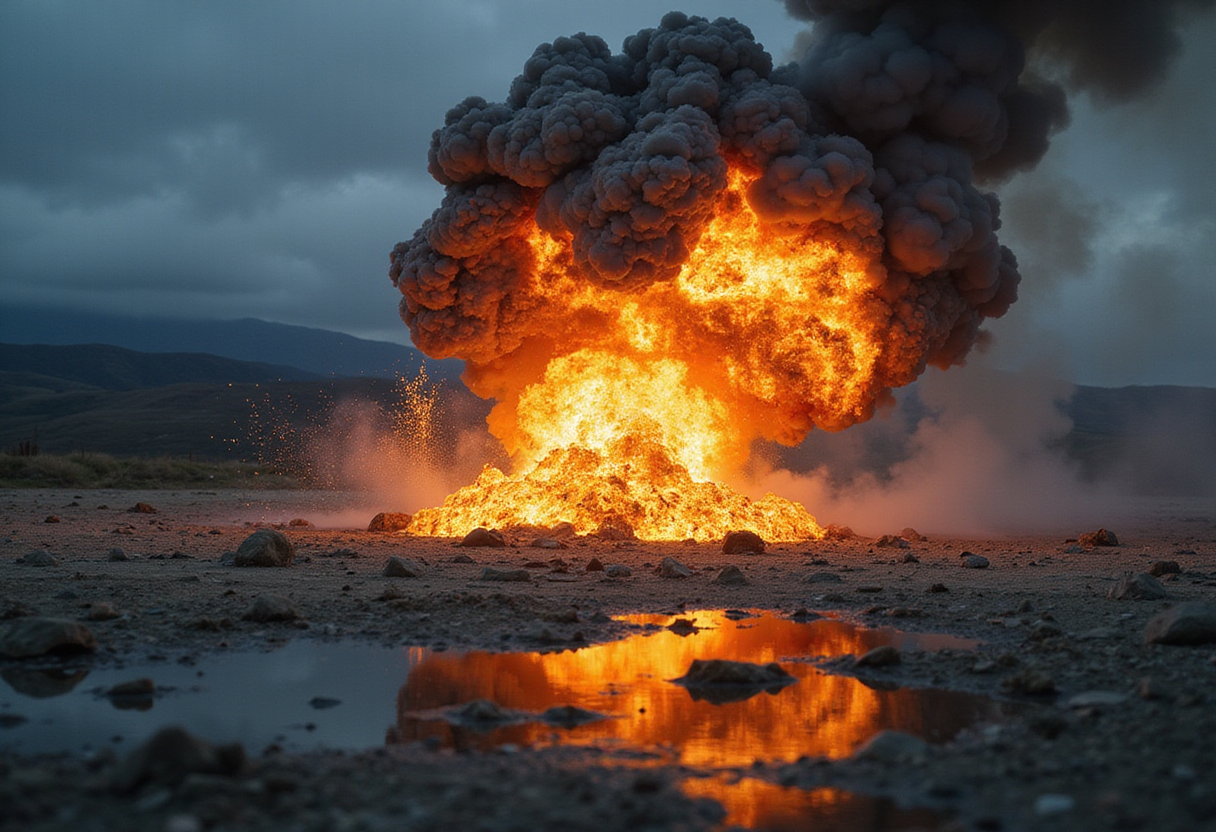
An explosion at Intel's chip fabrication plant in Israel killed two people and left a third seriously injured, according to a report from Tom's Hardware. Police suspect a gas cylinder malfunction caused the blast, and the resulting fire involved a toxic gas used to clean chipmaking tools.
The incident is one of the most serious accidents reported at an Intel manufacturing site in years. Details about the victims, their roles at the plant, and the exact sequence of events remain limited at this stage of the investigation.
What happened at the plant?
The explosion struck Intel's chip plant in Israel, a facility that forms part of the company's global manufacturing network. Two workers died at the scene of the accident. A third person suffered serious injuries and required medical treatment.
Police investigating the blast point to a gas cylinder malfunction as the suspected cause. The report does not specify how many cylinders were involved or where in the facility the equipment was located.
The fire that followed the explosion involved a toxic gas of the kind used to clean chipmaking tools. These cleaning gases are standard in semiconductor fabrication, where they remove residue from process chambers between production steps. Their presence complicated the emergency response and shaped how firefighters approached the scene.
The mechanism matters here. In a fab, hazardous gases move through sealed delivery systems into processing equipment. A failure in a cylinder, a valve, or a connection line can release gas under pressure. If that release meets an ignition source, the result can be an explosion followed by a chemical fire. Police have not yet said which specific component failed.
The takeaway: a routine part of fab housekeeping — gas supply to cleaning equipment — is the suspected trigger for a fatal accident.
What do we know about the suspected cause?
At this point, the gas cylinder malfunction remains a police suspicion rather than a confirmed finding. Investigators will need to examine the cylinder, its fittings, and the surrounding tool before drawing a firm conclusion.
The involvement of a toxic cleaning gas adds a second layer to the investigation. Beyond the explosion itself, authorities will want to establish whether any gas escaped beyond the immediate area and whether exposure played a role in the casualties or the injuries.
No information has been released about damage to production equipment, wafers in process, or the operational status of the fab. Intel has not yet published a detailed public statement on the accident, based on the report.
The takeaway: the official cause is still under investigation, and the working theory centers on gas-handling hardware.
Why do cleaning gases carry risk?
Semiconductor fabrication depends on gases for etching, deposition, and chamber cleaning. Cleaning gases remove material that builds up inside process tools as a normal byproduct of chipmaking. Many of these gases are toxic, corrosive, or flammable, and plants store and pipe them under strict controls.
Cylinders are one link in that chain. They hold gas at pressure and feed it to tools through regulators and delivery lines. Any failure at that link — a faulty valve, damaged seal, or mishandled cylinder — can release energy and chemical hazard at once. That appears to be the pattern police are examining in this case.
The takeaway: the same gases that keep process tools running are among the most dangerous materials a fab handles day to day.
What comes next?
The police investigation will determine whether the suspected cylinder malfunction stems from equipment failure, maintenance error, or another factor. Its findings will determine whether Intel faces regulatory scrutiny over gas-handling procedures at the site.
For the plant itself, the immediate questions are human and operational: the welfare of the injured worker, support for the families of the dead, and the pace at which the affected section of the fab can be inspected, cleared, and returned to service.
Source: Google News: semiconductors
More from Tom Whitfield
Show full bio
Staff writer covering companies, deals and strategy in Semiconductors, chip manufacturing, hardware, AI compute at Chip Dispatch.
525 articles
Related articles
two-dead-after-nf3-explosion-at-intel-s-kiryat-gat-fab-28-47cf426a
Two Dead After NF3 Explosion at Intel's Kiryat Gat Fab 28
semianalysis-publishes-teardown-of-intel-s-panther-lake-silicon-2743a6ab
SemiAnalysis Publishes Teardown of Intel's Panther Lake Silicon
three-indicted-in-south-korea-over-semiconductor-technology-leak-to-china-9bb8f786
Three Indicted in South Korea Over Semiconductor Technology Leak to China
air-liquide-commits-170-million-to-semiconductor-gas-production-in-japan-1c231fb9
Air Liquide Commits €170 Million to Semiconductor Gas Production in Japan