AI & Compute · 3 min read
US Air Force Seeks Private Capital for $2 Billion, 30,000-GPU Supercomputer
An Air Force RFI posted Nov. 25 seeks private financing for a $2.0 billion, 30,000-GPU-equivalent aerospace AI supercomputer on federally leased land, with responses due Dec. 11.
Key takeaways
- The Air Force wants a supercomputer of up to about 30,000 GPU equivalents for physical AI, large model training and dense simulation.
- The RFI asks how private capital would fund roughly $2.0 billion of equipment and facilities on federally leased property.
- The site starts at about 750 kW of room power and scales to a 30 MW substation, with a possible further 30 MW pad and battery storage.
- Questions are due Dec. 2 and responses by Dec. 11 at 4 p.m. ET.
- The SAM.gov listing gives Mountain View, California, as the place of performance.
The Department of the Air Force is asking private investors how they would fund roughly $2.0 billion in computing equipment and data center facilities for a purpose-built aerospace supercomputer scaling to approximately 30,000 GPU equivalents. The request, titled "DAF Advanced Aerospace Computing," appeared on SAM.gov on Wednesday, Nov. 25, and was issued by the Air Force District of Washington's contracting office. Data Center Dynamics reported on the notice earlier.
The notice is market research, not a procurement. It states plainly that it is not a request for proposals and does not commit the government to award a contract.
What kind of machine does the Air Force want?
The system would serve a specific workload mix. According to the notice, it would be optimized for "complex tensor operations, physical AI, large model training, and dense scientific simulation." That is the language of modern aerospace engineering: training large models that interact with physical systems, and running the dense simulations that aircraft and weapons design demand.
The Air Force also asks respondents to compare GPUs with CPU-centric clusters on dense fluid dynamics and partial differential equation solving — the mathematical core of aerospace simulation. The question signals that the service is not yet certain which architecture best fits its workload, and it wants vendors to make the case with numbers rather than slogans.
How would the money work?
Most of the questionnaire concerns finance, not silicon. The Air Force asks what financing instruments, equity hurdle rates and debt tenors private capital would require to fund the roughly $2.0 billion buildout on federally leased property. It asks what step-in rights lenders would demand if an operator defaulted, and how much development capital a consortium would need before any revenue arrives.
The commercial tension sits in one question: would commercial customers sign take-or-pay or anchor-tenant commitments for non-defense capacity, and how would they price GPU time when defense work can preempt their jobs? In plain terms, the Air Force wants to know whether outside tenants would accept second place on a machine the military can always bump them from.
There is also an asset-life mismatch to solve. The notice observes that AI hardware becomes obsolete within three to five years while data center buildings run on a 20-year-plus horizon, and it asks how the hardware could stay current without disrupting debt service. That question alone will shape how any deal is structured.
Power, cooling and classified neighbors
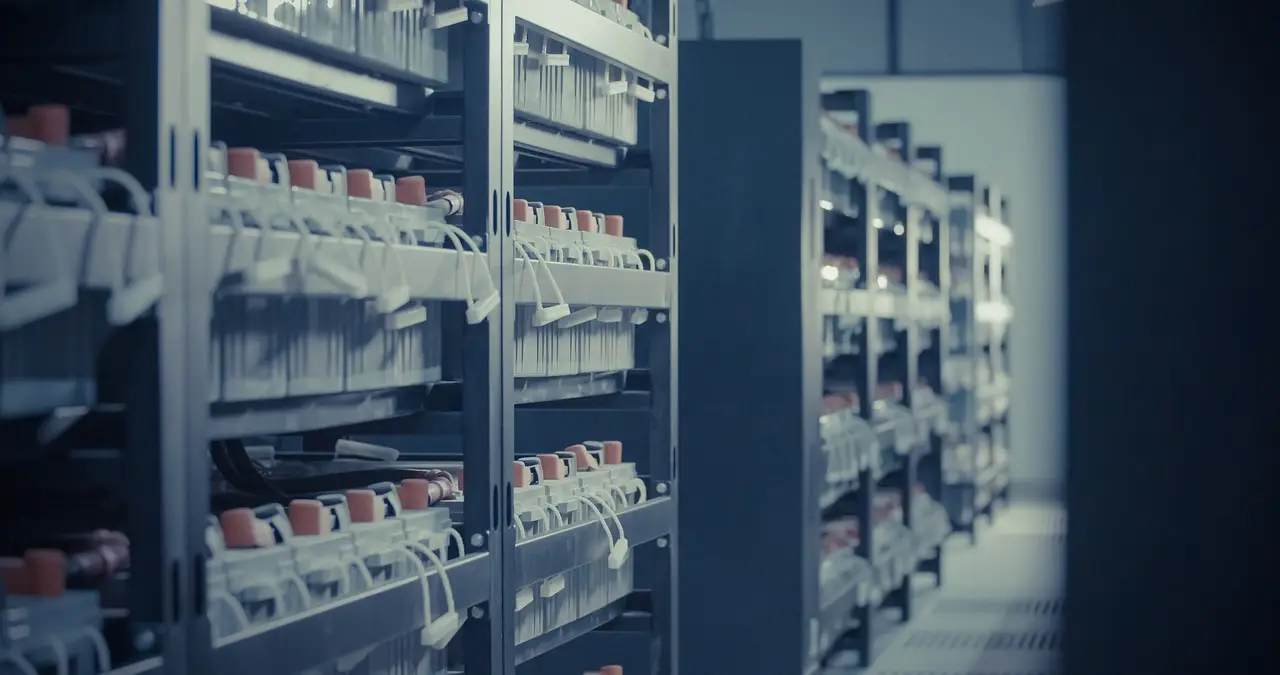
The initial site carries an immediate room power envelope of about 750 kW, scaling to a substation transformer capacity of up to 30 MW. The notice sets an ultimate target of an additional 30 MW pad plus battery storage, and it asks for modular or containerized pods that can deliver compute while utilities are upgraded. For cooling, it requests liquid or immersion cooling for racks of 100 kW and above, along with microgrid or storage options such as a 250 MWh battery.
The SAM.gov listing names Mountain View, California, as the place of performance, though the notice itself does not identify the site.
The facility must also host two very different populations at once. The Air Force wants designs that place unclassified commercial tenants alongside Secret, Top Secret and Special Access Program enclaves on the same campus, with protection against model weight extraction and side-channel leakage across shared interconnects. Mixing paying customers with the most sensitive defense programs on shared hardware is the hardest engineering problem in the whole document.
What happens next?
Questions are due by Dec. 2 and responses by Dec. 11 at 4 p.m. ET. Submissions are capped at a two-page executive summary and 10 pages of technical and financial response. The government may then invite selected respondents to one-on-one sessions.
If the answers show lenders will accept defense preemption rights and a three-to-five-year hardware refresh cycle, the Air Force will have a template for funding AI compute without a direct appropriation — and other agencies will likely copy it.
mlq.ai (Source)
More from Tom Whitfield
Show full bio
Staff writer covering companies, deals and strategy in Semiconductors, chip manufacturing, hardware, AI compute at Chip Dispatch.
1,305 articles