Volvo Picks Nvidia to Power Hands-Free Driving by 2030
Volvo will launch hands-free, point-to-point Level 2++ driving by 2030, running on Nvidia's autonomous driving stack in a direct challenge to Tesla's FSD.
- By
- Rebecca Stone
- Filed
- Channel
- AI & Compute
- Read
- 3 min read
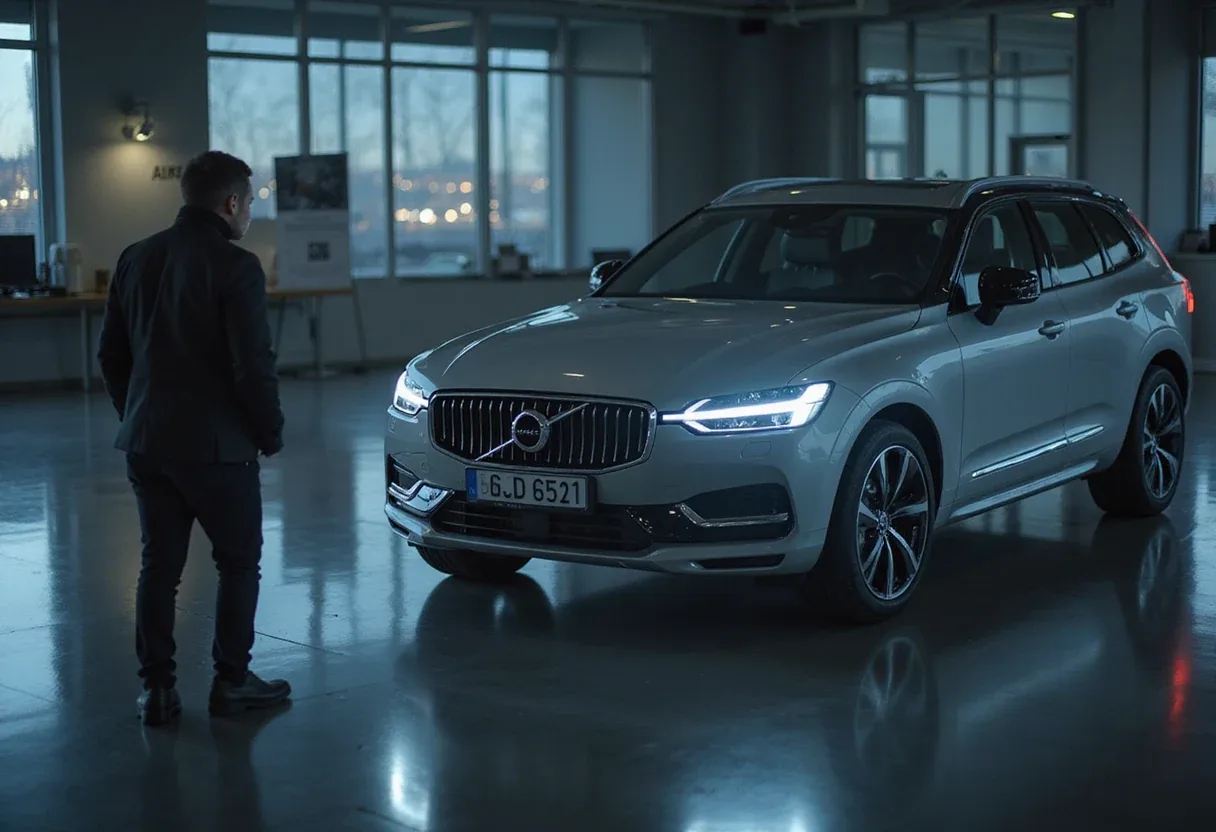
Volvo says it will launch hands-free, point-to-point driving by 2030, and it's building the system on Nvidia's autonomous driving stack rather than developing one in-house. The Chinese-owned, Swedish-designed automaker announced the plan Thursday, confirming its next-generation partially automated driving system will take direct aim at Tesla's Full Self-Driving (Supervised).
The target is ambitious. Volvo wants a system that handles complex urban environments — traffic lights, stop signs, unprotected left turns — without the driver issuing explicit commands at each step. The company classifies the capability as Level 2++, a step beyond conventional Level 2 highway assistance but still short of true Level 3 autonomy, where legal responsibility shifts to the vehicle.
For the silicon industry, the significance is straightforward. Nvidia's automotive AI platform is winning another marquee design win, and one with a hard launch date attached.
What does the Volvo-Nvidia deal actually cover?
Volvo will license Nvidia's autonomous driving stack — the software layer that processes sensor input, predicts the behavior of other road users, and plans the vehicle's path through city traffic. Volvo's announcement Thursday didn't include chip volumes, revenue figures, or a per-vehicle licensing structure, so the commercial terms remain undisclosed.
What's confirmed:
- Volvo plans a launch by 2030 for hands-free, point-to-point driving
- The system will run on Nvidia's autonomous driving stack
- Volvo labels the capability Level 2++, covering urban driving with traffic lights, stop signs, and unprotected left turns
- Volvo frames the offering as similar to Tesla's Full Self-Driving (Supervised)
What's not yet public: which Nvidia compute platform Volvo will use, how many vehicles the rollout covers, and whether the system ships as standard equipment or a paid option. Those details will shape the deal's real value for Nvidia's automotive segment.
How does this fit the competitive picture?
Volvo is following a path Mercedes-Benz already cleared. Mercedes recently rolled out a Nvidia-powered automated driving system of its own, making Volvo the second major European marque to hand its urban autonomy software to the Santa Clara chipmaker rather than build it internally.
That's a meaningful signal for the industry. Legacy automakers once assumed autonomy software was a core competency they'd own. Two of them have now concluded that Nvidia's stack — trained on enormous fleets and compute budgets — gets them to market faster than an in-house effort.
Tesla, of course, went the opposite direction. Its Full Self-Driving (Supervised) system runs on Tesla-designed inference hardware and proprietary software, with the company treating vertical integration as its differentiator. Volvo's announcement positions its 2030 system directly against that approach on capability, if not on silicon provenance.
Why the 2030 date matters
The timeline gives Volvo room, but it also sets a clock. Tesla's supervised system is already deployed on public roads today, and Mercedes has its Nvidia-powered system in the field. If Volvo's Level 2++ offering slips past 2030, it arrives into a market where the competitive baseline has moved again.
The Level 2++ framing is itself a hedge. By keeping the driver legally responsible — hands-free, eyes-on — Volvo avoids the regulatory burden that has slowed conditional-autonomy approvals in Europe. It's the same supervised framing Tesla uses, and it lets the system ship broadly without waiting for Level 3 legislation to mature across markets.
For Nvidia, each automaker that adopts the stack strengthens the case for the next one. With Mercedes on the road and Volvo committed to a 2030 launch, Nvidia's automotive business now has two premium European brands building their urban-driving futures on its silicon and software — and every additional design win between now and the decade's end will sharpen the pressure on automakers still trying to go it alone.
Original: platform.theverge.com
More from Rebecca Stone
Show full bio
Correspondent covering technology and product news in Semiconductors, chip manufacturing, hardware, AI compute at Chip Dispatch.
550 articles
Related articles
nvidia-expands-halos-safety-stack-from-robotaxis-to-humanoid-robots-83857814
Nvidia Expands Halos Safety Stack From Robotaxis to Humanoid Robots
microsoft-rolls-out-third-gen-maia-300-ai-chip-frames-it-as-nvidia-alternative-9f49d96d
Microsoft Rolls Out Third-Gen Maia 300 AI Chip, Frames It as Nvidia Alternative
microsoft-rewrites-windows-for-arm-based-nvidia-rtx-spark-b7c0ab8c
Microsoft Rewrites Windows for Arm-Based Nvidia RTX Spark
robotaxi-fleet-to-quadruple-toward-331-000-by-2031-reshaping-adas-chip-demand-cf5a137c
Robotaxi Fleet to Quadruple Toward 331,000 by 2031, Reshaping ADAS Chip Demand