Science & TechnologyLOT 261122 · 3 min read
WashU decodes nine touch points with one optical microresonator
WashU replaced nine touch sensors with one optical microresonator. Machine learning decoded position and surface movement, with possible uses in robotics, health monitoring and authentication.
Key takeaways
- One optical microresonator replaced an array of nine sensors in the touch demonstration.
- The nine-location platform measured both touch position and surface displacement.
- Tests remained effective with noisier optical measurements and fewer data points.
- The 2026 Laser & Photonics Reviews paper is article e71643.
By Grace Kim
Washington University in St. Louis used one tiny optical microresonator to identify nine touch locations on a miniature keyboard-like platform and measure how far the surface moved.
The demonstration replaced an array of nine sensors with a single light-trapping device. Machine learning converted changes in several optical modes into separate measurements.
How does one sensor measure several changes?
Most conventional sensors are designed to measure one type of change. Engineers therefore combine multiple elements when a device must track several variables, often increasing size, complexity and calibration burden.
The WashU device traps light inside, allowing it to travel along many paths. Each change around the device alters those optical responses differently. Their combined patterns form unique optical barcodes that carry information about several physical changes.
Machine-learning algorithms learn from examples of known changes. They then identify hidden relationships within the complex light patterns and translate the barcodes into useful measurements, including touch location and surface displacement.
Yang said: “What excites us most is that a single, tiny optical sensor can perform functions that typically require multiple sensors.”
He said multiple sensing channels and analysis of optical-mode responses can extract richer information from one device. That opens a path toward smaller, smarter sensors.
Lu said the sensor captures abundant information, but machine learning makes that information understandable. It lets one sensor detect and distinguish multiple physical changes. He also described the goal as intelligent sensors that can understand several elements of a changing world through information carried by light.
Yang and Lu said the same principle extends beyond touch. Designers can extract more information from different optical modes rather than adding physical sensing elements.
What did the nine-location test show?
The work appeared in 2026 in Laser & Photonics Reviews as “AI-Empowered Hyper-Information Barcodes for Multiparameter Sensing With a Single Multimode Microresonator,” article e71643.
Lan Yang, the Edwin H. & Florence G. Skinner Professor of Electrical & Systems Engineering, led the project with Chenyang Lu, the Fullgraf Professor of Computer Science & Engineering. Both belong to WashU’s McKelvey School of Engineering.
First author Jie Liao is a postdoctoral research associate in Yang’s group. Co-author Hangyue Li is a doctoral student in Lu’s group.
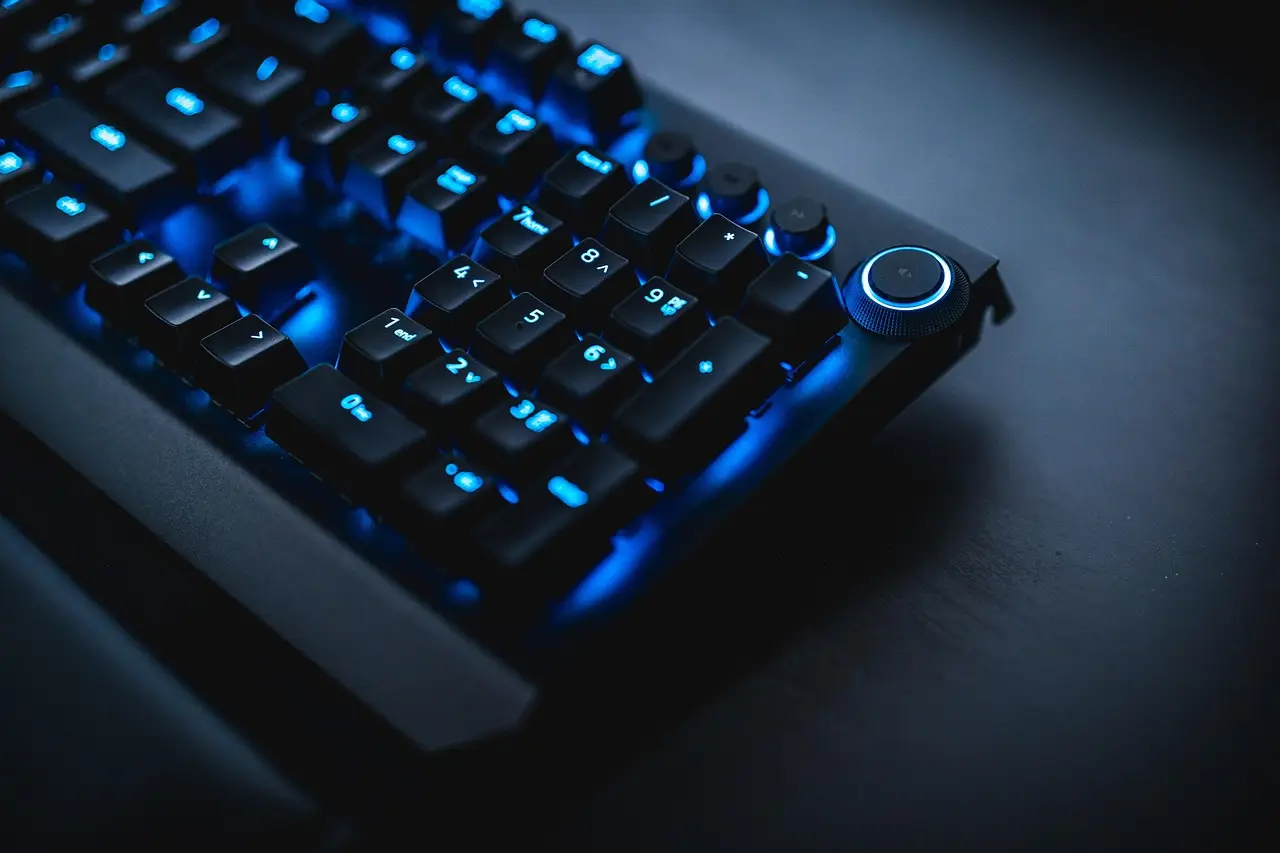
Researchers tested the method on a miniature keyboard-like platform with nine touch locations. One optical microresonator supplied both touch position and the distance the surface moved, replacing the nine-sensor array.
The tests also remained effective when optical measurements became noisier or contained fewer data points. Those conditions matter because practical sensing systems must tolerate imperfect signals without losing the ability to distinguish simultaneous changes.
The reported result is a controlled sensing demonstration. It does not establish a finished product or a commercial deployment.
Liao said further development could support compact, intelligent devices for robotic touch, environmental monitoring and biomedical sensing.
For health monitoring, Liao said measuring several related physiological changes together could provide a more complete picture than any single measurement alone.
How could the sensor improve security and health monitoring?
Cybersecurity is a proposed application, not part of the reported test. Co-author Hangyue Li suggested that a smartphone could recognize both an access code and a distinctive way of entering it.
Li said: “The pattern you type in — including how much pressure you apply on different numbers — that could increase the safety.”
That would use typing behavior as an additional authentication factor. The research presents the concept rather than a demonstrated phone product.
Potential applications identified by the researchers include:
- Robotic touch: Compact devices could sense multiple mechanical changes at once.
- Environmental monitoring: One optical element could support several simultaneous measurements.
- Biomedical sensing: Related physiological changes could be captured together.
- Health monitoring: Combined readings could provide a fuller picture than isolated measurements.
The AI for Health Institute at WashU provided partial support for the work.
If further development preserves the nine-location test’s performance with noisy, sparse measurements, the single-sensor architecture could compete with multi-sensor systems on device size and calibration burden. The paper sets no pricing, production volume or commercialization schedule.
source.washu.edu (Source)
More from Grace Kim
Show full bio
Market editor covering people, launches and day-to-day practice in Semiconductors, chip manufacturing, hardware, AI compute at Chip Dispatch.
1,213 articles