AI Chips Move Into Fusion Research at Great Sky
Great Sky's high-speed AI chips now analyze fusion plasmas, The Joplin Globe reports. No node, partner, or benchmark is disclosed, so the claim stays directional.
- By
- Sophie Lindqvist
- Filed
- Channel
- AI & Compute
- Read
- 3 min read
By Sophie Lindqvist
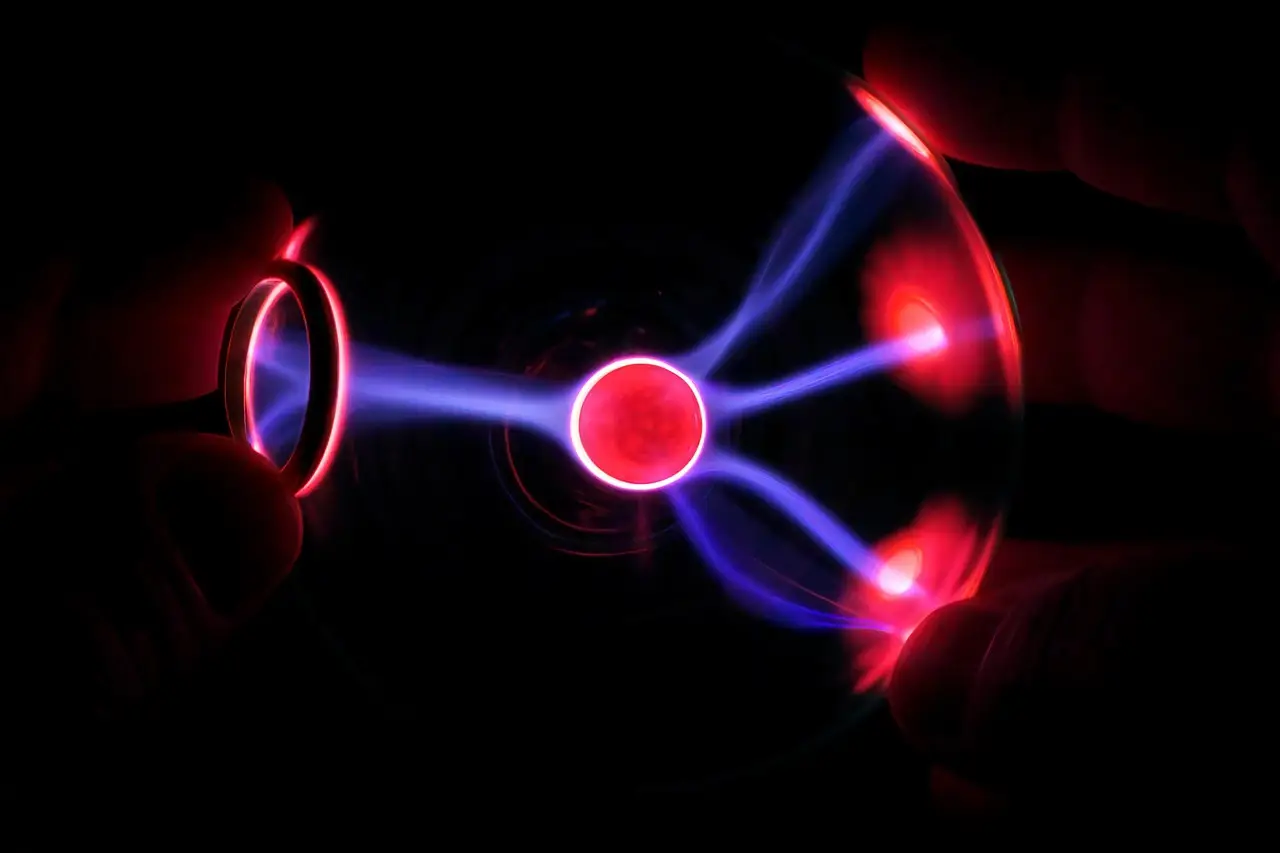
Great Sky has built high-speed AI chips that analyze fusion plasmas, according to a report from The Joplin Globe. That is the confirmed core of the story. Almost nothing else is.
The report names the company and the application. It does not name a process node. It does not state a wafer size. It offers no capacity figures, no deal value, and no shipment numbers. Readers should hold every claim that follows against that gap.
What do the chips actually do?
The chips process plasma data at high speed. Fusion reactors produce torrents of sensor output during each pulse. Magnetic confinement experiments generate measurements that must be parsed in real time. AI accelerators can shorten the loop between detection and response.
That is the engineering logic. The source does not specify which reactor, which diagnostic, or which data rates the silicon handles. The phrase "analyze fusion plasmas" covers a wide range of workloads, from anomaly detection to full equilibrium reconstruction. Without a named facility or benchmark, the claim remains directional rather than verified.
Who is Great Sky?
The Joplin Globe identifies the company only as Great Sky. The report does not describe its funding, its fab strategy, or its founding date. It does not say whether the company designs its own silicon or adapts existing hardware.
This matters for the semiconductor reader. A fabless startup buying merchant accelerators tells one story about the supply chain. A company taping out custom silicon tells another. The source is silent on both.
Why does fusion need custom AI hardware?
Plasma control is a latency problem. A disruption in a tokamak can develop in milliseconds. Conventional compute pipelines often batch the data and answer too late. Edge inference chips placed near the sensors can act within the pulse itself.
Several public research programs have pursued this path with commodity GPUs and FPGAs first. Custom silicon arrives only when the general-purpose parts fall short. The report gives no comparison figures, so the case for dedicated chips rests on inference, not on cited performance data.
What is not said?
The gaps deserve a list.
- No process node, die size, or power envelope appears in the report.
- No customer, laboratory, or reactor operator is named.
- No revenue, funding round, or unit economics are disclosed.
- No benchmark against existing GPU or FPGA pipelines is offered.
- No timeline for deployment or volume production is given.
Each omission is normal for an early-stage announcement. Each also limits what a buyer or investor can verify today.
What changes for the chip market?
Probably little, for now. Fusion research is a small market next to datacenter AI. The significance is architectural, not commercial. If plasma control becomes a proven niche for high-speed inference chips, it joins particle physics and radio astronomy as a scientific workload that pulls custom silicon forward.
Scientific buyers tolerate small volumes and long design cycles. Vendors that serve them often use the work to harden products for larger markets later. Whether Great Sky follows that path is unknown. The report does not say.
The Joplin Globe piece reads as a profile of a promising application, not as a product launch. Until the company publishes part numbers, partners, or performance data, the strongest fact on record remains the headline itself: high-speed AI chips, built by Great Sky, now analyze fusion plasmas.
Source: Google News: AI chips
More from Sophie Lindqvist
Show full bio
News editor covering money, funding and market shifts around Semiconductors, chip manufacturing, hardware, AI compute at Chip Dispatch.
631 articles
Related articles
great-sky-ai-chips-take-on-fusion-plasma-analysis-096ac665
Great Sky AI Chips Take On Fusion Plasma Analysis
google-s-first-suncatcher-satellite-reaches-orbit-to-test-ai-chips-in-space-8752a1fc
Google's First Suncatcher Satellite Reaches Orbit to Test AI Chips in Space
google-to-fly-ai-chips-in-orbit-under-project-suncatcher-7cc3be7b
Google to Fly AI Chips in Orbit Under Project Suncatcher
google-will-test-ai-chips-in-orbit-with-project-suncatcher-00c84a4f
Google Will Test AI Chips in Orbit With Project Suncatcher