Anthropic Eyes Samsung 2nm For First Custom AI Chip
SammyGuru reports Anthropic may be tapping Samsung's 2nm process for its first custom AI accelerator — a deal that, if confirmed, would give the Korean foundry a marquee AI customer at a node where it has yet to announce a public win.
- By
- Sophie Lindqvist
- Filed
- Channel
- AI & Compute
- Read
- 3 min read
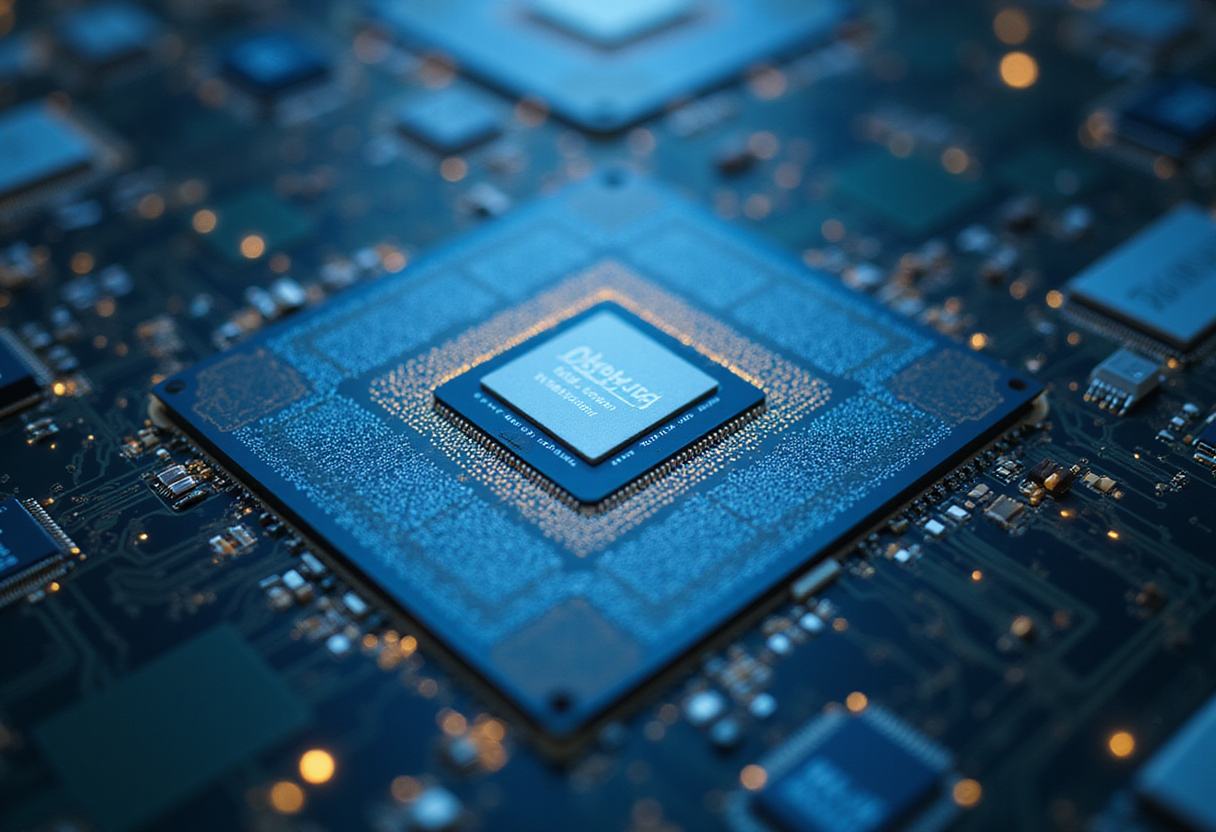
Anthropic, the AI lab behind the Claude model family, may have selected Samsung Foundry's 2nm process for its first custom accelerator chip, according to a report by SammyGuru that disclosed no underlying sources.
The headline-only report points to a potential foundry engagement at Samsung's most advanced logic node, a gate-all-around (GAA) process the Korean foundry began risk-producing in 2024 and has since worked to qualify for external customers. If confirmed, the engagement would publicly mark Anthropic's entry into a custom-silicon race that already includes Google with its TPU family, Amazon Web Services with Trainium and Inferentia, and Microsoft with its Maia accelerator.
What does Samsung's 2nm process offer an AI customer?
Samsung's 2nm node, marketed as SF2, is the company's first logic process to use a gate-all-around transistor architecture. Samsung demonstrated 2nm test wafers in 2022 and began risk production at its Hwaseong fab complex. The node competes directly with TSMC's N2, which the Taiwanese foundry has scheduled for volume production in 2025.
For AI workload customers, 2nm delivers:
- Higher transistor density than preceding 3nm nodes
- Improved performance per watt on dense matrix multiplications
- A second leading-edge foundry source for advanced AI silicon
Samsung has courted AI accelerator designers as anchor customers, in part to differentiate from TSMC and to fill capacity at Hwaseong and its planned Taylor, Texas facility.
Why would Anthropic go custom now?
Anthropic has not publicly announced a silicon program. Public reporting in early 2025 valued the company at roughly $61.5 billion post-money following a major funding round, and the company runs one of the largest inference workloads among independent AI labs.
Peer labs have already moved in this direction:
- Google: TPU program in production since 2015
- AWS: Trainium (2020) and Inferentia accelerators
- Microsoft: Maia 100 unveiled in late 2023
A custom chip would not replace Anthropic's reliance on Nvidia GPUs for training. Frontier training requires tightly coupled, high-bandwidth GPU clusters, and Nvidia's CUDA stack remains embedded in research workflows. Custom silicon typically targets inference — the higher-volume, lower-latency workload that dominates the cost of deployed AI services.
What shifts in the foundry supply picture?
A Samsung 2nm win would be commercially significant. Samsung's foundry division has posted multi-quarter losses through 2024, according to Reuters and other outlets, as the company struggled to win external customers at 3nm and below. A marquee AI lab would give Samsung a reference design for 2nm in a segment — AI accelerators — that has defaulted to TSMC.
The pattern would also extend the diversification of US-headquartered AI labs across foundries:
- Google has used both TSMC and Samsung for some TPU generations
- Apple splits A-series and M-series production between the two foundries
- Anthropic's reported move would add a third major US customer of that type for Samsung's 2nm
What remains unverified
SammyGuru's report carries no sourced comment from either company, no manufacturing timeline, no wafer volume, no pricing, and no indication of which design house — if any — has been engaged. Anthropic has historically declined to discuss its hardware roadmap. Samsung has not confirmed the customer.
Until either side acknowledges the engagement, the report reads as a directional signal rather than a confirmed foundry win, and the commercial picture will depend on whether 2nm volume at Hwaseong can land on a timeline that matches Anthropic's inference deployment schedule.
Source: Google News: AI chips
More from Sophie Lindqvist
Related articles
samsung-foundry-bets-on-ai-chips-to-close-gap-with-tsmc-84321559
Samsung Foundry Bets on AI Chips to Close Gap With TSMC
ai-demand-drives-foundry-2-0-revenue-up-25-tsmc-extends-lead-9ef7552a
AI Demand Drives Foundry 2.0 Revenue Up 25%, TSMC Extends Lead
tsmc-capacity-crunch-opens-door-for-samsung-foundry-b52a49ba
TSMC Capacity Crunch Opens Door for Samsung Foundry
south-korea-commits-576-billion-to-ai-chip-production-12d0fc8c
South Korea Commits $576 Billion to AI Chip Production