Apple Brings CMF 2026 Color Accuracy to Its First Laptop
Apple’s $2,900 MacBook Pro is the first laptop with CMF 2026, adding P3, Adobe RGB, 2,000-nit output and calibration to a portable OLED touchscreen display.
- By
- Rebecca Stone
- Filed
- Channel
- Consumer Tech
- Read
- 4 min read
By Rebecca Stone
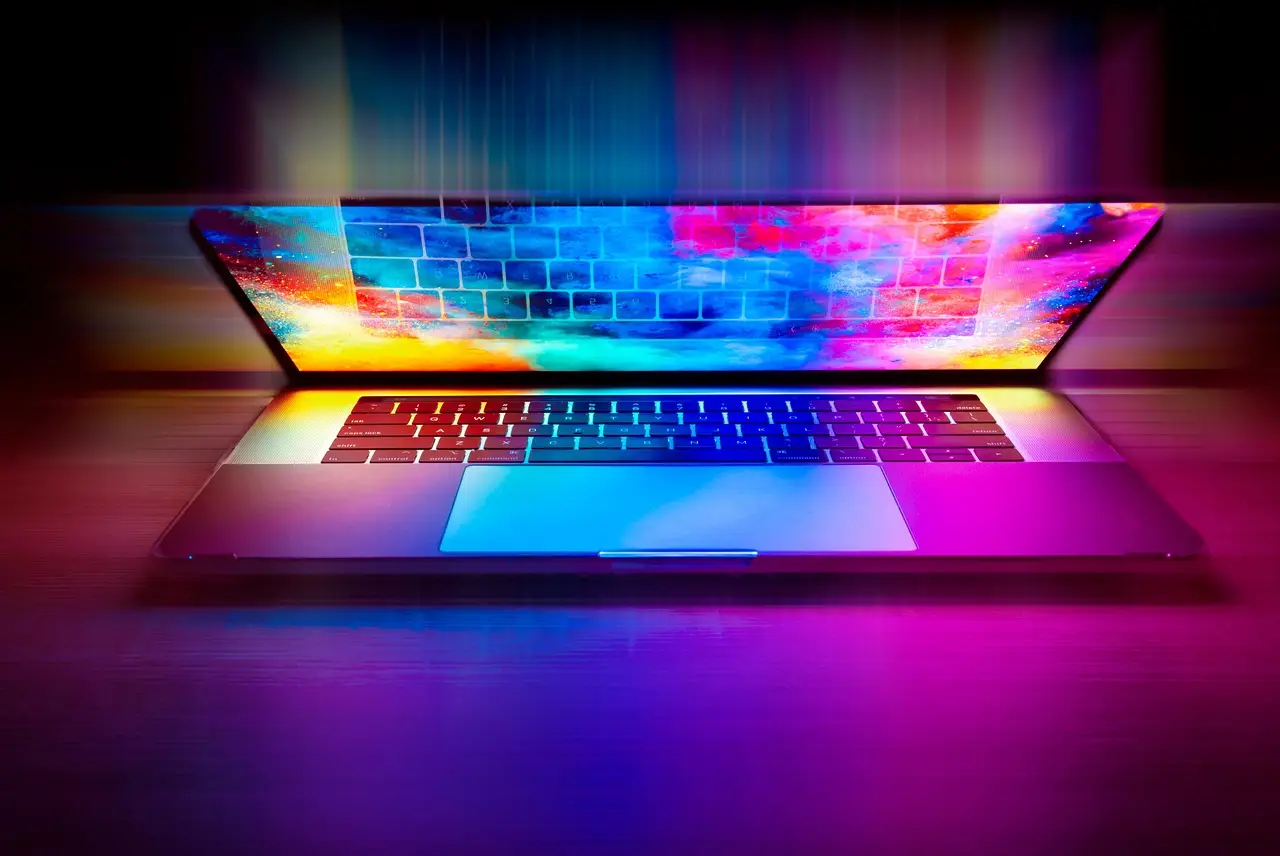
At $2,900, Apple’s new MacBook Pro with PROLED XDR Display is the first laptop—and only the second product overall—to support Apple CMF 2026 color modes, putting P3 and Adobe RGB reference modes on a portable OLED touchscreen.
The new MacBook Pro also brings two firsts for Apple laptops: an OLED display and touchscreen functionality. The more consequential change for color professionals is the color-matching system beneath the panel, designed to preserve an agreed image across different display technologies and different viewers.
Writing as an image-accuracy enthusiast, trained calibrator and display expert, Rebecca Stone said: “Apple CMF 2026 addresses that, so that displays look the same regardless of the technology they use.” Stone also judged that the approach could be the future for displays.
What does CMF 2026 change?
Color-matching functions, or CMFs, mathematically represent how people perceive color, and several variations exist. The specification that has anchored calibration for nearly a century is CIE 1931, established in 1931 by the Commission Internationale de l’Éclairage, or International Commission on Illumination. Most reference modes on the new MacBook still use CIE 1931.
Display technology developed over the past 20 years has exposed the standard’s limits. OLED, LEDs with KSF phosphors and quantum dots use ultra-narrow-band spectra. Even at the same D65 white point, the same image on an OLED and a quantum-dot LED can look identical to one person but different to another.
Those differences reflect small biological variations, including the sensitivity of the cones that enable color vision, which can change with age. CIE 1931 does not properly account for those differences and was created using only 17 test subjects.
That limitation matters when content must retain the same appearance regardless of the screen technology or the person watching it. CMF 2026 targets that problem directly. The laptop does not force users into the new system, but it makes the new system available on a portable device.
Why does portability matter?
Apple first included CMF 2026 on the Studio Display XDR. Stone reviewed that monitor earlier in the year and found it excellent, though expensive, for color professionals because it combined CMF 2026 with reference color modes. The standalone Studio Display XDR costs $3,300.
Moving that capability from a desk-bound monitor to a laptop gives color professionals access while traveling, shooting on location or working away from a fixed editing station. It also expands the potential user base beyond buyers of Apple’s professional external display.
The laptop changes the equation. A reference workflow that previously required a $3,300 monitor can now travel with the machine handling the work.
What can the MacBook display?
The PROLED XDR panel exposes two Apple CMF 2026 reference modes:
- P3 color primaries.
- A mode combining P3 and Adobe RGB color primaries for greater flexibility.
Peak brightness reaches 2,000 nits with both HDR and SDR content. By comparison, the Studio Display XDR reaches a peak SDR luminance of 1,000 nits. True Tone automatically adjusts HDR tone mapping, brightness and white point according to ambient lighting, while an option in Displays preferences lets users disable it.
Apple CMF 2026 remains optional. The MacBook includes 14 additional reference modes based on the CIE 1931 color space, including DICOM for medical imaging. That medical reference mode serves a specialized purpose, while the broader legacy set retains compatibility with established workflows.
How precisely can users calibrate it?
The MacBook supports the Apple Pro Display Calibrator, which can adjust the reference color modes or a custom mode. Three calibration routes are available:
- A full calibration.
- Fine-tuning a calibration with the appropriate measurement equipment.
- Visual fine-tuning of the display.
That range gives professional users both instrument-based control and a less demanding visual option. It also extends Apple’s own reference-display system into the same portable form as the computer.
Will CIE adopt the approach?
Apple is currently working with a CIE technical committee on a proposed standard based on CMF 2026. It remains a proposal, not a published CIE standard. The effort matters because color science and display technology have advanced substantially since CIE 1931 established the original color space.
The commercial logic favors the laptop. “More people are buying a touchscreen MacBook, even at $2,900, than a $3,300 professional monitor,” Stone said. The $900 gap gives the portable system a price advantage over the Studio Display XDR while making calibrated reference modes available to a broader group of color professionals.
The next test is whether Apple’s CIE proposal gains enough support to make CMF 2026 a cross-vendor standard rather than an Apple-specific advantage; the price gap between the two products gives the portable workflow a clear commercial lead in the meantime.
Source: The Verge: Tech
More from Rebecca Stone
Show full bio
Correspondent covering technology and product news in Semiconductors, chip manufacturing, hardware, AI compute at Chip Dispatch.
726 articles
Related articles
apple-s-first-touchscreen-macbook-pro-starts-at-2-899
Apple's First Touchscreen MacBook Pro Starts at $2,899
apples-october-event-could-bring-touch-oled-and-m6-macs
Apple’s October event could bring touch, OLED and M6 Macs
apple-sets-event-m6-silicon-and-oled-macs-take-the-stage-7791ffdc
Apple Sets October 28 Event, M6 Silicon and OLED Macs Take the Stage
apple-ships-touchscreen-macbook-pro-with-oled-and-a-5-799-problem
Apple Ships Touchscreen MacBook Pro With OLED, and a $5,799 Problem