AST SpaceMobile Revenue Up 187% to $42.3M, 45 Satellites Targeted by Mid-2027
AST SpaceMobile's Q3 revenue rose 187% to $42.3 million on gateway deliveries and US government milestones, with 45 satellites targeted in orbit by mid-2027.
- By
- Tom Whitfield
- Filed
- Channel
- Tech Business
- Read
- 4 min read
AST SpaceMobile reported third-quarter revenue of $42.3 million, up 187% from $14.7 million a year earlier and 34% above the second quarter's $31.5 million, on gateway deliveries and milestones under US government contracts. The satellite-to-smartphone operator kept its full-year 2026 revenue guidance of $150 million to $200 million and held roughly $3.2 billion in cash and restricted cash at September 30.
The company attributed the growth to hardware shipments and government work rather than consumer service. Engineering services costs rose to $95.8 million from $40.8 million a year earlier, reflecting the build-out of the constellation and its supporting ground infrastructure.
What did the quarter deliver?
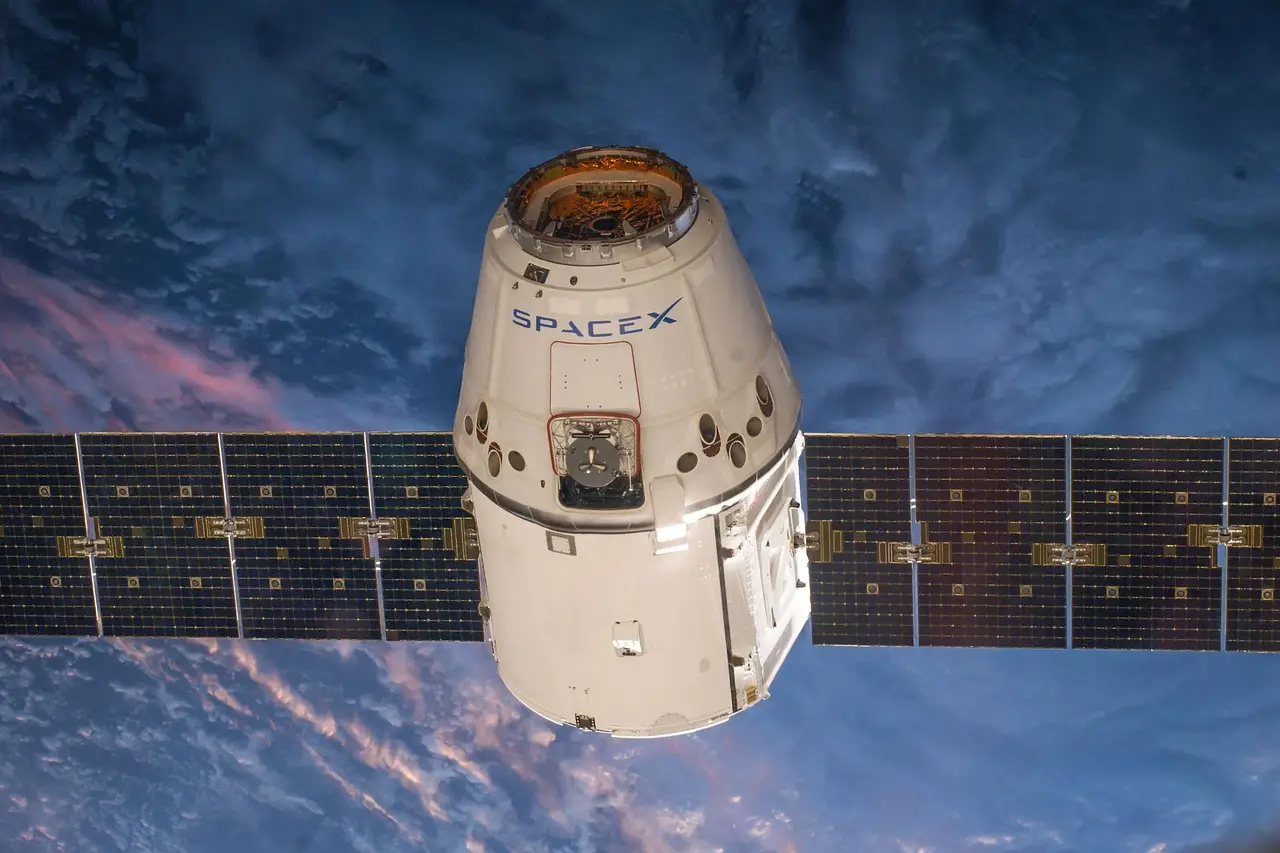
Twelve BlueBird satellites now operate in orbit. The investor presentation lists BlueBirds 1 through 6 and 8 through 13 as unfolded and operating, with BlueBirds 11, 12 and 13 having launched before the August update. No new satellites reached orbit during the quarter itself.
The next batch is already staged. BlueBirds 14, 15 and 16 shipped to Cape Canaveral in September and await a confirmed SpaceX launch date. The company targets about 45 BlueBirds in orbit by mid-2027 and says its launch agreements now cover more than 100 satellites deployed across 2027 and 2028.
How fast can production scale?
Production now runs through BlueBird 51 at two Texas factories. The company pulled forward its custom ASIC chip — which it says delivers ten times the processing bandwidth of its in-orbit Block 1 satellites — to BlueBird 34, from an earlier plan of BlueBird 50.
Chairman and Chief Executive Abel Avellan set a clear production marker: "We expect to achieve a production rate of six ASIC satellites per month in December of this year."
The launch cadence is tight and specific:
- BlueBirds 17 to 19 ship by end of November for a Blue Origin launch expected early in the first quarter of 2027.
- BlueBirds 20 to 25 ship in December and January for first-quarter 2027 launches under a US Defense Priorities and Allocations System (DPAS) rating.
- From late 2028, the company plans to fly BlueBirds on Blacklift, its own 20-ton reusable rocket using Miranda and Vira engines licensed from Firefly Aerospace, announced November 6.
What do the losses and cash position show?
Total operating expenses fell to $211.0 million from $329.1 million in the second quarter, which had included a $125.9 million loss on involuntary conversion. The net loss attributable to common stockholders was $132.4 million, or $0.44 a share, against $122.9 million, or $0.45 a share, a year earlier.
Cash, cash equivalents and restricted cash rose to about $3.2 billion from roughly $2.7 billion at the end of June, after a $1.15 billion convertible note sale in July. Long-term debt climbed to $4.08 billion from $2.21 billion at the end of 2025. Capital spending on property and equipment reached $1.15 billion in the first nine months.
Funding continues to arrive from outside the equity markets. The company cited about $1 billion of non-dilutive funding from Japan's Ministry of Internal Affairs and Communications for the J-LEO constellation with partner Rakuten, plus a pipeline of roughly $1.2 billion in US quasi-government financing for 2027. It also won a US Space Force contract for space-based sensing worth about $100 million in revenue — its 16th US government award.
Can the company hit its 2026 guidance?
The arithmetic is demanding. By MLQ's calculation, reaching the low end of the $150 million to $200 million guidance would require about $61 million in fourth-quarter revenue, after $88.6 million in the first nine months.
Service revenue, not hardware, would need to carry that load. The company expects to switch on intermittent nationwide service in the United States and other key markets before the end of 2026, starting with partners in the US, Canada, Japan, Saudi Arabia and the UK.
The bet now rests on execution: six ASIC satellites a month from December, launches every few weeks through early 2027, and service revenue arriving fast enough to close a fourth-quarter gap of at least $61 million.
Source: mlq.ai
More from Tom Whitfield
Show full bio
Staff writer covering companies, deals and strategy in Semiconductors, chip manufacturing, hardware, AI compute at Chip Dispatch.
787 articles
Related articles
samsung-guides-to-76b-q3-operating-profit-1-6x-tsmc-s-revenue-9d201d7a
Samsung Guides to $76B Q3 Operating Profit, 1.6x TSMC's Revenue
qualcomm-forecasts-15-billion-data-center-business
Qualcomm Forecasts $15 Billion Data Center Business by 2029
via-lifts-outlook-as-quarterly-revenue-reaches-143-5m
Via lifts 2026 outlook as quarterly revenue reaches $143.5M
tsmc-posts-t-511-86-billion-september-revenue-t-1-49-trillion-q3-4f982a2d
TSMC Posts T$511.86 Billion September Revenue, T$1.49 Trillion Q3