Aurender's $4,700 Network Hub Adds Filtering, Not 10GbE
Aurender's $4,700 NH10 has eight Gigabit ports, two SFP slots and seven-stage filtering on four copper ports, but no 10GbE or credible audible sonic benefit.
- By
- Nathan Brooks
- Filed
- Channel
- Consumer Tech
- Read
- 3 min read
By Nathan Brooks
The Aurender NH10 Network Hub carries a $4,700 asking price and eight Gigabit Ethernet ports, including two SFP slots, but it offers no 10GbE path.
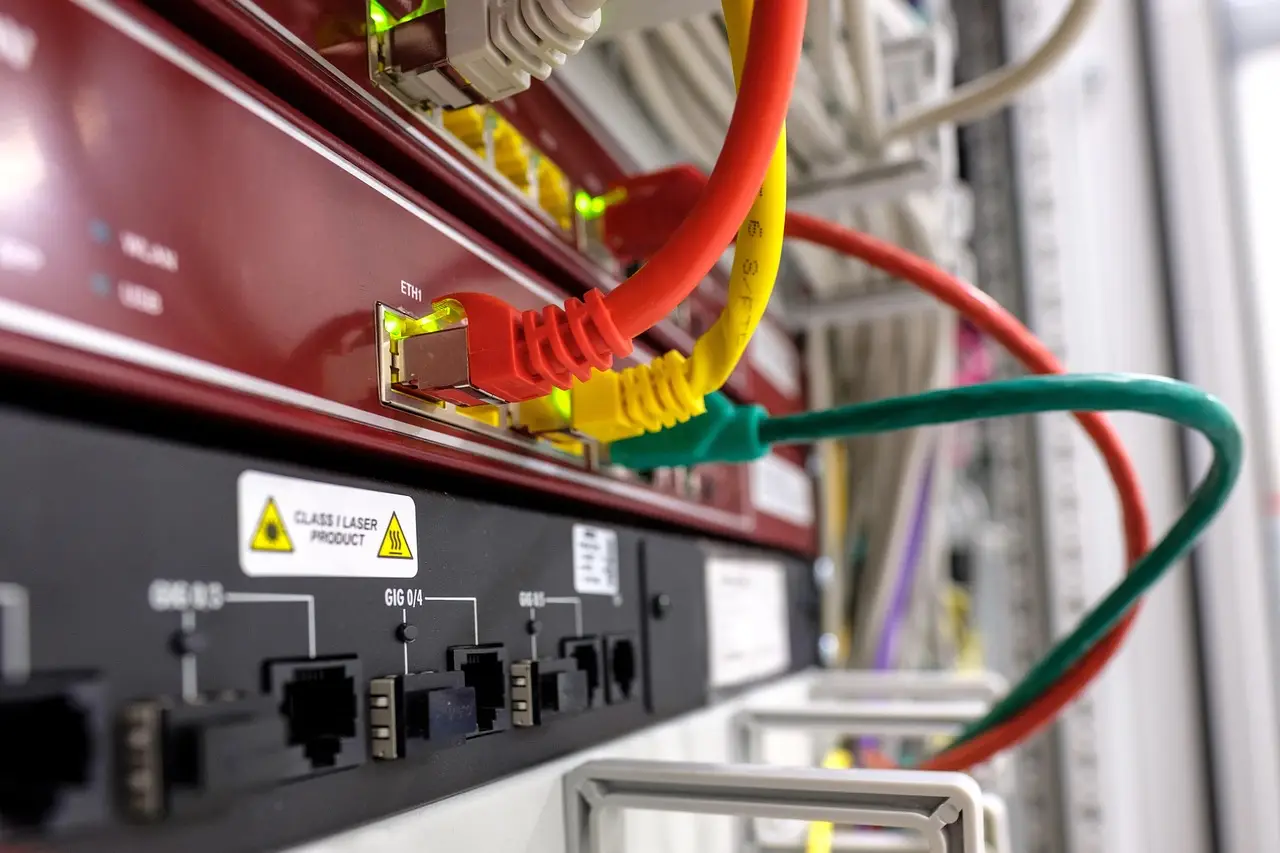
Aurender markets the NH10 as audiophile-grade networking, promising a noise-free experience and music with “emotional impact.” Although billed as a hub, the device is effectively a network switch, with six copper Ethernet ports and two SFP ports for optional fiber or copper transceivers.
Aurender's product page says fiber connections provide electrical isolation. That feature arrives at a steep premium: the $4,700 machine still cannot exceed Gigabit Ethernet speeds. The filtering hardware adds circuitry, not throughput.
What does the $4,700 buy?
Four of the six copper ports have seven electrical filtering stages in total behind them, while the remaining pair has two stages each. Aurender's headline count of seven isolation stages therefore does not describe all six copper connections in the same way.
Aurender's designer said the team experimented with designs using more than 10 stages before settling on seven “from listening comparisons.” The Ethernet standard already requires electrical isolation for standard twisted-pair connections, so the added filtering sits above a baseline the specification already requires.
Aurender also says an FPGA controls an oven-controlled crystal oscillator, or OXCO, for clock synchronization. A BNC input at the rear accepts an external clock source.
The clock arrangement addresses synchronization between devices rather than packet integrity or the analog output stage. Those concerns overlap in a recording studio, but that overlap does not make network filtering a cure for playback noise.
A board photograph appears to show a Realtek RT8370N switch controller, an MV85 oscillator and an AMD/Xilinx Spartan-6 FPGA. LCSC lists the controller at $5.50, eBay prices the oscillator at $39, and the FPGA at $8 to $15 depending on the model.
Those retail listings are not a bill of materials. They do expose the scale of the premium: manufacturing and material costs add more than chip prices, but Tom's Hardware contributing writer Bruno Ferreira doubts they come anywhere near the $4,700 asking price.
Can a network switch improve the sound?
Ferreira gives the hardware a blunt verdict: “the hardware here cannot, by any reasonable definition, make any difference to the sound.” His argument rests on protections already present in the data path.
Ferreira notes that TCP connections include built-in error correction, while Ethernet adds Cyclic Redundancy Check and several similar layers before data becomes an analog signal. A network switch forwards protected data; it does not clean the output of the downstream digital-to-analog converter.
Electrical isolation belongs at the actual DAC output stage in playback equipment, according to Ferreira, rather than at the network switch. Even affordable audio interfaces have signal-to-noise ratios that make the network-stage filtering claim hard to sustain.
Jitter is the audiophile claim with a real foundation but little relevance here, Ferreira argues. Recording studios sometimes need synchronized clocks across several pieces of equipment. For one playback device, however, he considers network-level jitter discussion pointless.
Will the premium survive?
Ferreira also points to studios using one ordinary Ethernet cable to carry four balanced analog lines. His broader point is that elaborate network filtering does not address the noise and timing problems encountered in the analog output stage.
The NH10 therefore differentiates its bill of materials rather than its throughput. At $4,700, buyers receive eight Gigabit ports, two SFP options and seven-stage filtering on four copper ports, but no faster network path.
The next competitive test for Aurender is straightforward: add 10GbE or lower the $4,700 price. Until then, the NH10 sells elaborate filtering around a $5.50 switch controller, not a faster network.
Source: Tom's Hardware
More from Nathan Brooks
Show full bio
Senior reporter covering people, launches and day-to-day practice in Semiconductors, chip manufacturing, hardware, AI compute at Chip Dispatch.
740 articles
Related articles
co-packaged-optics-bottleneck-shifts-from-architecture-to-manufacturing-f1c530db
Co-Packaged Optics Bottleneck Shifts From Architecture to Manufacturing
nxp-puts-10base-t1s-phy-onto-cortex-m33-microcontroller-43b22b61
NXP Puts 10BASE-T1S PHY Onto Cortex-M33 Microcontroller
nvidia-overtakes-cisco-and-arista-in-datacenter-ethernet-switches-4cbd4e88
Nvidia Overtakes Cisco and Arista in Datacenter Ethernet Switches
nvidia-pulled-25-74-billion-from-infiniband-in-year-ended-july-b214933f
Nvidia Pulled $25.74 Billion From InfiniBand In Year Ended July