Drones Flown Inside 10 Tornadoes Collect Data No Ground Sensor Ever Has
The OTUS Project flew 3D-printed drones into 10 tornadoes across 13 intercepts, collecting thermodynamic data no ground sensor system has ever captured, with NIST-built 3D wind sensors.
- By
- Rebecca Stone
- Filed
- Channel
- Science & Technology
- Read
- 4 min read
A small team has flown drones directly into 10 tornadoes, completing 13 intercepts and gathering thermodynamic data from inside funnels rotating at speeds that can exceed 300 mph — measurements no ground-based sensor system has ever captured.
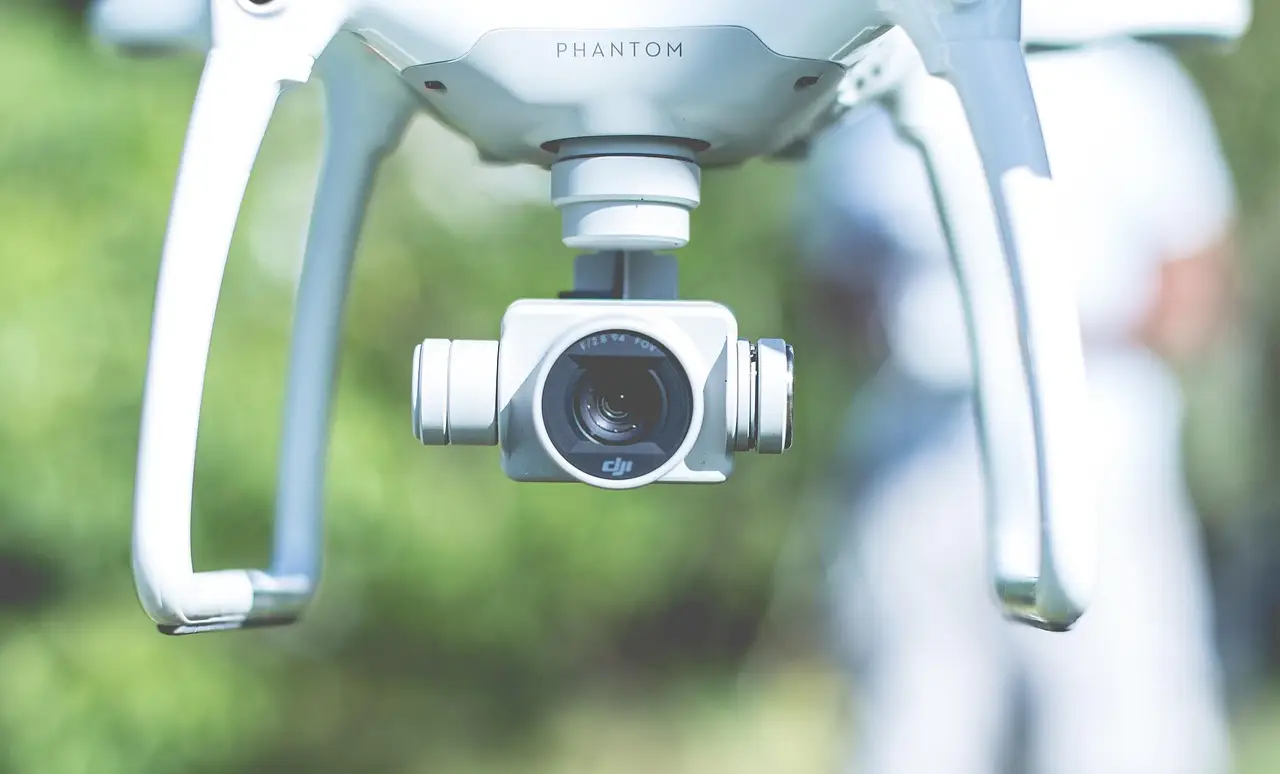
The OTUS Project (Observations of Tornadoes by UAV Systems) builds 3D-printed, hand-built UAVs engineered to survive the violent interior of a tornado. Each carries thermodynamic sensors, flight telemetry, and custom weather instrumentation that logs temperature, humidity, pressure, and wind speed from the air around the funnel before the aircraft pushes through it. Less than three months after the project's founding, its first drone flew inside a tornado.
According to NOAA's National Severe Storms Laboratory, much about tornadoes remains unknown. Contrary to popular belief, they're rare, hard to predict, and capable of causing billions of dollars in damage. OTUS aims to narrow that knowledge gap by merging storm science, drone engineering, and documentary filmmaking.
Who flies into a funnel?
Four people founded the effort. Nelson Tucker, a meteorology student at Millersville University and researcher with Tornado Talk, serves as president and brings a long-standing obsession with severe weather. Louis Tucker is CEO and lead pilot — and the 2023 National Collegiate Drone Racing Champion, who also helped lead his school to a first-place finish in 2024. The project credits him with proving that drone-based tornado research was feasible once the engineering caught up.
Tanner Beard, an aerospace and spacecraft systems engineer, designed the custom drone architecture. Erik Fox — a retired Army veteran, meteorologist, storm chaser, and president of the National Storm Chaser Summit — handles safety and field operations. The team's stated mission, per its website: "protect lives and property by enhancing structural resilience, through wind & thermodynamic data collection that improves predictive models & hazard forecasting."
What makes the sensors special?
The instrumentation is the hard part. A typical monitoring setup can't collect useful data in a tornado's extraordinarily dynamic environment, especially from a high-speed drone.
"The thermodynamic response times needed are so great that only specialized sensors are able to keep up," the team writes. "In addition, these sensors have to be simultaneously shielded from the degrading conditions while being sufficiently exposed and uncontaminated to measure them."
So OTUS built its own hardware, partnering with the National Institute of Standards and Technology (NIST) to develop a lightweight vertical wind-speed sensor. It measures thermodynamic conditions and 3D wind loads near the surface around tornadoes. No sensor on the market could measure such intense winds at a weight a drone can carry, the team says, so most of its development effort went into the 3D wind sensor.
The flight method is deliberate. The drone first flies orbital circles around the tornado, collecting atmospheric data at multiple altitudes. Then it passes through the funnel itself, producing a comprehensive picture of air behavior both inside and outside the vortex.
What stands in the way?
Regulation, for one. FAA rules require visual line of sight, operation below 400 feet in uncontrolled airspace, and waivers for flying over people, night operations, or beyond visual range — waivers that take time, and stack up fast when extreme weather enters the picture.
Pilot skill is the other barrier. Louis Tucker has flown into tornado rotation more than a dozen times, something few pilots alive could do.
When will the data surface?
"We have collected incredible measurements that we are very eager to share with the wider world. It will likely be months before we can share this," the team stated. "Science, specifically for the benefit and safety of all people threatened by tornadoes, is what we exist for. We were founded with the goal of gathering measurements that will bring about real-world change, and that requires immense effort."
The team frames the intercepts as a stepping stone toward better forecasting and longer alert times, plus next-generation wind sensors. "We are still early on in our path to forwarding our understanding of tornado hazards, and we believe the future is bright," the statement continues. "Once we have proven the scientific credibility and accuracy of our data, we will have many exciting things to share."
With the data pipeline established and NIST-backed sensors flying, the next question is whether those months of validation will translate into measurably longer tornado warnings.
Original: theotusproject.com
More from Rebecca Stone
Show full bio
Correspondent covering technology and product news in Semiconductors, chip manufacturing, hardware, AI compute at Chip Dispatch.
726 articles
Related articles
three-schoolboys-build-130-raspberry-pi-underwater-camera-5af98430
Three Schoolboys Build £130 Raspberry Pi Underwater Camera
cadence-says-30-of-chips-in-design-use-ai-agents-launches-maestro-with-nvidia
Cadence Says 30% of Chips in Design Use AI Agents, Launches Maestro With Nvidia
google-s-ai-chips-reach-orbit-as-mvp-satellite-launches-525a0bda
Google's AI Chips Reach Orbit as MVP Satellite Launches
broadcom-ceo-many-ai-investors-have-no-clue-boom-like-a-casino-ce480070
Broadcom CEO: Many AI Investors Have 'No Clue,' Boom Like a Casino