Google's Trillium TPUs Reach Orbit in Space Data Center Bet
Four Google Trillium TPUs reached orbit October 1 on a Falcon 9 under Project Suncatcher. Scaling to a space data center needs 370,000 tons of payload and an 18x launch-cost cut.
- By
- Tom Whitfield
- Filed
- Channel
- AI & Compute
- Read
- 4 min read
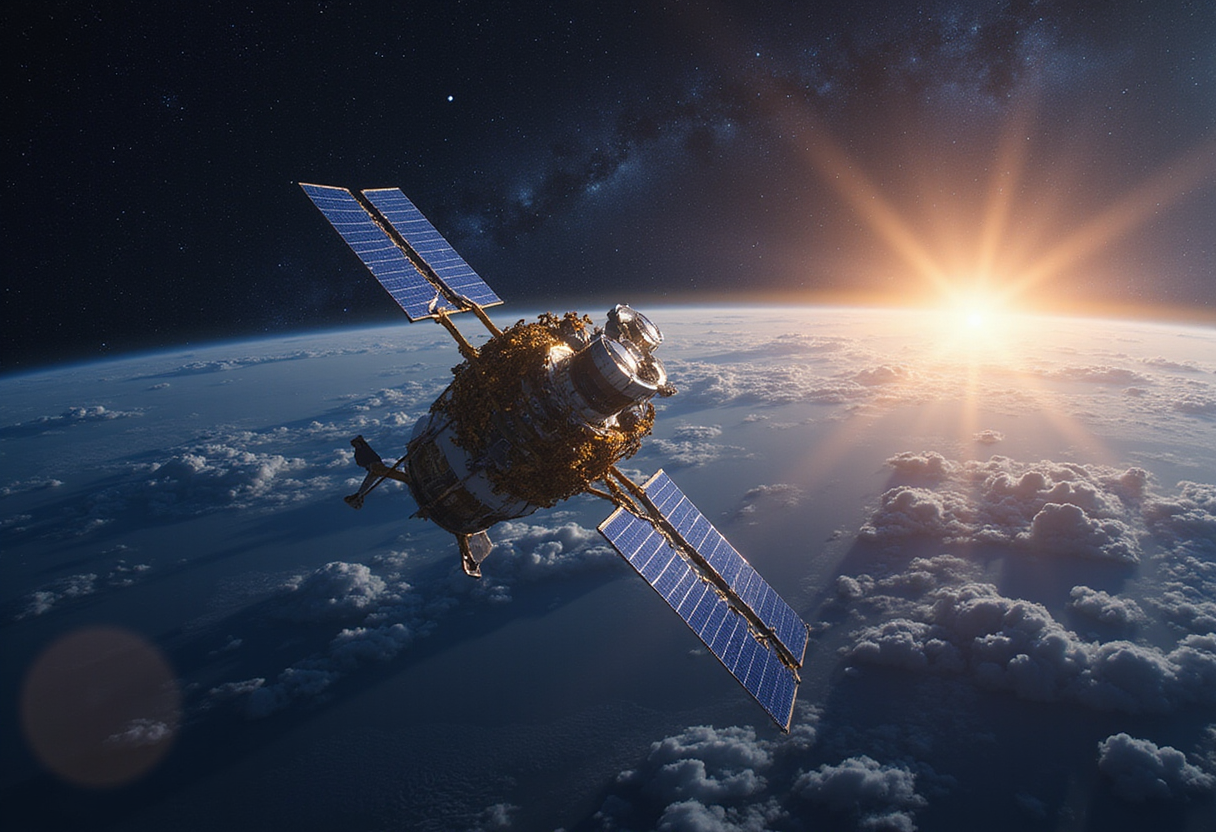
Four Google Trillium TPUs reached low Earth orbit on October 1, 2026, aboard a SpaceX Falcon 9 — the first concrete test of whether the company's AI silicon can survive and compute in space, and the opening move in what Google itself calls a "long-term research moonshot."
The prototype satellite, part of Google's Project Suncatcher, carries the chips that power Google's AI infrastructure on the ground. The immediate engineering questions are blunt: can TPUs tolerate launch vibrations, radiation, and extreme thermal swings while still doing useful inference or training work? Google and satellite developer Planet plan a second step in 2027, launching two purpose-built satellites to test high-bandwidth optical communication between orbiting machines.
The prize behind the experiment is energy. AI data centers consume enormous amounts of electricity and cooling, and grid constraints have become a real bottleneck for capacity expansion. Google's researchers estimate that appropriately positioned solar panels in orbit could generate up to eight times more power than the same hardware on Earth, while the vacuum of space eliminates conventional air-based cooling entirely.
What would an orbital data center actually look like?
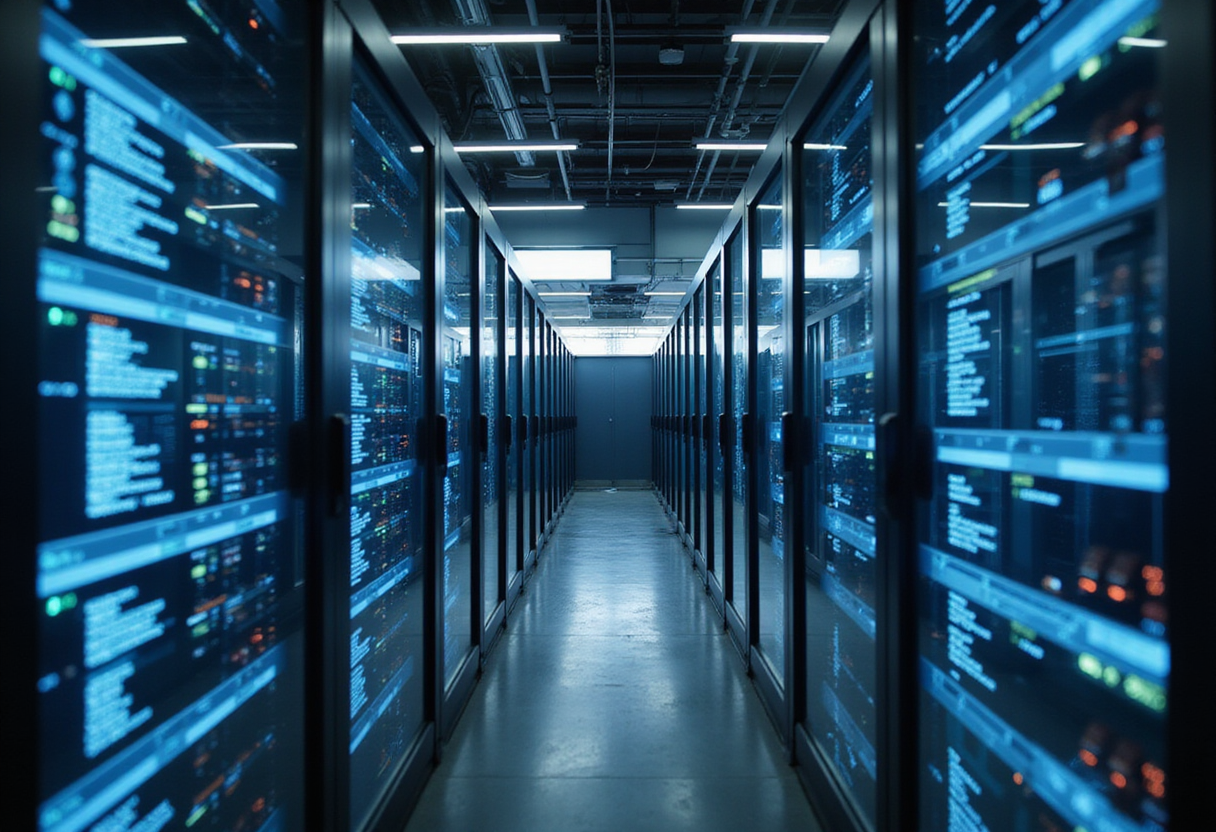
Google's architecture calls for clusters of satellites carrying many TPUs. One proposed configuration uses 81 satellites flying within roughly a one-kilometer radius, linked by the optical intersatellite links the 2027 mission is designed to validate.
That is the easy part. The mass budget is not.
According to TechCrunch, reaching the required compute scale would demand 370,000 tons of payload sent to orbit. If SpaceX's Starship eventually delivers its targeted 200 metric tons per launch, the arithmetic works out to 1,850 launches over ten years — 185 flights per year. Starship has never flown more than five times in a single year to date.
Can launch costs fall far enough, fast enough?
The economics are even harsher than the flight rate. Sending one kilogram of hardware to low Earth orbit currently costs around $3,600. For space-based compute to become roughly comparable with terrestrial data-center power costs, Google calculates that figure must fall to $200 per kilogram — an 18x reduction. Google's own estimate puts that price point no earlier than the mid-2030s.
Competition may compress that timeline. The orbital data-center field is already crowded with well-funded players:
- Blue Origin has filed plans for up to 51,600 orbital data-center satellites under Project Sunrise.
- Starcloud is working toward as many as 88,000 satellites and has already demonstrated an Nvidia H100 GPU operating in orbit.
- Axiom Space is pursuing orbital data centers and says its technology is scaling from kilowatts toward megawatts.
Multiple competing constellations would create sustained demand for heavy-lift launch capacity, which historically has been the mechanism that drives per-kilogram prices down. Whether Starship, New Glenn derivatives, or other vehicles capture that demand, the direction of travel matters more than any single provider.
Radiation, thermal cycling, and the engineering unknowns
Surviving launch is only the first hurdle. Trillium TPUs were designed for chilled, serviced, terrestrial halls. In orbit they face ionizing radiation that can flip bits and degrade silicon, thermal cycling between sun and shadow, and no possibility of hardware repair. The Suncatcher prototype's core job is to measure how the chips behave under those conditions over time — data no ground-based qualification can fully substitute for.
The optical link tests planned for 2027 address the second constraint: a distributed TPU cluster only works if satellite-to-satellite bandwidth approaches the interconnect speeds inside a single data center. High-bandwidth optical crosslinks are the prerequisite for treating 81 separate spacecraft as one machine.
Why it matters for the semiconductor industry
For chipmakers and hyperscalers, Suncatcher is a demand signal rather than a near-term product. If orbital compute becomes viable even at the margins, it would create a new class of radiation-tolerant, high-reliability accelerator orders — and shift part of the AI infrastructure buildout from power-constrained terrestrial grids to launch-constrained space logistics.
The near-term watch items are concrete: results from the Trillium payload on vibration, radiation, and thermal performance; the 2027 optical link demonstration with Planet; and Starship's flight cadence, which must climb from single digits per year toward the hundreds before any 370,000-ton constellation becomes physically launchable.
Google frames all of this honestly as a moonshot. The technical experiments are moving forward; the proof that the economics work — $200-per-kilogram launch costs that Google does not expect before the mid-2030s — remains the gating factor between four TPUs in orbit and a genuine space data center industry.
Original: nexos.ai
More from Tom Whitfield
Show full bio
Staff writer covering consumer brands and retail at Chip Dispatch.
269 articles
Related articles
google-launches-first-tpu-test-satellite-for-orbital-data-centers-92903fa9
Google Launches First TPU Test Satellite for Orbital Data Centers
google-flies-ai-chips-to-orbit-to-test-space-data-centers-3fe33f5d
Google Flies AI Chips to Orbit to Test Space Data Centers
google-s-project-suncatcher-satellite-reaches-orbit-with-trillium-tpus-8e8a0b66
Google's Project Suncatcher Satellite Reaches Orbit with Trillium TPUs
google-testing-ai-chips-for-possible-data-centers-in-space-fef003bc
Google Testing AI Chips for Possible Data Centers in Space