Memory & Storage · 3 min read
Huawei's 4,096-Pin Custom HBM Targets Samsung's Memory Grip
Huawei's ISSCC 2027 paper describes a 4,096-DQ custom HBM with 5-layer wafer-on-wafer hybrid bonding, doubling pin density versus Korean HBM — but no capacity, speeds or shipping date.
Key takeaways
- Huawei's ISSCC 2027 paper 22.6, scheduled Feb. 16, describes a 64-channel custom HBM with 4,096 data pins.
- Bloomberg reports the design doubles data-pin density versus Samsung and SK Hynix mass-produced HBM.
- Samsung presents a 48GB HBM4E at 17Gb/s per pin in the same ISSCC session, 25 minutes earlier.
- The Information reports the Ascend 960DT will rely largely on Samsung and SK Hynix memory; SK Hynix has not supplied Huawei since 2020.
- UBS expects Chinese suppliers to hold 88% of China's AI processor market by 2028.
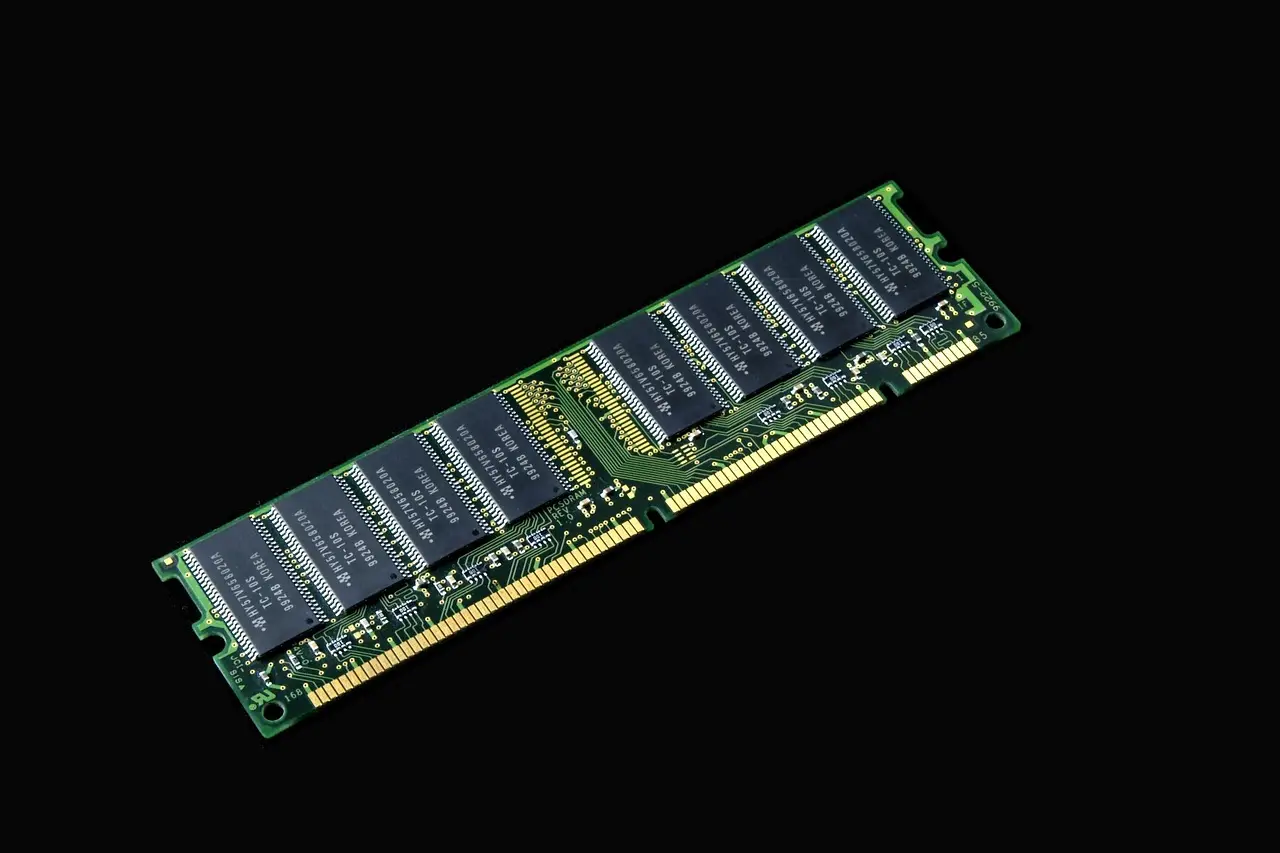
Huawei will present a custom HBM chip with 4,096 data pins at ISSCC 2027, a design Bloomberg reports doubles the data-pin density of the memory Samsung and SK Hynix mass produce. Seven authors from Huawei Technologies in Shenzhen are listed on paper 22.6, scheduled for 4:00 p.m. on Tuesday, Feb. 16, at the San Francisco conference [2]. The advance program describes "A 64-Channel 4096-DQ Custom HBM with Memory Controllers and 5-Layer Wafer-on-Wafer Hybrid Bonding" [2].
The evidence, it bears repeating, is a paper title. The listing discloses no capacity, no per-pin speed and no production timeline. Huawei's next flagship AI accelerator, the Ascend 960DT, is still expected to run largely on Korean memory, according to The Information [4].
What does the paper title actually say?
DQ refers to the data input/output pins. The title therefore describes a 4,096-pin data interface split across 64 channels [2]. Two further details sit in the title itself. The design places memory controllers inside the custom HBM stack, and it joins five wafer layers with wafer-on-wafer hybrid bonding, a technique that bonds copper directly rather than relying on solder bumps [2][3].
China's IT Home first reported Huawei's ISSCC listings from the Nov. 23 draft agenda, and noted the specifications must be confirmed in the final paper and presentation [3]. Caution is warranted. ISSCC papers report measured silicon; acceptance does not mean a product is in production.
The conference context is instructive. In the very same session, Samsung is scheduled 25 minutes earlier to present a 48GB HBM4E running at 17Gb/s per pin [2]. Huawei will share a stage with the incumbent, at least on the program. The pin count is the headline; the throughput per pin is the number that would settle the comparison, and it is absent.
Bloomberg reported on Thursday, Nov. 26 that the doubled pin density should, in theory, deliver much higher memory bandwidth [1]. Theory is doing honest work in that sentence. Higher pin counts raise bandwidth only if the signal integrity, power delivery and cost follow, and none of those appear in a title.
Why does Huawei need its own HBM?
HBM is the stacked memory that sits beside AI accelerators, and US sanctions block Huawei from buying the most advanced versions [1]. The company cannot simply place an order for the parts its rivals use. Domestic supply, meanwhile, remains short.
The Information reported in early November that Huawei had told some customers the Ascend 960DT will rely largely on Samsung and SK Hynix memory, and asked some buyers to source the HBM themselves [4]. SK Hynix told the publication it has not supplied Huawei since 2020 [4]. The squeeze is not theoretical, and it is not confined to Huawei: the memory shortage is already hitting buyers worldwide.
What else is Huawei bringing to San Francisco?
Huawei has three other papers on the ISSCC program [2]. One covers a hybrid-bonded "LogicFolding" flagship mobile chip. Another describes a 33A 3D-stacked voltage regulator that, according to its title, cuts system power by 59W for AI processors [2][3]. The company is clearly building a broader advanced-packaging story, not a single memory anecdote.
The commercial backdrop sharpens the picture. UBS expects Chinese suppliers to take 88% of China's AI processor market by 2028. Earlier this week, Huawei said a homegrown chip design tool chain now runs on a real chip project. Piece by piece, the company is closing gaps that sanctions opened.
A 4,096-pin paper title is a claim, not a product. The number that matters now is how quickly Huawei can turn measured silicon into supply, before the Ascend 960DT has to ask Korean vendors for forgiveness or for memory.
mlq.ai (Source)
More from Nathan Brooks
Show full bio
Senior reporter covering people, launches and day-to-day practice in Semiconductors, chip manufacturing, hardware, AI compute at Chip Dispatch.
1,287 articles