Intel's Nova Lake Demands New Boards: Nova Point Chipsets Detailed
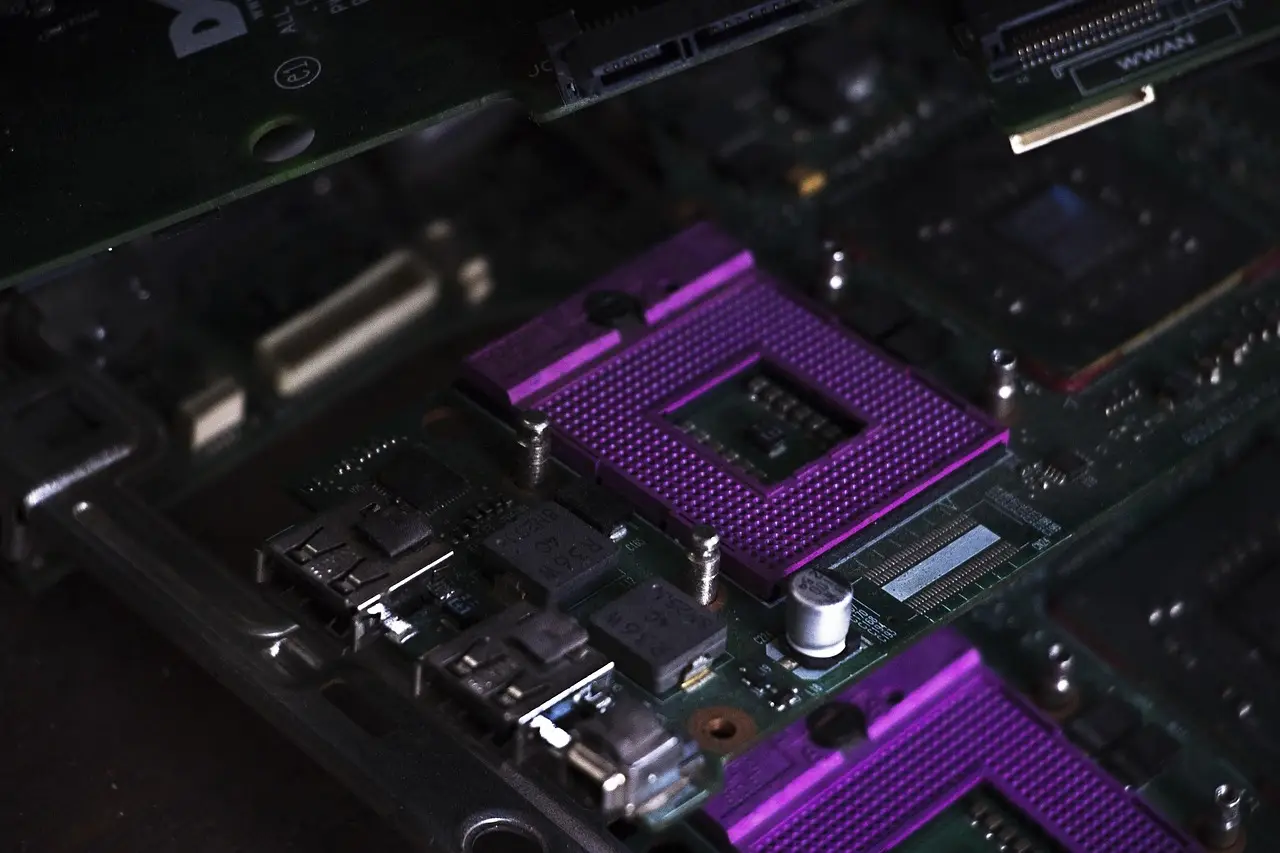
Nova Lake-S needs the new LGA 1954 socket and Nova Point chipsets: Z990, Z970, B960, W980 and Q970. DDR5-8000 base, 12 chipset PCIe 5.0 lanes and Thunderbolt 5 headline the platform.
- By
- Grace Kim
- Filed
- Channel
- Hardware & Components
- Read
- 4 min read
Intel's Nova Lake-S processors will require an entirely new motherboard platform, with mass production rumored for Q4 2026 and launch expected in Q1 2027. The new LGA 1954 socket replaces LGA 1851, which reaches end of life with Core Ultra Series 2 chips such as the Core Ultra 7 270K Plus released earlier in 2026. Intel CEO Lip-Bu Tan said earlier this year that Nova Lake is "coming at the end of 2026."
What changes with the 900-series chipsets?
The Nova Point chipset family consists of five members: Z990 and Z970 for enthusiasts, B960 for mainstream, W980 for workstations and Q970. Intel drops the entry-level H910 tier. Z970 is a new second enthusiast option, reportedly built on the same silicon as B960, positioned between it and the flagship Z990.
Key specifications, per leaks and unofficial data marked with estimates:
- Z990: up to 48 PCIe lanes total, 12 chipset PCIe 5.0 lanes, 12 chipset PCIe 4.0 lanes, DMI Gen5 x4 link, two processor Thunderbolt 5 ports at 80 Gbps, 8 SATA ports, PCIe RAID support, CPU and BCLK overclocking
- Z970: up to 34 PCIe lanes, 14 PCIe 4.0 chipset lanes, DMI Gen5 x2, one TB5 port, CPU multiplier overclocking but no BCLK control
- B960: 34 lanes, no chipset PCIe 5.0, no overclocking beyond memory
- Z890 comparison: 48 lanes but zero chipset PCIe 5.0 and a Gen4 DMI link
Nova Lake CPUs reportedly supply 36 native PCIe 5.0 lanes: 16 for graphics, 8 for storage, 8 for dual Thunderbolt 5 controllers and 4 for DMI. In theory, builders can run five PCIe 5.0 M.2 sockets with no bandwidth sharing between the CPU and chipset, a significant upgrade over Z890.
Why might chipsets need fans?
The chipset package shrinks versus Z890: 600 mm² versus 658 mm², with the die shrinking roughly 22 percent to 72.5 mm² (11.15 x 6.5 mm). Base power rises from 6 W to 7.9 W, with a 14 W maximum. The higher power density explains rumored active-cooling guidelines. When populated with PCIe slots and M.2 drives, the chipset raises working voltage to maintain signal integrity. Early X570 chipset fans serve as a cautionary comparison for noise.
How fast is the memory and connectivity?
The platform base memory speed is DDR5-8000, up 800 MT/s over the Arrow Lake refresh. Kits that reach that speed cost at least $700 from reputable brands, setting a high cost of entry, though slower existing DDR5 will work with some performance penalty.
Thunderbolt 5 support, typically via the Intel JHL9580 controller, should be more prevalent than on Z890. TB5 delivers 80 Gbps bidirectional, up to 120 Gbps in single-direction boost mode, plus DisplayPort 2.1, USB4 and USB PD 3.1 at 100-130 W.
Networking expectations:
- Most boards ship 2.5-5GbE using Realtek 8125/8126 chips, some Killer E3100G and E5000
- Premium boards add dual Ethernet and 10 GbE via Marvell Aqtion parts such as the AQC113C
- Wi-Fi 7 dominates, with chips from MediaTek (MT7927), Intel (BE200/202) and Realtek (RTL9822AE); 320 MHz parts double bandwidth versus 160 MHz versions
Which boards have leaked?
Eurasian Economic Union database listings via Videocardz show 24 Gigabyte SKUs: Aorus Xtreme, Aorus Master in three variants, six Aorus Pro and Elite SKUs, multiple rear-connect Aorus Stealth options, Eagle boards, Duo X models using 2-DIMM topology for high-density CQDIMMs, plus Micro ATX, Mini-ITX and wood-accent Aero entries. Shipping records via Club386 reveal six ASRock models, from the flagship Taichi White and Taichi Creator down to the Pro RS WiFi and Z990 Challenger, with multiple Steel Legend variants — but no Z970, B960 or small form factors yet.
Asus and MSI have not surfaced any listings. Expect ROG Maximus, Strix, ProArt, TUF and Prime from Asus, and MEG Godlike, Ace, MPG Carbon and Edge plus MAG Tomahawk from MSI. EEU listings do not guarantee release in any market.
What will it cost?
No pricing exists yet. More PCIe 5.0 bandwidth requires more copper, and hardware upgrades point to higher or flat prices versus current generation boards. Nova Lake is Intel's first bLLC (big last-level cache) design, aimed at AMD's X3D processors. Flagship models allegedly use two compute tiles with up to 52 cores, arriving after the mid-range unlocked 28-core parts launch in Q1 2027. Most details remain leaks; expect many boards at CES 2027 with launches soon after, and official lineups, performance and pricing could shift before then.
Source: Tom's Hardware
More from Grace Kim
Show full bio
Market editor covering people, launches and day-to-day practice in Semiconductors, chip manufacturing, hardware, AI compute at Chip Dispatch.
715 articles
Related articles
intel-confirms-nova-lake-on-18a-p-plans-client-capacity-shift
Intel confirms Nova Lake on 18A-P, plans client capacity shift
alibaba-cloud-targets-next-year-mass-production-for-zhenwu-v900-ai-chip-e46eda44
Alibaba Cloud Targets Next-Year Mass Production for Zhenwu V900 AI Chip
intel-built-nova-lake-8-16-samples-on-18a-p-then-moved-compute-tiles-to-tsmc-n2p-a027f282
Intel Built Nova Lake 8+16 Samples on 18A-P, Then Moved Compute Tiles to TSMC N2P
alibaba-pulls-zhenwu-v900-production-to-q1-claims-3x-0241b0e7
Alibaba Pulls Zhenwu V900 Production to Q1 2027, Claims 3x