Memory & Storage · 4 min read
Kioxia and Nvidia Push GPU Memory to 1.1 Petabytes With 144 SSDs
Kioxia and Nvidia demonstrated 1.1 PB of SSD-backed GPU memory on a GB200 NVL72 with 144 XD8 drives, plus a GP2 SSD claiming 18 million read IOPS — but no latency figures yet.
Key takeaways
- Kioxia and Nvidia used 144 XD8 Series 7.68 TB SSDs on a GB200 NVL72 to reach about 1.1 PB of raw flash capacity.
- Kioxia shares closed up 12.57% at 7,762 yen on Thursday after a 14.18% drop on Wednesday.
- The GP2 SSD claims over 18 million random read IOPS at 512-byte blocks; samples ship to select customers by end of 2027.
- Kioxia gave no throughput or latency figures for the SCADA proof of concept announced Nov. 26.
- The companies said the setup could hold 2 trillion 512-byte vectors for vector databases and graph neural networks.
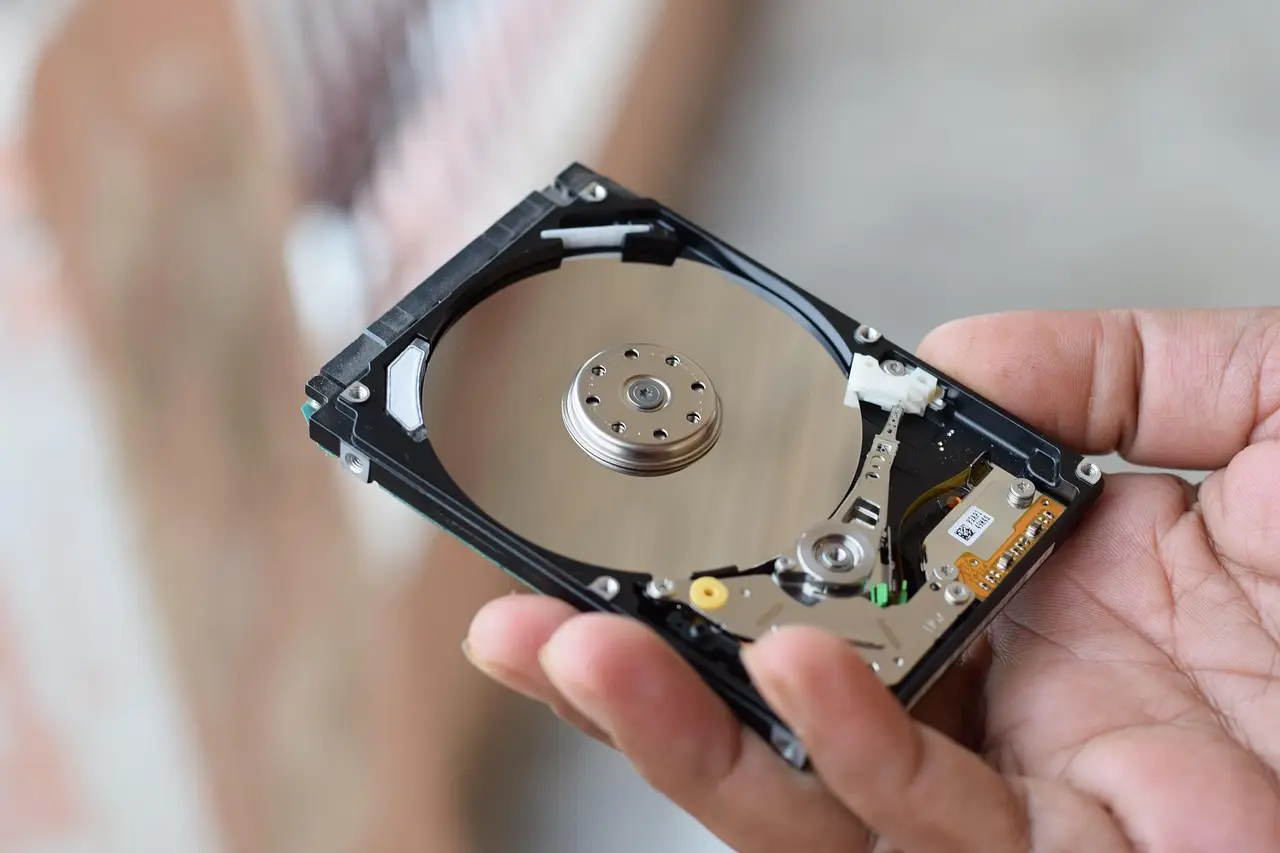
Kioxia and Nvidia demonstrated a system that extends effective GPU memory capacity to roughly 1.1 petabytes by attaching 144 SSDs to a GB200 NVL72 rack, Kioxia said on Thursday, Nov. 26. The proof of concept ran on Nvidia's Storage-Next initiative and pairs the SCADA software library with Kioxia's enterprise flash.
The test hardware was concrete. A GB200 NVL72 rack-scale system with 18 server nodes carried 144 Kioxia XD8 Series 7.68 TB E1.S NVMe SSDs, giving about 1.1 PB of raw flash capacity. Each node held eight SSDs, which Kioxia said supported nearly 60 TB of flash-based extended memory per node.
Kioxia shares closed up 12.57% at 7,762 yen on Thursday, an 867-yen gain, according to CNBC quote data timestamped 3:30 p.m. Tokyo time. The stock had fallen 14.18% on Wednesday.
How does the SCADA link work?
GPUs hold working data in high bandwidth memory (HBM). Kioxia said datasets too large for HBM must be split into pieces and shuttled between memory and slower storage. SCADA, short for Scaled Accelerated Data Access, is an Nvidia software library that extends effective GPU memory using NVMe SSDs, including fine-grained reads at small block sizes.
The proof-of-concept system supports 512-byte accesses. Kioxia said the architecture could hold 2 trillion 512-byte vectors, and named large vector databases and graph neural network datasets as target workloads.
The companies "remain engaged in evaluating the technical feasibility and performance" of SCADA and the Storage-Next architecture, the release said. Kioxia gave no throughput or latency figures for the test. That gap matters. A capacity claim without latency numbers leaves the central question unanswered — whether SSD-backed memory is fast enough for real training or inference workloads rather than a marketing ceiling.
What is the GP2 drive?
Kioxia announced the GP2 Series the same day, the second drive in its GP line of SSDs built for direct GPU access. The drive uses XL-FLASH generation 3 memory. Kioxia said it delivers more than 18 million random read IOPS at a 512-byte block size, nearly double the GP1 Series announced in August 2026.
Expected sequential reads reach up to 28 GB/s on PCIe 6.0 x4, the company said. Evaluation samples go to select customers by the end of 2027. Kioxia said later GP generations will target up to 100 million random read IOPS.
The GP2 is a roadmap item, not a shipping product. Sample availability nearly two years out, in late 2027, puts the IOPS figures firmly in the promised category. The 100 million IOPS target for future generations carries no date at all.
Why did the stock move?
The share rebound tracked the broader market. Kioxia stock rose as much as 14.5% to 7,895 yen on Thursday, after falling 14.18% on Wednesday, Investing.com reported. Asian chip stocks recovered part of Wednesday's sell-off in the same session.
The rebound came after a sharp one-day drop, so the net two-day move was roughly flat. The Storage-Next announcement coincided with the recovery, but the release alone cannot explain a market-wide swing.
What is confirmed and what is not
The confirmed facts are the hardware configuration, the capacity figure and the software mechanism:
- 144 XD8 Series 7.68 TB SSDs on a GB200 NVL72 with 18 nodes
- About 1.1 PB of raw SSD capacity
- Nearly 60 TB of extended memory per node
- SCADA library supporting 512-byte accesses and 2 trillion 512-byte vectors
The unconfirmed items are equally clear. There are no throughput or latency measurements. The 2 trillion vector figure is a capacity calculation, not a benchmark result. The companies say they continue to evaluate feasibility. GP2 specifications are expected figures from the vendor.
The commercial logic behind Storage-Next is straightforward. HBM supply is tight and expensive, and datasets for vector databases and graph neural networks keep growing. If SSD-backed memory can serve fine-grained 512-byte reads at usable speed, petabyte-scale GPU memory becomes a procurement decision rather than a physics limit. That remains a large if until Kioxia and Nvidia publish latency and throughput data for the architecture, which they have not yet done.
mlq.ai (Source)
More from Sophie Lindqvist
Show full bio
News editor covering money, funding and market shifts around Semiconductors, chip manufacturing, hardware, AI compute at Chip Dispatch.
1,332 articles