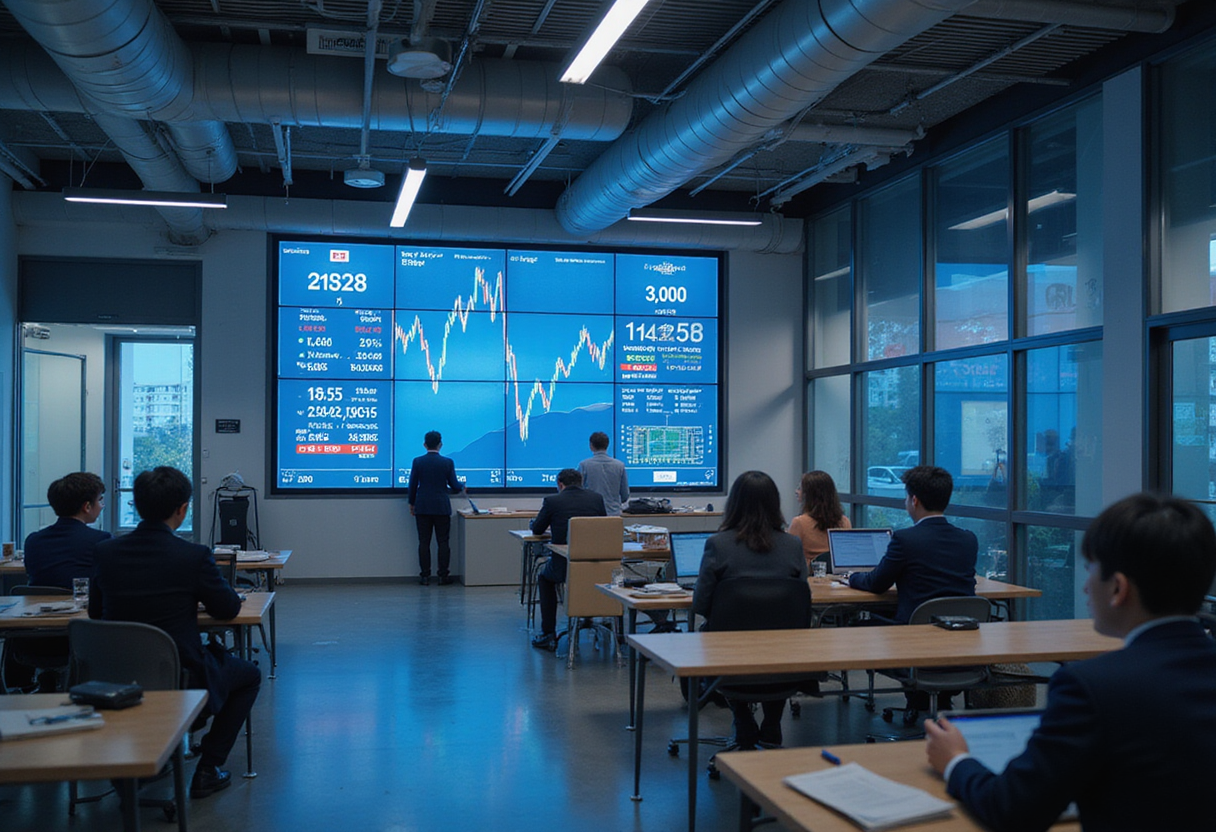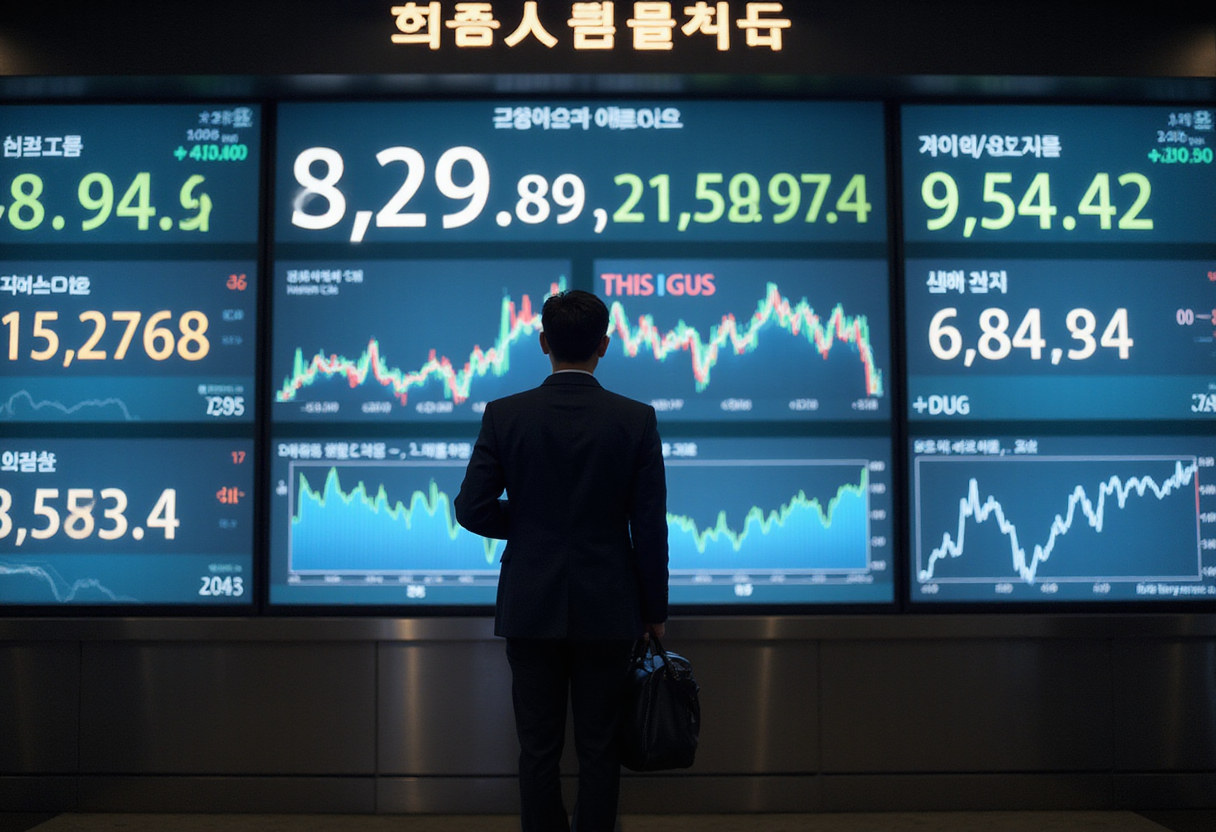
Kospi Falls More Than 5% as AI Doubts Trigger Chip Sell-Off
South Korea's Kospi fell more than 5% as semiconductor shares led a broad sell-off, with investors questioning whether the AI boom's momentum justifies current valuations.
- By
- Nathan Brooks
- Filed
- Channel
- Semiconductors
- Read
- 2 min read
South Korea's Kospi index dropped more than 5% in a single session, dragged down by a sell-off in semiconductor shares as investors reconsidered the durability of the artificial-intelligence boom. The decline ranks among the sharpest single-day falls for the benchmark in recent memory. It was not a health scare or a policy shock that moved the tape. It was a change of mood about chips.
Semiconductor stocks carried the index lower. That pattern matters for Seoul in a way it does not for most other markets. Chipmakers and their suppliers carry outsized weight on the Kospi, so when sentiment on AI hardware turns, the whole index turns with it. A 5% fall in the benchmark is, in effect, a verdict on the sector.
Why did AI optimism curdle now?
The proximate cause, as reported, is worry that the AI boom has been overbought. Investors have spent two years pricing semiconductor makers on the assumption that demand for AI hardware keeps compounding. Any signal that the assumption is soft — a cautious forecast, a slowing order book, a rival's warning — lands on chip stocks first and hardest.
South Korea sits near the front of that queue. The country's largest listed companies are memory and logic producers whose fortunes ride on data-center spending. When that spending looks certain, they are the market's engine. When it looks questionable, they are its anchor.
The worry is not that AI demand has collapsed. It is that expectations ran ahead of evidence. Markets can forgive a slow quarter. They punish a narrative that wobbles.
What does the fall signal for the chip trade?
A one-day drop settles nothing about fundamentals. It does settle something about positioning. A decline of this size implies that a great deal of optimistic money was standing in the same doorway, and that the doorway was narrower than the crowd believed.
For semiconductor executives, the message is mixed. The AI build-out continues; no company in the source material announced a cancelled fab or a cut wafer starts. What changed is the price investors will pay for future growth, not the growth itself. That distinction will keep CFOs busy during the next earnings season.
For Seoul's policymakers, the fall is a reminder that the national economy and a handful of chip stocks remain tightly coupled. Diversification has been the stated goal for years. The index's behaviour shows how much work remains.
Where does the market go from here?
The honest answer is that one session does not establish a trend. Sharp, sentiment-driven falls in semiconductor shares have historically been followed by equally sharp recoveries when the next round of orders or earnings arrives — and by deeper slides when the doubt proves justified. Investors will now watch the upcoming results and guidance from Korea's major chipmakers for evidence of whether AI demand is merely pausing or actually peaking.
Source: Google News: semiconductors
More from Nathan Brooks
Show full bio
Senior reporter covering people, launches and day-to-day practice in Semiconductors, chip manufacturing, hardware, AI compute at Chip Dispatch.
432 articles
Related articles
kospi-falls-over-7-as-chip-stocks-lead-sharp-sell-off-5648a897
Kospi Falls Over 7% as Chip Stocks Lead Sharp Sell-Off
kospi-falls-more-than-7-as-ai-fears-trigger-chip-sell-off-0613740d
Kospi Falls More Than 7% as AI Fears Trigger Chip Sell-Off
kospi-falls-over-7-as-semiconductor-shares-lead-sell-off-5318ce6a
Kospi Falls Over 7% as Semiconductor Shares Lead Sell-Off
kospi-falls-more-than-7-as-chip-shares-lead-broad-sell-off-87cbef19
Kospi Falls More Than 7% as Chip Shares Lead Broad Sell-Off