Kospi Falls More Than 5% as Chip Stocks Lead Broad Sell-Off
Kospi fell more than 5% as semiconductor stocks led a sell-off on doubts about AI demand. The physical supply chain is unchanged, but financing for the next capex round looks less certain.
- By
- Tom Whitfield
- Filed
- Channel
- Semiconductors
- Read
- 3 min read
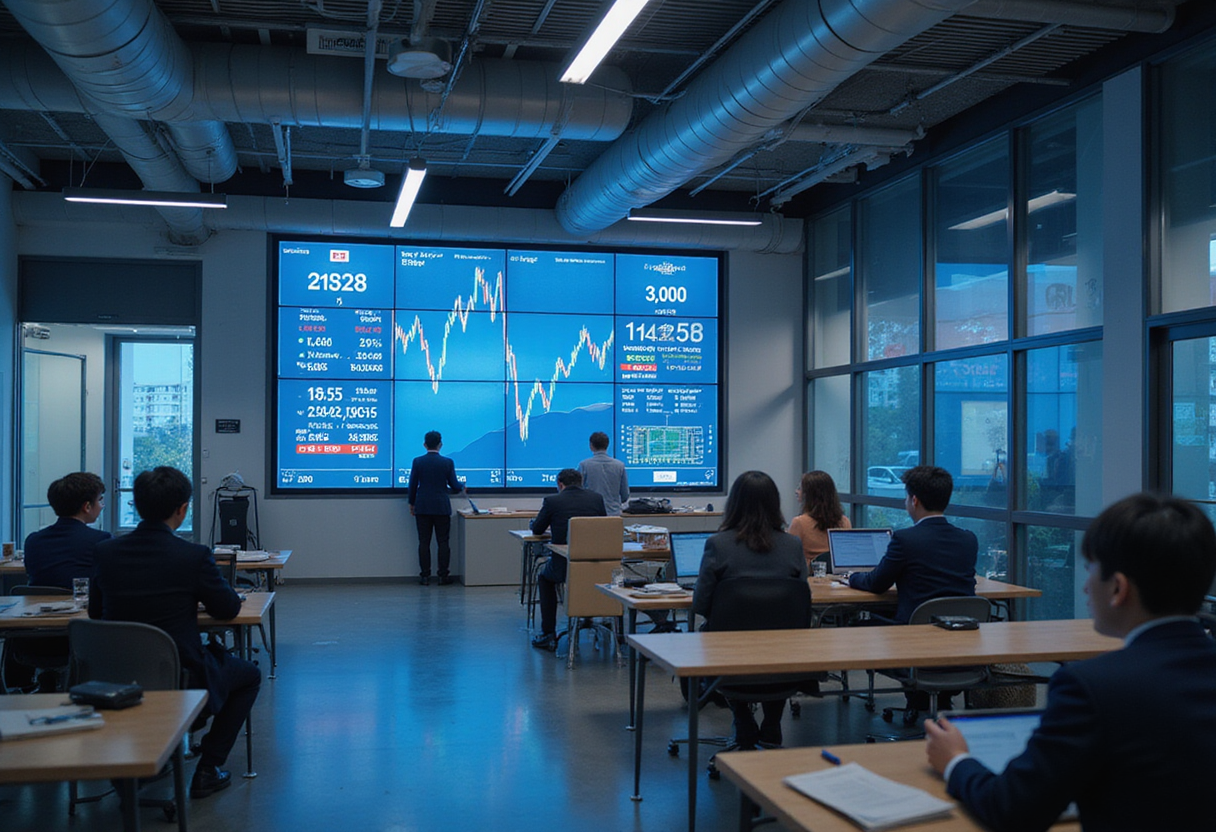
South Korea's Kospi index dropped more than 5% in a single session, with semiconductor stocks leading the sell-off as investors grew uneasy about the strength of the artificial intelligence boom. The decline marks one of the sharpest single-day falls for the benchmark in recent trading, and it puts the country's chip-heavy equity market at the center of a wider debate over whether AI-related demand can keep justifying elevated valuations.
The trigger was not a single company disclosure. It was a broad shift in sentiment. Traders moved to reduce exposure to semiconductor names after weeks of gains built on expectations that AI workloads would keep lifting demand for advanced memory and logic chips. When confidence in that story wavered, the most AI-leveraged stocks fell hardest, and the Kospi followed them down.
Why did semiconductor shares fall so hard?
South Korea's index carries an outsized weighting in chipmakers and their suppliers. That concentration works in both directions. When semiconductor demand expectations rise, the Kospi tends to outperform regional peers. When doubts appear, the same weighting amplifies the drop.
The concern in this session centered on the durability of the AI buildout. Investors asked whether spending on AI infrastructure — data centers, accelerators, and the memory that feeds them — would continue at the pace markets had already priced in. A more than 5% index decline reflects how much capital had accumulated in that trade.
In plain terms: the fall was a valuation event, not a production event. No fab announced cut capacity in connection with the move.
What does this change for the chip supply chain?
For now, very little on the physical side. A share sell-off does not cancel wafer starts, alter process roadmaps, or reduce shipments already contracted. Samsung Electronics, SK hynix, and their suppliers continue to operate the capacity they have built and continue to expand capacity already committed.
What it does change is the cost and appetite for the next round of expansion. Chipmakers fund much of their capex from retained earnings and market confidence. A sustained slide in share prices raises the cost of capital for new fabs, packaging lines, and R&D programs. A single volatile session does not do that damage on its own, but a prolonged decline would.
The takeaway: the physical supply chain is unchanged, but the financing environment for its next expansion phase just became less certain.
Is this a Korean story or a global one?
It is both. Korea is the most concentrated expression of a pattern visible across semiconductor-linked equities. Markets worldwide have tied chip valuations to AI demand projections, and any softening in those projections transmits quickly through indices with heavy semiconductor weightings. The Kospi's more-than-5% fall is the sharpest symptom of that linkage reported in this session.
For equipment makers, materials suppliers, and memory producers, the commercial picture depends on whether end demand for AI systems holds. If it does, the sell-off will read as a correction within an upward trend. If orders slow, the market has signaled how quickly sentiment can reverse.
The next weeks will show whether this was a one-day repricing or the start of a longer adjustment in how investors value AI-driven chip demand.
Source: Google News: semiconductors
More from Tom Whitfield
Show full bio
Staff writer covering companies, deals and strategy in Semiconductors, chip manufacturing, hardware, AI compute at Chip Dispatch.
437 articles
Related articles
kospi-falls-more-than-7-as-chip-shares-lead-broad-sell-off-c6bc3954
Kospi Falls More Than 7% as Chip Shares Lead Broad Sell-Off
kospi-falls-more-than-7-as-chip-shares-lead-broad-sell-off-87cbef19
Kospi Falls More Than 7% as Chip Shares Lead Broad Sell-Off
kospi-falls-more-than-7-as-ai-fears-trigger-chip-sell-off-0613740d
Kospi Falls More Than 7% as AI Fears Trigger Chip Sell-Off
kospi-falls-more-than-7-as-ai-fears-trigger-chip-stock-sell-off-c304c1a1
Kospi Falls More Than 7% as AI Fears Trigger Chip Stock Sell-Off