LG Electronics and Bosch to Co-Develop Automotive Chiplets
LG Electronics will co-develop automotive chiplet semiconductors with Bosch, Maeil Business Newspaper reports. The announcement gives no deal value, node or timeline.
- By
- Sophie Lindqvist
- Filed
- Channel
- Semiconductors
- Read
- 3 min read
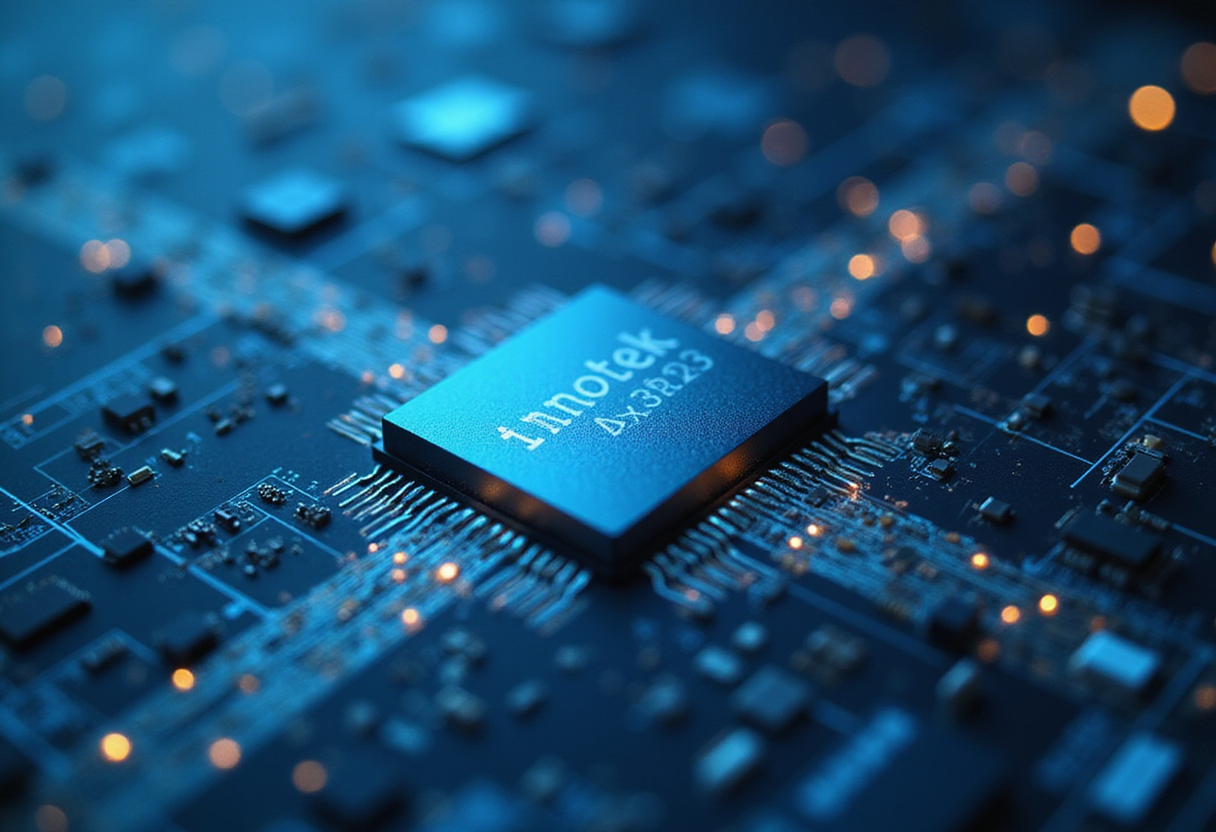
LG Electronics will develop automotive chiplet semiconductors jointly with Bosch, according to a report by South Korea's Maeil Business Newspaper. The deal pairs a Korean electronics group with Germany's largest automotive supplier. Both companies target chiplets — modular silicon building blocks that designers link inside a single package.
The report gives no deal value, no timeline and no named product family. That absence matters. Announcements of this kind routinely omit the figures investors need, and this one omits all of them.
Why chiplets appeal to carmakers
Chiplet design splits a large processor into smaller dies, then connects them on an interposer or substrate. The approach can lift yield on complex designs and let engineers mix process nodes within one package. A vendor can build a safety-critical die on a mature, automotive-qualified node and pair it with a faster compute die on leading-edge silicon.
Automotive demand drives the logic here. Modern vehicles carry dozens of controllers, and software-defined architectures push more computing into centralized domains. Tier-one suppliers such as Bosch want custom silicon for those platforms. Teaming with LG gives Bosch a development partner with fabrication ties through the LG group and a growing automotive components business.
The announcement, however, does not specify which functions the chiplets will serve. Infotainment, advanced driver assistance and domain controllers each imply different process nodes, safety certifications and volumes. Without that detail, the commercial scope stays unclear.
What the partnership does not say
Three gaps stand out in the reporting so far.
- No wafer size, process node or packaging partner appears in the announcement.
- Neither company has stated a production date, sample date or target vehicle platform.
- The report does not say whether the work covers IP co-development, joint design services or full custom silicon.
Analyst estimates on the automotive chiplet market vary widely, and none appear in the source report. Any figure circulating now should be read as a projection, not an order book.
Context: LG's quiet automotive build-out
LG Electronics has spent years repositioning its vehicle components division as a core business. The company already supplies automotive displays, infotainment systems and e-powertrain parts to global carmakers. A chiplet program with Bosch would extend that stack upward into semiconductor design.
For Bosch, the move fits a pattern. The supplier has invested in its own silicon operations, including a planned Dresden fab announced in 2021 at roughly one billion euros, and has pushed into custom automotive processors. Chiplets would let Bosch assemble tailored compute without taping out every large die at once at a leading-edge foundry.
The geopolitical backdrop rewards exactly this kind of partnership. Carmakers want supply chains that do not hinge on a single region, and modular designs widen the choice of fabs per die. Whether LG and Bosch structure their program that way remains unstated.
The skeptic's ledger
Every promise here needs a caveat. A joint development agreement is not a product. A product is not a qualified automotive part. A qualified part is not volume revenue. The distance from announcement to dashboard is measured in years, and automotive qualification cycles are among the longest in the industry.
The source also does not clarify the corporate entities involved — whether the deal runs through LG Electronics directly or through affiliates with relevant silicon expertise. That distinction shapes accountability, timelines and eventual capacity claims.
Bosch has not published shipment or revenue targets tied to this program. LG has not confirmed the financial terms. Until either company files specifics, the strongest verified fact remains the partnership itself: two large industrial groups agree that automotive chiplets deserve joint engineering, and both are willing to spend undisclosed sums on that belief.
Watch for follow-on signals — a named foundry partner, a process node disclosure, or a first sample date — because those, not the headline, will tell investors whether this program has a production path or only a press release.
Source: Google News: semiconductors
More from Sophie Lindqvist
Show full bio
News editor covering money, funding and market shifts around Semiconductors, chip manufacturing, hardware, AI compute at Chip Dispatch.
376 articles
Related articles
lg-electronics-teams-with-bosch-on-automotive-chiplets-c90d8a78
LG Electronics Teams With Bosch on Automotive Chiplets
globalfoundries-to-manufacture-silicon-interposers-for-tsmc-355fc59d
GlobalFoundries to Manufacture Silicon Interposers for TSMC
lg-innotek-pivots-toward-semiconductor-substrates-and-physical-ai-0cc0fbad
LG Innotek Pivots Toward Semiconductor Substrates and Physical AI
hyundai-mobis-pushes-to-localize-automotive-chips-in-korea-d5d89cad
Hyundai Mobis Pushes to Localize Automotive Chips in Korea