Mercedes-Benz Prototypes Holographic Windshield Display to Replace Screens
Mercedes demonstrated a holographic windshield display in Sindelfingen: transparent film, hidden projector, full-color video at 20 percent brightness, aimed at replacing passenger screens.
- By
- Grace Kim
- Filed
- Channel
- Consumer Tech
- Read
- 4 min read
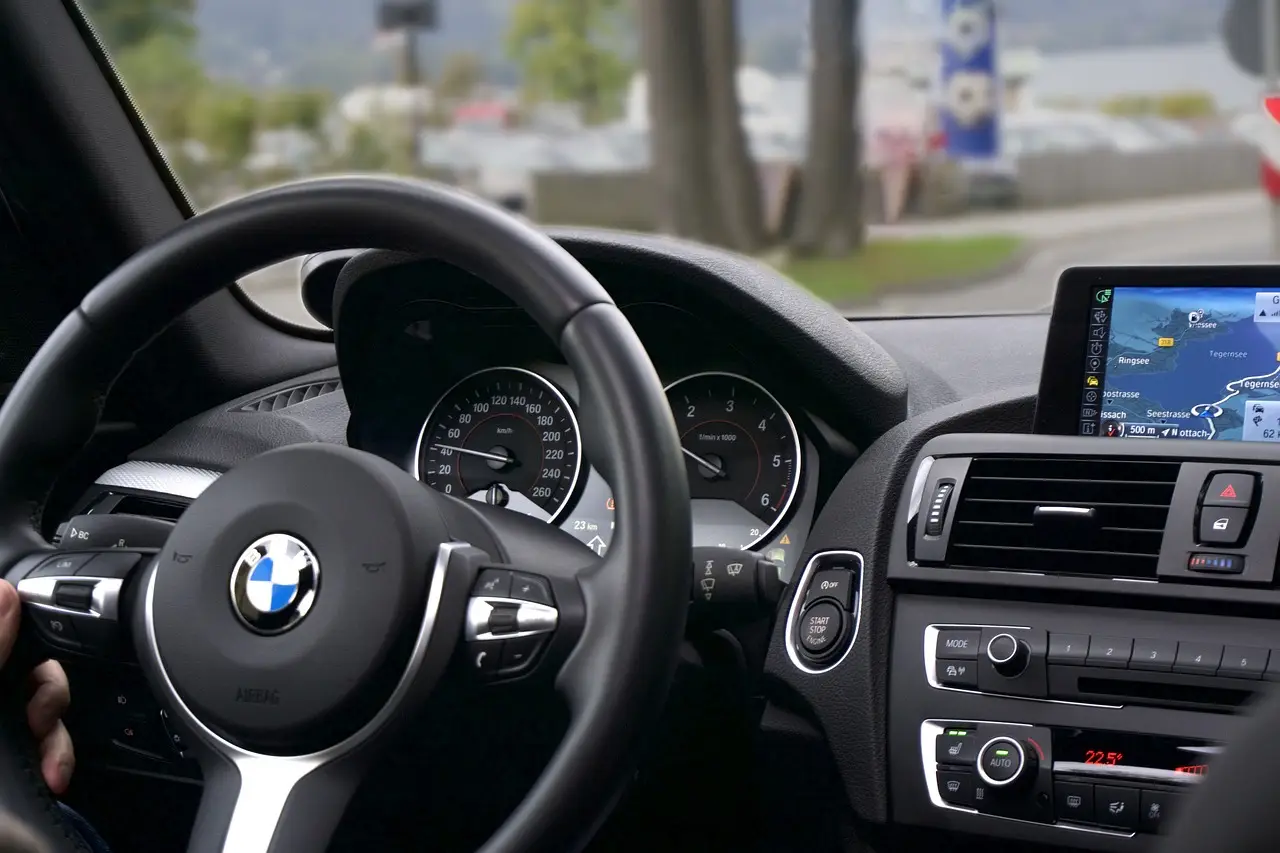
Mercedes-Benz has demonstrated a prototype holographic heads-up display that projects full-color video onto a transparent film laminated into the windshield, hidden from the driver's view. Engineers showed the system at the company's research facilities in Sindelfingen, Germany, installed in a pre-2027 right-hand-drive S-Class test vehicle.
The display uses two components. A projector mounts inside the dashboard. A special transparent film laminated into the glass carries holographic optical elements that selectively reflect the projected light.
"Super-small mirrors," is how Mercedes development engineer Lena Hees described the elements. The design keeps the image visible in direct sunlight while blocking it from the driver's sightline.
Why is Mercedes moving away from screens?
Luxury interiors now compete on screen count and size. Mercedes' own Hyperscreen spans the dashboard from pillar to pillar in an increasing number of models. But customer research points the other way.
A recent JD Power study found car owners classify passenger screens as "not necessary" and hold generally negative opinions of them. Mercedes has seen similar feedback, though for different reasons.
"We have customers who like the Hyperscreen," development engineer Maximilian Hilger said. "But there are others who want to maintain luxury materials."
The critique comes from the top of the company. New chief design officer Bastian Baudy told Auto Motor Sport: "Materiality and haptics must remain tangible—with switches, buttons, and intuitive controls. Real materials are at the heart of Mercedes: metal, wood."
CEO Ola Källenius grouped interior quality and materials among the brand's "forever values," alongside safety and driving character. His predecessor in design thinking, Gordon Wagener, was blunter.
"Screens are not luxury," Wagener told ABC News. "You have a better—and bigger—TV at home, right? And every car has a big screen. So we have to create luxury beyond the screen."
What did the prototype actually deliver?
The prototype hardware remains crude. The projector sits in a trapezoidal hole cut into the dash, and a cooling fan whirs audibly during operation. The display ran full-color videos of the C-Class Electric during the demonstration.
The image was sufficiently bright even though the prototype operated at just 20 percent of maximum brightness, according to Manual Holstein, a manager in Mercedes research for future displays. Resolution already exceeds any current head-up display, including Mercedes' own augmented-reality HUD.
The weaknesses are equally concrete:
- Resolution trails any passenger touchscreen by a wide margin.
- Video contrast ran too high.
- Windshield angle distorted the picture into a narrow height.
- No one would choose it over a phone, tablet, or conventional screen today.
Holstein said the production projector will be much smaller than current HUD boxes, small enough to hide behind wood or metal trim. He said the production model will have no audible fan, higher resolution, and dismissed the distortion as a prototype-specific problem.
How big could the display become?
The holographic film size, or "eyebox," can be made much larger and raised higher than the prototype's HUD-like position, Holstein said. Mercedes envisions nearly half the windshield as a virtual screen visible only to the passenger, showing videos, entertainment, or highlighted points of interest in the view ahead.
A similar display could serve the driver side with situational information, video calls, or parked entertainment. When Mercedes' Level 3 autonomous driving system permits eyes-off driving, the technology could let drivers watch content in motion. At minimum, it could replace today's HUDs and their bulkier projector boxes.
The reporter who rode in the test vehicle noted the higher screen angle and visibility of the road beyond may reduce the motion sickness that passenger screens cause in moving cars.
Is the demand real?
The commercial question stays open. If JD Power found customers indifferent to passenger touchscreens, enthusiasm for holographic video displays is doubtful. Whether the production version meets its promises remains untested, and Mercedes has not confirmed a launch date or model.
The strategic logic still holds. If a laminated film and hidden projector let Mercedes restore wood, metal, and physical controls while offering unique technology, the company gains a differentiator that mainstream screen layouts cannot copy as easily — and one that pre-empts the trickle-down problem that made pillar-to-pillar displays ordinary in the first place.
Source: Ars Technica
More from Grace Kim
Show full bio
Market editor covering people, launches and day-to-day practice in Semiconductors, chip manufacturing, hardware, AI compute at Chip Dispatch.
763 articles
Related articles
apple-ships-homeview-its-first-smart-display-in-four-finishes-0e4a670a
Apple Ships HomeView, Its First Smart Display, in Four Finishes
auo-and-innolux-bet-on-glass-as-next-gen-ai-chip-material-83c6d2d9
AUO and Innolux Bet on Glass as Next-Gen AI Chip Material
apples-touchscreen-macbook-pro-is-more-normal-than-expected
Apple’s Touchscreen MacBook Pro Is More Normal Than Expected
universal-display-shares-bounce-but-the-valuation-question-stays-open-d94c5b9d
Universal Display Shares Bounce, but the Valuation Question Stays Open