Nvidia falls 4.3% as Huang resigns; AMD and Broadcom rally
Nvidia closed down 4.34% at $166.19 after an abrupt 14% opening loss on Jensen Huang’s resignation. AMD and Broadcom gained more than 5% as yields and oil pressured indexes.
- By
- Tom Whitfield
- Filed
- Channel
- Tech Business
- Read
- 4 min read
Tom Whitfield
Nvidia closed down 4.34% at $166.19 on Thursday, Nov. 12, after an approximately 14% opening plunge on Jensen Huang’s resignation as chief executive. The $7.54 loss left the stock well above its intraday low of $148.80, as investors recovered much of their initial selling.
How severe was the Wall Street sell-off?
Wall Street finished the session with modest index declines despite a much larger early loss:
- The S&P 500 fell 26.98 points, or 0.35%, to 7,592.40.
- The Dow Jones Industrial Average lost 189.40 points, or 0.36%, to 52,297.09.
- The Nasdaq Composite dropped 100.10 points, or 0.39%, to 25,366.09.
AP reported that the S&P 500 had fallen nearly 1% early in the session, while the Nasdaq had traded as much as 1.6% lower. Both recovered most of those losses before the close.
Higher Treasury yields and oil prices created additional pressure, although energy shares and Nvidia competitors limited the index declines. The result was a mild headline fall built on severe pressure in Nvidia and a rapid rotation into selected chip stocks.
What did Huang’s exit do to chip stocks?
Nvidia shares opened about 14% lower after the company announced Huang’s departure, according to AP. They recovered to close down 4.34% at $166.19, with a session range of $148.80 to $167.14, according to The Motley Fool’s market report.
Several brokers reduced their ratings on Nvidia following Huang’s exit. Their actions confirmed that investors were reassessing the company’s leadership, although the source did not identify the brokers or their revised targets.
The clearest beneficiary was AMD, whose shares rose 5.9%. Broadcom gained 5.5%, while other Nvidia-related names moved in opposite directions:
- CoreWeave, which rents Nvidia chips to cloud customers, fell 6.9%.
- Micron Technology declined 1.6%.
- Super Micro Computer dropped 11.3%.
The contrast shows that traders did not treat Nvidia’s leadership change as an industry-wide rise in chip demand. They shifted capital toward selected competitors while penalizing businesses with closer exposure to Nvidia’s outlook.
Why did Treasury yields and oil rise?
The 10-year Treasury yield climbed to 5.12% from 4.98% on Tuesday, before the Veterans Day bond-market holiday, AP reported. Higher crude prices revived inflation concerns and pushed bond yields higher.
Brent crude rose 3.3% to $95.82 a barrel after President Donald Trump said, “we don’t need a deal with Iran.” Energy stocks also gained, with Exxon Mobil up 1.8% and Marathon Petroleum up 2.5%.
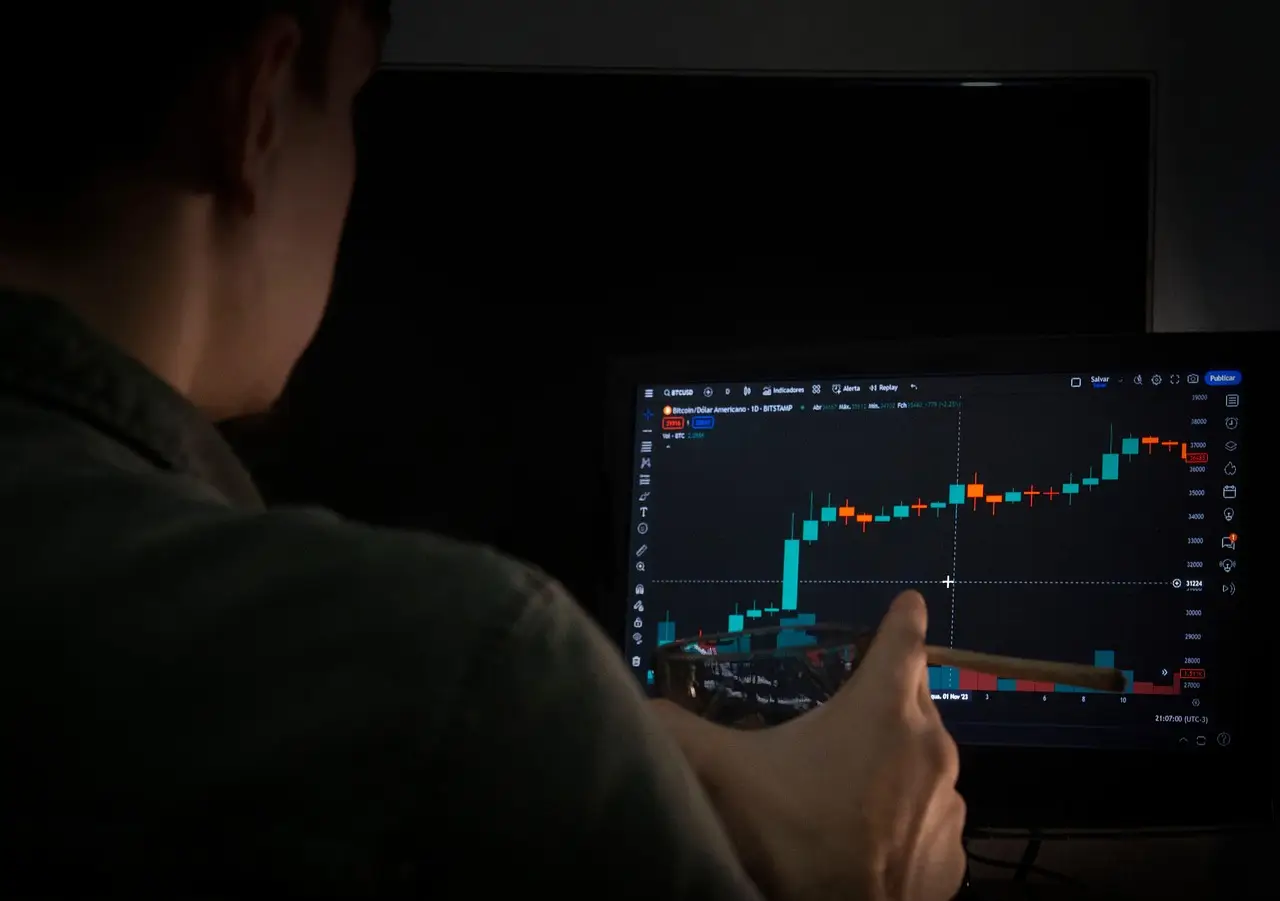
Bitcoin fell below $72,000 during late-morning New York trading, Yahoo Finance reported, amid bitcoin exchange-traded-fund outflows. The combination of dearer crude, higher yields and weaker cryptocurrency reinforced the cautious tone outside technology stocks.
The macro backdrop supplied a second source of pressure: rising yields tightened financial conditions just as Nvidia confronted an abrupt leadership change.
What changed after the closing bell?
Extended trading produced sharp moves in several companies exposed to artificial-intelligence infrastructure and semiconductor equipment.
Cerebras Systems rose 18% after reporting record third-quarter revenue, raising its 2026 forecast and announcing a cloud deal that company executives identified as Microsoft, CNBC reported. The Microsoft identification came from executives rather than a separately confirmed customer announcement in the source.
Applied Materials gained about 1.5% in after-hours trading, Investing.com reported, after revenue increased 53% to $10.41 billion. The figure supplied a concrete signal that semiconductor equipment demand remained strong despite Nvidia’s leadership disruption.
Cisco also rose in extended trading. The company raised its forecast for artificial-intelligence infrastructure revenue from hyperscalers to about $9 billion, according to CNBC. That forecast placed Cisco alongside Nvidia’s rivals in the financial debate over where AI spending will produce revenue.
The after-hours gains rewarded stronger revenue, forecasts and deal announcements, showing that investors still pursued companies with visible AI demand.
Where did European markets finish?
Europe’s STOXX 600 index rose 0.14% to a record 664.01. That positive close contrasted with the modest losses on the three main U.S. indexes.
The competitive test ahead is clearer now: Nvidia must stabilize after Huang’s exit while AMD and Broadcom extend their gains and other suppliers report faster growth.
Source: mlq.ai
More from Tom Whitfield
Show full bio
Staff writer covering companies, deals and strategy in Semiconductors, chip manufacturing, hardware, AI compute at Chip Dispatch.
897 articles
Related articles
s-p-500-jumps-2-35-to-7-549-94-while-nvidia-drops-on-probe
S&P 500 Jumps 2.35% to 7,549.94 While Nvidia Drops on Probe
nvidia-slides-7-as-board-weighs-jensen-huangs-future
Nvidia slides 7% as board weighs Jensen Huang’s future
nvidia-trails-chip-rally-as-wall-street-rebounds-on-lower-oil
Nvidia trails chip rally as Wall Street rebounds on lower oil
nvidia-shares-fall-nearly-5-as-trump-backs-huang-amid-board-probe
Nvidia Shares Fall Nearly 5% as Trump Backs Huang Amid Board Probe