Nvidia Shares Fall Nearly 5% as Trump Backs Huang Amid Board Probe
Nvidia fell 5.48% to $176.41 as a board probe into CEO Jensen Huang unfolded, with Trump defending him and analysts debating key-person risk ahead of November 17 earnings.
- By
- Tom Whitfield
- Filed
- Channel
- Tech Business
- Read
- 4 min read
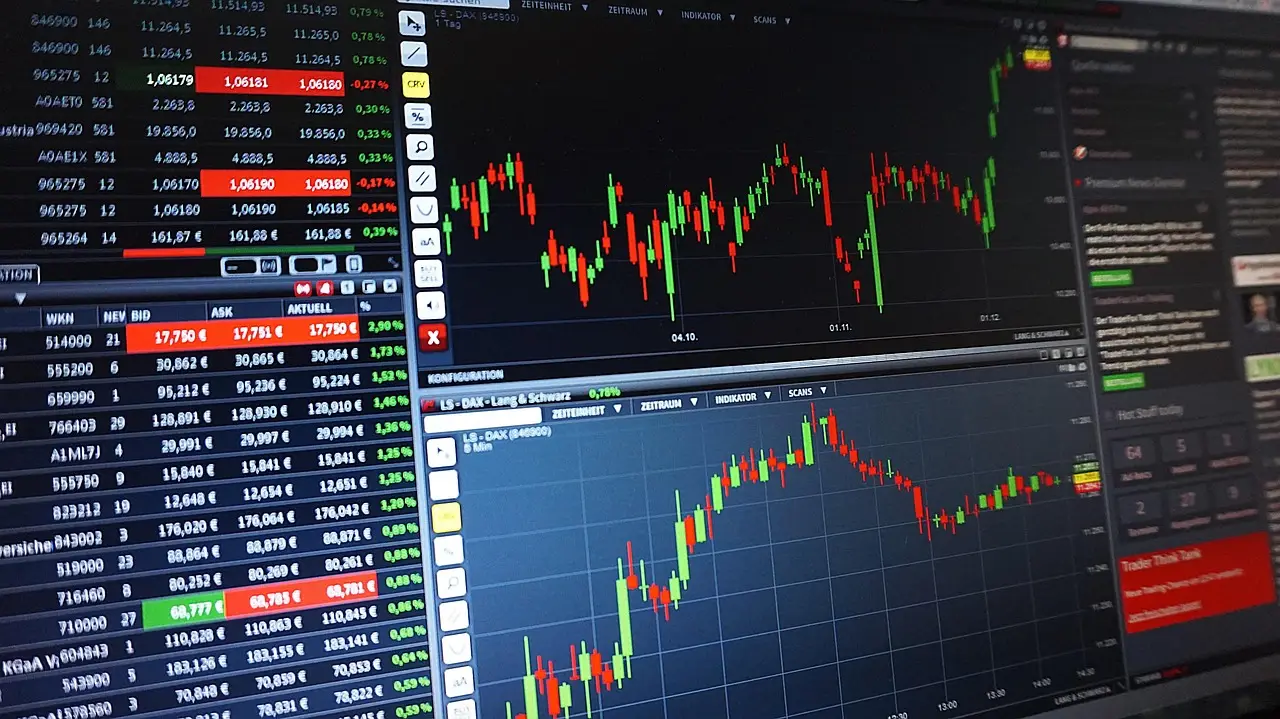
Nvidia shares fell 4.8% in US premarket trading on Monday as investors weighed the fallout from an independent board investigation involving CEO Jensen Huang. The decline exceeded 6% in Frankfurt, and the stock later traded at $176.41, down 5.48% from Friday's close of $186.64, according to StockAnalysis market data.
The picture emerged in stages through the morning. CNBC's 09:05 GMT report put the premarket decline at 4.8%, Reuters reported a 4.5% loss at 10:10 GMT, and CNBC's 11:04 GMT update showed Frankfurt-traded shares more than 6% lower. Bloomberg separately reported a drop of about 6% in early trading.
After the US opening bell, shares opened at $173.07 and touched an intraday low of $170.24 before recovering part of the loss. By 11:51 a.m. ET the stock stood at $176.41. The selling stayed concentrated in Nvidia rather than spreading across the sector, which tells the market something important.
Other US chipmakers, including Intel, Marvell, Qualcomm and Arm, slipped more than 1% in premarket trading, while Asian technology shares recovered across the region. The gap suggests investors treated the news as a company-specific governance concern, not as evidence of broader disruption to semiconductor demand.
What triggered the selloff?
The decline followed weekend reports by The New York Times and the Financial Times, citing US intelligence sources, about an alleged foreign intelligence effort involving a business executive with whom Huang acknowledged having an affair. Nvidia's board announced an independent investigation and said it had no reason to believe national security or company secrets had been compromised. No public findings have established the espionage allegations. The company set out its position in a November 8 board statement.
US President Donald Trump defended Huang on Sunday, praising his contribution to the country while saying he had not discussed the allegations with him. "I think he's an honorable guy. I think he probably has an excuse for it. You have to hear it," Trump told reporters. He also said Huang had "done an amazing job for our country." The comments offer public support at a sensitive moment, but they do not resolve the questions before Nvidia's board.
How does Wall Street see the risk?
Analysts focused on a question rarely raised about the AI chipmaker: what happens to Nvidia if Huang cannot remain CEO?
- Dan Ives of Yorkville Ives & Co. called the episode a "black eye moment" for Huang, warning of possible multiple congressional inquiries and an overhang on the shares. "The clear worry is, does Jensen stay on as CEO?" he said, while dismissing talk of replacing Huang as "comedy."
- Joachim Klement of Panmure Liberum said the impact "is currently contained to Nvidia", but warned consequences could spread to other semiconductor companies if Huang's position became endangered and Nvidia reduced support for businesses in Asia or the United States.
- Ben Emons of Fed Watch Advisors pointed to succession. "Every high-profile company carries key-person risk, and Nvidia is no exception," he said, adding that the initial handling and subsequent disclosures could weigh on investor confidence.
The assessments separate two risks. One is the immediate uncertainty around Huang's leadership. The other is whether an extended investigation adds regulatory and operational pressure to a company whose founder remains tied to its strategic direction.
How does China respond?
China's Foreign Ministry rejected the allegations on Monday. Spokesperson Guo Jiakun said the government considered the claim unsupported and politically motivated. "The 'Chinese spy' allegation is purely unsubstantiated and directed at smearing China," Guo said at the ministry's regular press conference.
Beijing's response adds a geopolitical dimension, given Nvidia's position in the US-China semiconductor competition and Huang's longstanding effort to preserve access to Chinese customers. The investigation could draw further scrutiny of the company's relationships, information-security procedures and exposure to export controls, although no wrongdoing by Nvidia or Huang has been established. Three Republican House committee chairs have requested a closed-door briefing with Huang on November 18, with a response or alternative date due by November 11.
What comes next?
Nvidia's next scheduled catalyst is its third-quarter fiscal 2027 results on November 17, with the earnings call confirmed for 2 p.m. Pacific Time, 5 p.m. Eastern. The results will let investors judge whether the controversy has affected the operating outlook, though the board investigation may still be open by then.
For now, the market is pricing a governance and leadership concern rather than a confirmed deterioration in Nvidia's chip business. The central question sits with the independent directors: whether the investigation can establish what happened, address the national-security concerns raised in the reporting, and preserve confidence in the company's leadership before the November 17 results test investor patience.
Source: financefeeds.com
More from Tom Whitfield
Show full bio
Staff writer covering companies, deals and strategy in Semiconductors, chip manufacturing, hardware, AI compute at Chip Dispatch.
785 articles
Related articles
nvidia-opens-independent-probe-as-shares-slip-before-results
Nvidia Opens Independent Probe as Shares Slip Before Results
nvidia-closes-at-186-64-as-huang-memo-tests-pre-earnings-risk
Nvidia closes at $186.64 as Huang memo tests pre-earnings risk
nvidia-board-investigates-jensen-huang-as-ai-stocks-shed-billions
Nvidia Board Investigates Jensen Huang as AI Stocks Shed Billions
nvidias-235-billion-buyback-authorization-faces-ceo-review
Nvidia’s $235 Billion Buyback Authorization Faces CEO Review