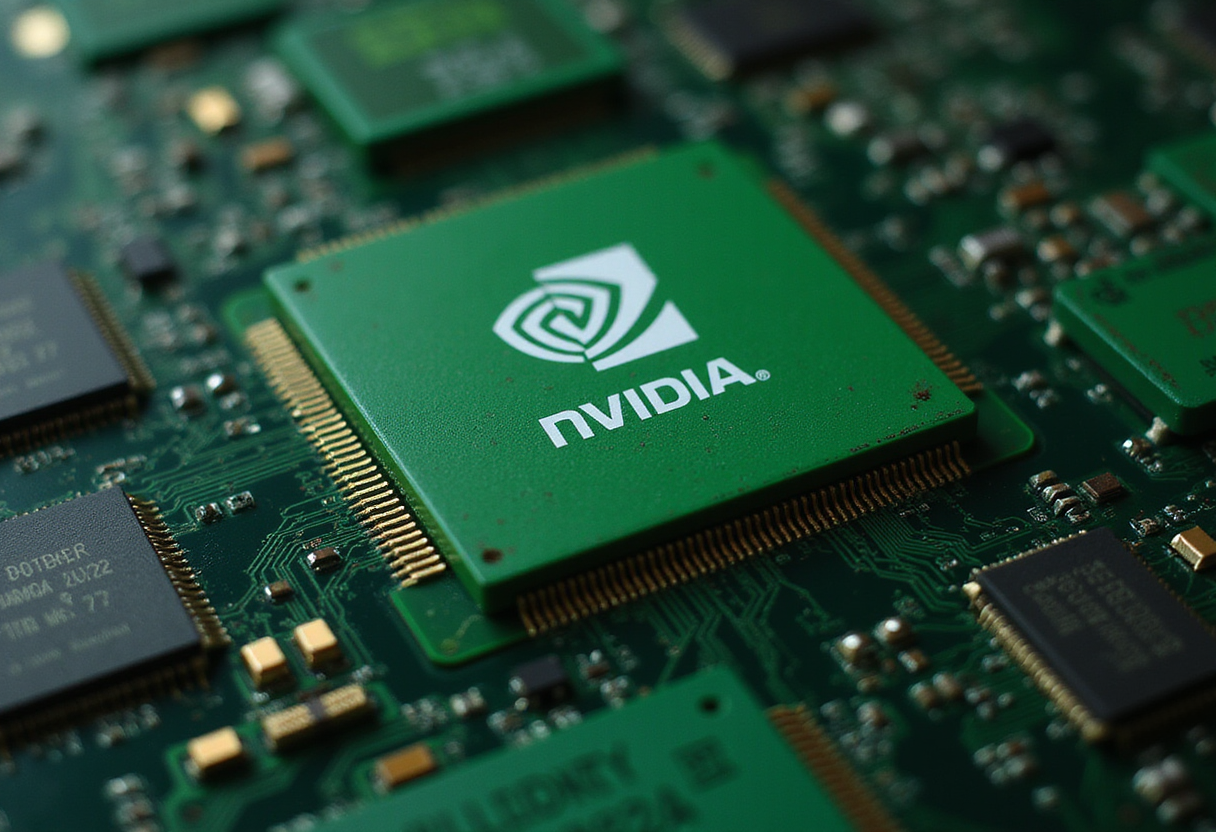
PNY Reportedly Refuses Warranty on Melted RTX 5090 Powered by Native Cable
PNY has allegedly refused to honor a warranty claim on an RTX 5090 graphics card that melted while drawing power through a native 16-pin cable, per a Tom's Hardware report by Zak Killian.
- By
- Rebecca Stone
- Filed
- Channel
- Consumer Tech
- Read
- 3 min read
PNY has allegedly refused to honor a warranty claim on an RTX 5090 graphics card that melted while running on a native power-supply cable, according to a report by freelance contributor Zak Killian at Tom's Hardware.
The article describes a customer whose GeForce RTX 5090 — NVIDIA's flagship consumer GPU, launched January 30, 2025 — suffered a connector melt despite using the cable that shipped inside the PSU box rather than a third-party adapter. PNY, one of the larger NVIDIA AIB partners in North America alongside Asus, MSI, Gigabyte, and Zotac, allegedly told the customer the damage did not qualify for warranty service. Killian's piece flags the denial as an allegation; Chip Dispatch could not independently verify the account, and PNY did not respond before publication.
The 16-pin connector at the center of the report is the 12V-2x6 standard, the revised version of the 12VHPWR plug that NVIDIA introduced with the RTX 4090 in 2022. After a wave of melting incidents through 2023 and 2024 — including a high-profile class-action over RTX 4090 burnouts — the standard was updated with tighter sensing pins meant to flag incomplete seating before current flows. The RTX 5090, rated at 575W board power, was the first major NVIDIA launch built around the revised connector.
Industry tracking over the past 15 months has logged dozens of similar melting incidents across multiple AIB partners and PSU brands, with user reports clustering on r/nvidia, r/buildapc, and the Linus Tech Tips forum. NVIDIA and its board partners have consistently attributed the failures to user-side factors — poorly seated plugs, third-party cables, or bent installations — while independent teardowns by outlets including Gamers Nexus have pointed to tighter mechanical tolerances inside the new connector as a contributing variable. The $1,999 RTX 5090 Founders Edition retailed alongside AIB cards that pushed board power toward 600W in factory-overclocked SKUs.
That split in causation is doing real work in warranty disputes. If the failure is treated as a user error, the cost lands on the customer. If the connector itself is defective, the manufacturer or PSU vendor carries it. PNY's reported refusal, if accurate, would push the case toward the customer and put pressure on NVIDIA to clarify where the line falls when its flagship AIB partners and the cable shipped with a third-party PSU intersect. PNY is not the first AIB partner to face such pushback: r/nvidia threads going back to launch have logged similar RMA disputes with MSI and Gigabyte over RTX 5080 and 5090 connectors.
Killian's byline positions him as a long-time PC builder and former repair-shop owner. His piece lands as the latest entry in a slow drip of consumer-facing incidents that have dogged the RTX 5090 since its late-January retail debut, a launch window NVIDIA framed as the start of a multi-year Blackwell refresh across gaming and AI accelerators.
If the dispute escalates, expect more RTX 5090 owners in similar situations to publicly post photos and serial numbers. The pattern that emerges over the next several quarters — how many warranty claims get denied, how many melted cables trace back to PSU-side versus card-side defects, and whether NVIDIA intervenes — will determine whether the 12V-2x6 connector becomes a footnote or a defining warranty headache of the Blackwell generation.
Source: Tom's Hardware
More from Rebecca Stone
Show full bio
Correspondent covering technology and product news in Semiconductors, chip manufacturing, hardware, AI compute at Chip Dispatch.
352 articles
Related articles
nvidia-may-kill-off-rtx-5090-as-ai-chips-take-priority-4f13174a
Nvidia May Kill Off RTX 5090 as AI Chips Take Priority
nvidia-reportedly-halts-geforce-rtx-5090-production-for-ai-gpus-deb8a51c
Nvidia Reportedly Halts GeForce RTX 5090 Production for AI GPUs
nvidia-courts-insurers-to-back-ai-chip-collateralized-loans-0a10e007
Nvidia Courts Insurers to Back AI Chip-Collateralized Loans
china-reportedly-approves-nvidia-rtx-pro-5500-sales-to-alibaba-bytedance-8e9803aa
China Reportedly Approves Nvidia RTX PRO 5500 Sales to Alibaba, ByteDance