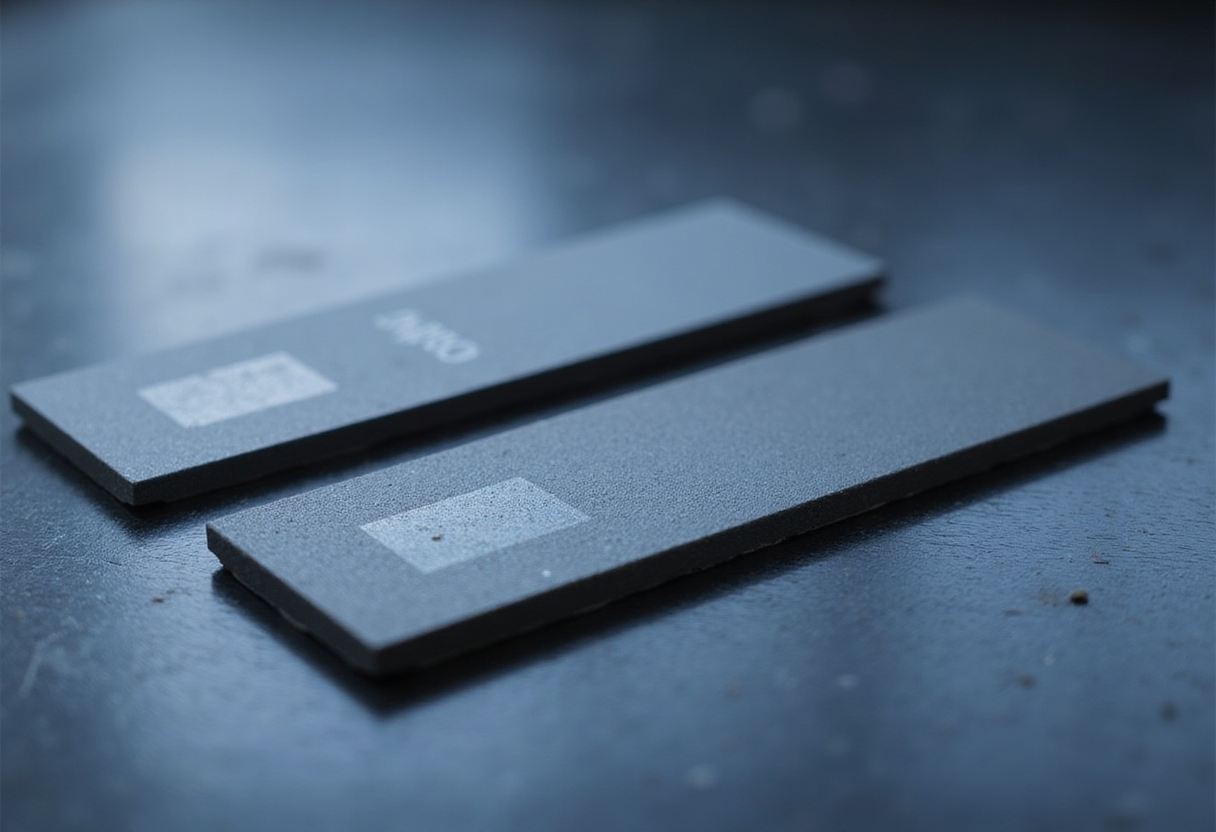
Qorvo samples C-band radar front-end trio covering 5.2-5.9 GHz
Qorvo is now sampling the QPB1055 BAW switched filter bank plus 50 W QPA2311 and 200 W QPA0018 GaN PAs for C-band pulsed ESA radar spanning 5.2 to 5.9 GHz.
- By
- Grace Kim
- Filed
- Channel
- Semiconductors
- Read
- 3 min read
Qorvo has begun sampling three C-band radar front-end devices spanning 5.2 to 5.9 GHz, including a switched filter bank built on bulk acoustic wave (BAW) technology and two gallium nitride (GaN) power amplifiers delivering 50 W and 200 W.
The QPB1055 integrates BAW filtering with switching, routing, and control on a single device. Qorvo designed the part to replace the discrete filter, switch, and RF-routing assemblies that pulsed electronically scanned array (ESA) designers previously assembled by hand. The company frames the device as providing "contiguous coverage with a combination of high Q, low insertion loss and small size unavailable in a discrete implementation."
On transmit, both PAs target the thermal and DC-power bottlenecks that have dogged C-band radar front ends. The QPA2311 produces 50 W with 55% power-added efficiency (PAE), while the 200 W QPA0018 removes the external high-power driver stage that lower-gain parts typically force on the system. Both use Qorvo's GaN process technology.
Qorvo is positioning the launch as a full-chain release. The three new devices join existing C-band limiters, low-noise amplifiers, switches, and driver amplifiers in the company's defense and aerospace catalog.
"We're investing across the C-band radar front end where frequency agility and transmit efficiency are problems the market has left open," said Diwakar Vishakhadatta, vice president of defense and aerospace products at Qorvo. "For customers, this means less custom receive design and higher transmit power without growing the DC power budget."
What problem does the integrated filter bank solve?
At C-band, frequency agility across 5.2 to 5.9 GHz has historically forced system engineers to assemble discrete filters, switches, and RF routing blocks because no integrated switched filter bank existed for the band. Qorvo's BAW-based part compresses that chain into a single component.
The pain points are familiar to any ESA hardware lead: cascaded discrete filters add insertion loss and board area; lossy switched banks erode noise figure; custom module work burns NRE budget.
How do the two transmit devices compare?
- QPA2311: 50 W output, 55% PAE
- QPA0018: 200 W output, eliminates external high-power driver
- Both built on Qorvo's GaN process
- Both optimized to cut DC power and heat dissipation at high transmit power
The 200 W part's ability to drop the external driver matters at the system level: a separate driver stage adds another bias rail, another thermal path, and another point of failure. Removing it lets designers push higher transmit power without expanding the DC power budget — the exact tradeoff Vishakhadatta flagged in his comments.
Why does the portfolio framing matter?
The three sampling parts draw on the same in-house expertise — BAW for filtering, GaN for power, system-level RF design — that Qorvo cites as its defense and aerospace differentiator. Radar customers can now pull receive and transmit building blocks from a single supplier rather than stitching a bill of materials across multiple vendors.
Samples and evaluation kits for the QPB1055, QPA2311, and QPA0018 are available immediately through Qorvo's sales channels.
Whether the integrated BAW filter bank holds up at high pulsed power densities, and whether 200 W GaN PAs remain premium-priced or commoditize against competing wide-bandgap parts, will shape the next round of C-band ESA architectures bidding for defense prime contractor slots in surveillance and missile-tracking roles.
Source: Electronics Weekly
More from Grace Kim
Show full bio
Market editor covering industry trends and analytics at Chip Dispatch.
264 articles
Related articles
quantalrf-s-wi-fi-7-8-front-end-module-pushes-linearity-into-silicon-4c6a5e95
QuantalRF's Wi-Fi 7/8 Front-End Module Pushes Linearity Into Silicon
spacex-awards-filtronic-68-1m-starlink-order-its-largest-ever-a8d53c9e
SpaceX Awards Filtronic $68.1M Starlink Order, Its Largest Ever
aluminum-nitride-wafer-market-tracks-wide-bandgap-demand-to-2035-0e210df1
Aluminum Nitride Wafer Market Tracks Wide-Bandgap Demand to 2035
wise-integration-and-navitas-semiconductor-partner-on-data-centre-psu-developmen-d427a0f5
Wise Integration and Navitas Semiconductor Partner on Data Centre PSU Development