Hardware & ComponentsLOT 261122 · 3 min read
Radeon RX 550 Mining Loses $0.15 a Day at US Power Rates
Minerstat data puts the RX 550's mining revenue at $0.07 daily against $0.22 in US power costs. Break-even requires $0.056 per kWh electricity, available only in a few regions.
Key takeaways
- RX 550 earns ~$0.07 daily gross versus ~$0.22 electricity cost at the US average $0.1804/kWh, a ~$0.15 daily loss (Nov 20, 2026).
- Break-even electricity rate is ~$0.056/kWh; only subsidized or hydro-surplus regions such as Paraguay qualify.
- Ethash, KawPoW and Etchash DAGs all exceed the card's 4 GB memory, blocking those networks.
- Used RX 550 units sell for $30-$50 as speculative and hobbyist purchases.
- GTX 1060 comparison: ~$0.42 daily gross revenue at 2.1 GH/s per Minerstat.
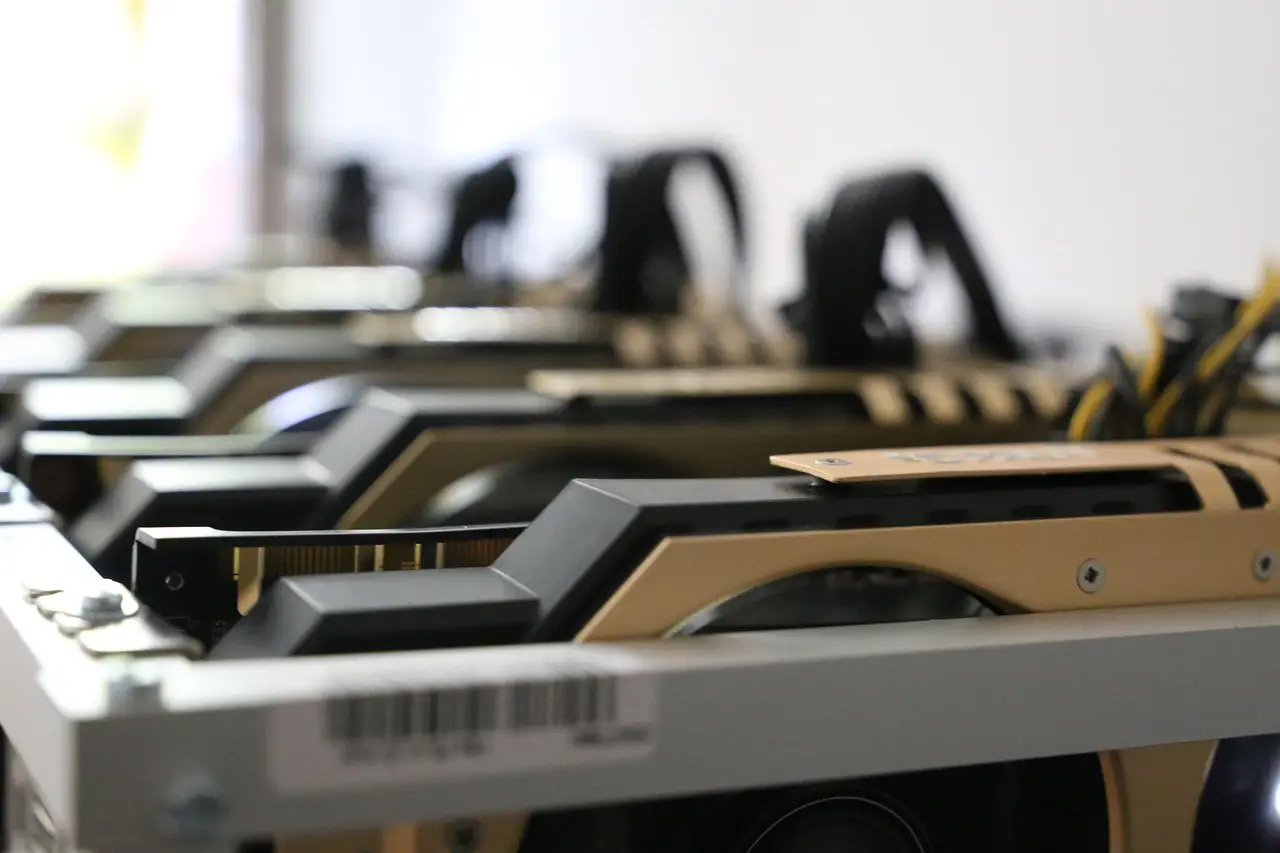
The AMD Radeon RX 550 now loses roughly $0.15 per day at United States residential electricity rates, earning about $0.07 in gross mining revenue against $0.22 in power costs. The figures come from Minerstat's profitability calculator as of November 20, 2026. The verdict is simple: a card that once paid for itself now charges its owner for the privilege.
The RX 550 launched in April 2017 with 4 GB of GDDR5 memory, 112 GB/s of bandwidth and a boost clock of 1183 MHz — the bottom rung of AMD's Polaris generation. Its benchmark numbers remain on record even where its mining careers have ended. Ethash returns 9 to 10 MH/s at stock settings and roughly 11 MH/s with memory overclocked to 1825 MHz, according to MinersHashrates testing. The 11.97 MH/s Ethash and 2.62 MH/s KawPoW figures are benchmarks only, not live capability.
What can the card actually mine?
Not Ethash, and not Ravencoin. The Ethash DAG and the Ravencoin DAG — now near 5,960 MB — both exceed the card's 4 GB buffer, which is a hard wall rather than a performance gap. Ethereum Classic's Etchash DAG crossed 4 GB in 2025 and closed that network to the RX 550 as well. Every epoch on the remaining proof-of-work chains trims the list further.
What survives is modest. The card manages 60 to 70 Sol/s on Equihash for Zcash and roughly 225 H/s on RandomX for Monero, rising to 275 H/s overclocked. Minerstat's benchmarks across 78 algorithms put Blake2s at 803.8 MH/s and Blake2b at 374.1 MH/s — rates that look impressive until one notes these serve small networks with low difficulty, where limited compute can still find blocks.
Where does break-even sit?
At approximately $0.056 per kilowatt-hour, according to Minerstat's November 20, 2026 calculations. That rate is scarce. It appears mainly in regions with heavily subsidized power, hydroelectric surplus or industrial contracts: Paraguay, parts of Central Asia and select African nations, where $0.02 to $0.03 rates put the card in positive territory. At $0.03 per kilowatt-hour, the RX 550 yields about $0.03 in daily profit — a rounding error with a fan attached.
The comparison with its contemporaries is unflattering. Per Minerstat's hardware data, the GTX 1060 reaches about 2.1 GH/s on its best algorithm and produces roughly $0.42 in daily gross revenue, around $0.28 daily profit at $0.08 per kWh. The GTX 1050 manages about $0.24 in daily profit at 1.18 GH/s.
Why does anyone still buy one?
Used units sell for $30 to $50 on resale platforms, a price at which speculative miners treat them as lottery tickets rather than equipment. The thesis borrows from history: during the 2021 bull market, even low-end GPUs returned positive daily income while coin prices outran network difficulty. Hobbyists form the other demand segment, using the card to learn mining software, pool connectivity and wallet management — the electricity bill functioning as tuition.
The RX 550's real value in 2026 is as a benchmark for the bottom of the GPU mining hierarchy. Ethereum's 2022 move to proof of stake removed the largest GPU-mineable network and pushed difficulty up on every remaining chain, compressing margins across all hardware tiers. Its economics show that profitability now depends on market timing and electricity access far more than silicon. Unless a coin rally outruns difficulty again, the card's most profitable coin, EPIC (Epic Cash), will keep it roughly $0.15 a day in the red.
financefeeds.com (Source)
More from Nathan Brooks
Show full bio
Senior reporter covering people, launches and day-to-day practice in Semiconductors, chip manufacturing, hardware, AI compute at Chip Dispatch.
1,201 articles