Chip ManufacturingLOT 261122 · 3 min read
Rapidus 2nm SRAM Yield Stands at Zero, Bloomberg Reports
Rapidus missed its summer 2026 SRAM milestone on the 2nm GAA node, Bloomberg reports, with cleanroom contamination adding risk to the second half of fiscal 2027 mass production.
Key takeaways
- Rapidus missed its summer 2026 milestone for functional SRAM cells on its 2nm node; reported SRAM yield is 0%.
- CEO Atsuyoshi Koike confirmed working 2nm GAA transistor electrical characteristics on July 10, 2025 at IIM-1 in Hokkaido.
- Rapidus targets mass production in H2 fiscal 2027, ending March 31, 2028, per its Japan Times interview.
- TSMC's N2 exceeded 90% yield on 256 Mb SRAM test chips by May 2025; only Intel, TSMC and Samsung currently mass-produce GAA chips.
- Bloomberg also reports particle contamination issues in Rapidus's cleanroom.
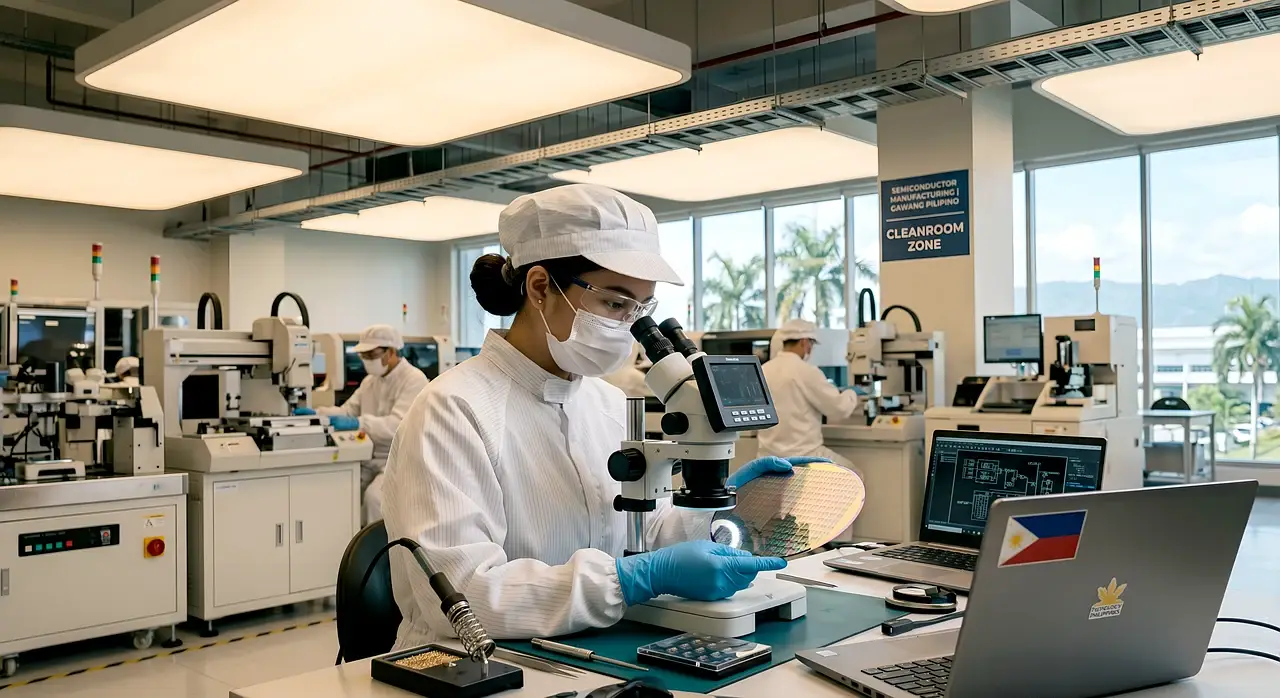
Rapidus has failed to demonstrate a single working SRAM cell on its 2nm-class node, Bloomberg reports, leaving its SRAM yield effectively at zero roughly 18 months before its promised mass production window. The Japanese government-backed startup was due to show functional SRAM cells by summer 2026. It has not done so. The company also faces particle contamination problems in its cleanroom, according to the same report.
What did Rapidus actually achieve?
The picture was brighter in July 2025. Rapidus produced test structures with 2nm-class gate-all-around (GAA) transistors at its IIM-1 fab in Hokkaido and reported expected electrical characteristics. "On July 10th we confirmed a major milestone: we successfully obtained electrical characteristics of 2-nanometer node GAA transistors," chief executive Atsuyoshi Koike told the Hot Chips 2025 conference. "We can see the transistor actually works."
That claim deserves scrutiny. Individual transistors are far simpler than integrated circuits. Bloomberg's report does not say whether Rapidus is failing on single cells, full memory arrays, or acceptable electrical characteristics and yields. What is confirmed: the summer 2026 SRAM milestone was missed, and the 2027 target now hangs on it.
Why SRAM is the gatekeeper
SRAM forms the cache and on-chip memory structures of modern processors, sometimes hundreds of millions of bitcells per chip. A conventional 6T bitcell packs six transistors plus contacts, local interconnects, and connections to wordlines, bitlines and power rails. A full 256 KB macro adds decoders, sense amplifiers, write drivers and control logic. Chipmakers use SRAM arrays and macros precisely because their repetitive structures expose defects, transistor variability and process problems that isolated test devices hide.
The industry benchmark is measurable. TSMC disclosed that its N2 node reached over 50% yield on a 256 Mb SRAM test chip in April 2023, more than 90% yield by April 2024, and over 90% average 256 Mb SRAM yield by May 2025, about half a year before volume production. Rapidus has announced no SRAM progress at all. The gap between TSMC's documented trajectory and Rapidus's silence is the real story here.
What stands between Rapidus and working SRAM?
Only Intel, TSMC and Samsung have reached mass production with GAA transistors. Rapidus was founded in 2022 and relies on process IP developed by IBM. Several specific failure modes could explain the stall, though Bloomberg does not identify one.
- Nanosheet release. Selective removal of sacrificial silicon-germanium layers must avoid damaging silicon channels. Imec research identifies nanosheet release as a critical GAA manufacturing challenge.
- EUV stochastic effects. Photon absorption and resist chemistry variations can cause edge roughness, missing or malformed structures across gates, contacts and interconnects. A company called Fractilia exists solely to address stochastic control.
- Inner spacer formation. A January 2026 paper in Nanomaterials shows subtle etching differences alter spacer geometry and nanosheet integrity, with electrical variability especially damaging to SRAM circuits.
- Gate stack integration. Thickness and work-function variation across nanosheets shifts threshold voltages, shrinking SRAM read, write and retention margins.
- Contamination and contacts. Bloomberg reports Rapidus is improving dust and particle control. IIM-1's unconventional grid-based wafer transport system, built for single-batch expedited processing, raises questions about qualification. A transport system alone cannot explain zero yield.
Is fiscal 2027 still realistic?
Rapidus does not confirm any delay. In an interview with the Japan Times, company representatives said it remains on track to mass-produce chips in the second half of fiscal 2027, which ends March 31, 2028. Note the shift in wording. Earlier targets implied calendar 2027; the fiscal framing quietly buys months.
The remaining schedule is unforgiving. Before high-volume manufacturing, Rapidus must demonstrate functional SRAM cells, integrate them into larger arrays, reach acceptable yields, qualify the process, and run roughly a year of risk production. Each step feeds the next. No rule dictates SRAM milestones a fixed number of quarters before production, but starting from zero yield in late 2026 compresses every subsequent phase.
Until Rapidus shows working SRAM and then larger integrated circuits, its ability to build commercially viable 2nm chips will remain an open question, and the competitive window behind TSMC, Samsung and Intel will keep widening.
Tom's Hardware (Source)
More from Sophie Lindqvist
Show full bio
News editor covering money, funding and market shifts around Semiconductors, chip manufacturing, hardware, AI compute at Chip Dispatch.
1,238 articles