Seagate’s AI Storage Bet Faces a December-Quarter Test
Seagate’s $4.233 billion fiscal first-quarter revenue and 57.8% gross margin support its AI-storage case, but December shipments, HAMR yields and 2028 pricing will decide the next rerating.
- By
- Rebecca Stone
- Filed
- Channel
- Memory & Storage
- Read
- 3 min read
By Rebecca Stone
Seagate Technology generated $3.4 billion in data-center sales, equal to 81% of revenue, while fiscal first-quarter revenue rose 61.0% to $4.233 billion. Non-GAAP EPS reached $7.68 against the $7.40 consensus, marking the sixth straight beat; gross margin hit 57.8%, and free cash flow reached $1.479 billion.
At $551.72, the shares traded 51.7% below their $1,143.27 52-week high even after a 9.99% one-session jump on CoreWeave-driven storage optimism. Then sentiment reversed: shares fell 20.19% in the week after the fiscal first-quarter beat. That whiplash captures the market’s central problem: a strong quarter has not settled whether Seagate’s AI-storage exposure is durable.
What must Seagate prove?
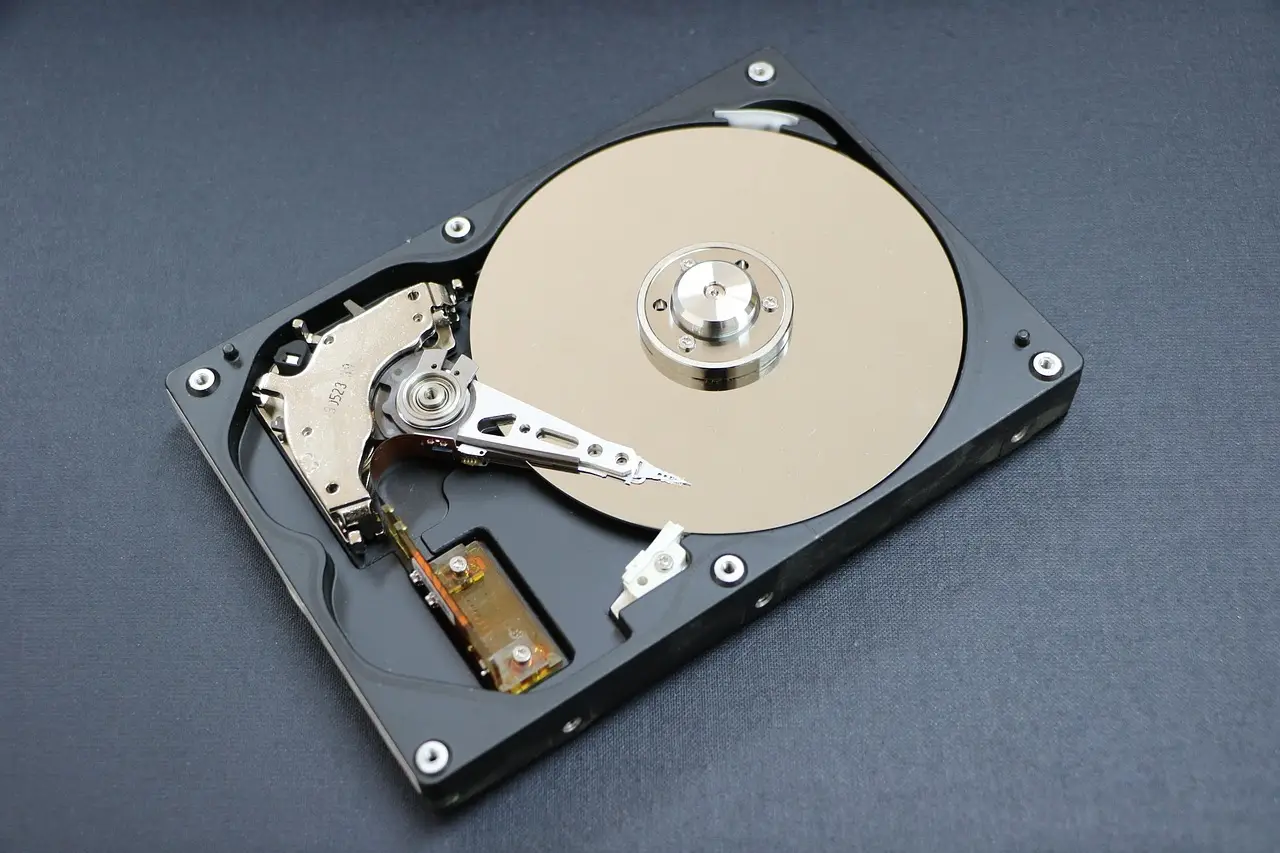
Seagate builds mass-capacity hard disk drives for hyperscale clouds, and its HAMR-based Mozaic platform serves as the growth engine. Microsoft recently qualified a Mozaic-based solution, giving the platform a named hyperscaler qualification.
Long-term agreements allocate most nearline supply through calendar 2028, while management plans to finalize pricing for that allocated supply over the next few quarters. Management expects HAMR to reach about 50% of the nearline exabyte run rate by the end of calendar 2026. A larger buyback step-up starts in the March quarter.
Those pricing and HAMR milestones will show whether Seagate can preserve pricing power. Company guidance calls for $4.80 billion in revenue and $9.20 in EPS. Analysts made 18 upward fiscal 2027 revisions in the past 30 days against one cut. On those expectations, the stock trades at about 13 times forward earnings.
Can record margins survive the cycle?
The core bear argument asks whether hard disk drives represent a durable AI play or sit at the peak of a cyclical bubble, mirroring the debate around Micron. The market snapshot also shows a price-to-book ratio of 33.65 and a beta of 2.201, underscoring how closely the valuation tracks expectations.
Customer concentration remains a risk because Seagate’s growth story rests on hyperscaler spending across storage, power and networking. An accompanying analysis puts hyperscaler capital expenditure at 102% of cloud revenue, illustrating the scale of the spending cycle on which the company depends.
On the earnings call, management noted higher external component costs, plus scrap and yield pressure during HAMR transitions. Seagate’s filing also lists tariffs and Commerce Department settlement obligations as risks.
What does Wall Street expect?
The $1,044.83 consensus target implies 89.4% upside from $551.72, but it remains an analyst estimate that can change. Ratings across 26 analysts break down as follows:
- Strong Buy: 4
- Buy: 18
- Hold: 4
- Sell: 0
Shares have gained 92.71% over one year while the S&P 500 gained 11.24%. Over the past month, Seagate fell 26.75%, compared with a 2.36% decline for the index. The trailing P/E ratio stands at 26, and the stock trades below its 50-day average of $756.58.
The figures capture a company whose earnings performance has outpaced the broader market, even as short-term sentiment has deteriorated sharply. With the shares already well above their one-year starting point, the next operating disclosures carry more weight than the prior earnings beat.
Can December shipments settle the debate?
Management promised “another big step” in December-quarter shipments. Results at or above $9.20 in EPS would support the optimistic case, while higher calendar 2028 pricing locked in on schedule would strengthen it.
Concerns would mount if hyperscalers delay deployments or product swaps return. Management says it sees “none of that right now.” Rising component costs that stall margin gains would add another source of pressure.
Investors should track exabyte shipments, gross margin and contract pricing each quarter. Seagate’s earnings power is established, but its AI credibility still faces a cyclical test.
With most nearline supply already allocated through calendar 2028, next quarter’s exabyte shipments, gross margin and contract pricing will show whether the AI-storage case can support Wall Street’s 89.4% consensus upside.
Source: 247wallst.com
More from Rebecca Stone
Show full bio
Correspondent covering technology and product news in Semiconductors, chip manufacturing, hardware, AI compute at Chip Dispatch.
892 articles
Related articles
seagate-posts-record-4-8b-quarter-as-hamr-drives-hyperscaler-demand
Seagate Posts Record $4.8B Quarter as HAMR Drives Hyperscaler Demand
seagate-jumps-9-as-coreweave-results-revive-the-ai-storage-trade
Seagate Jumps 9% as CoreWeave Results Revive the AI Storage Trade
wd-posts-55-revenue-growth-as-40tb-and-hamr-ramps-approach
WD posts 55% revenue growth as 40TB and HAMR ramps approach
seagate-s-report-ssds-cost-6-5x-more-per-terabyte-than-disk-c491bdee
Seagate's 2026 Report: SSDs Cost 6.5x More Per Terabyte Than Disk