AI & ComputeLOT 261119 · 3 min read
TASKING Outlines Agentic AI Path to ISO 26262 Certification
TASKING specialist Gerard Vink details a human-in-the-loop agentic AI framework for certifying ISO 26262 multicore automotive software, with guardrails around WCET and timing-coupling analysis.
Key takeaways
- ISO 26262 compliance requires WCET analysis and Freedom from Interference (FFI) evidence across data, control and timing coupling pathways.
- Vink says unqualified AI can delete compute-intensive code parts when told to optimize for speed, missing the intended objective.
- A trusted process framework requires defined AI task scope, guardrails against scope extension, and human ownership of AI contributions.
- Agentic AI can mitigate compilation errors during overnight test campaigns and log incidents for human oversight.
- WCET is not the longest observed test time; the gap to actual WCET is where undetected deadline violations occur.
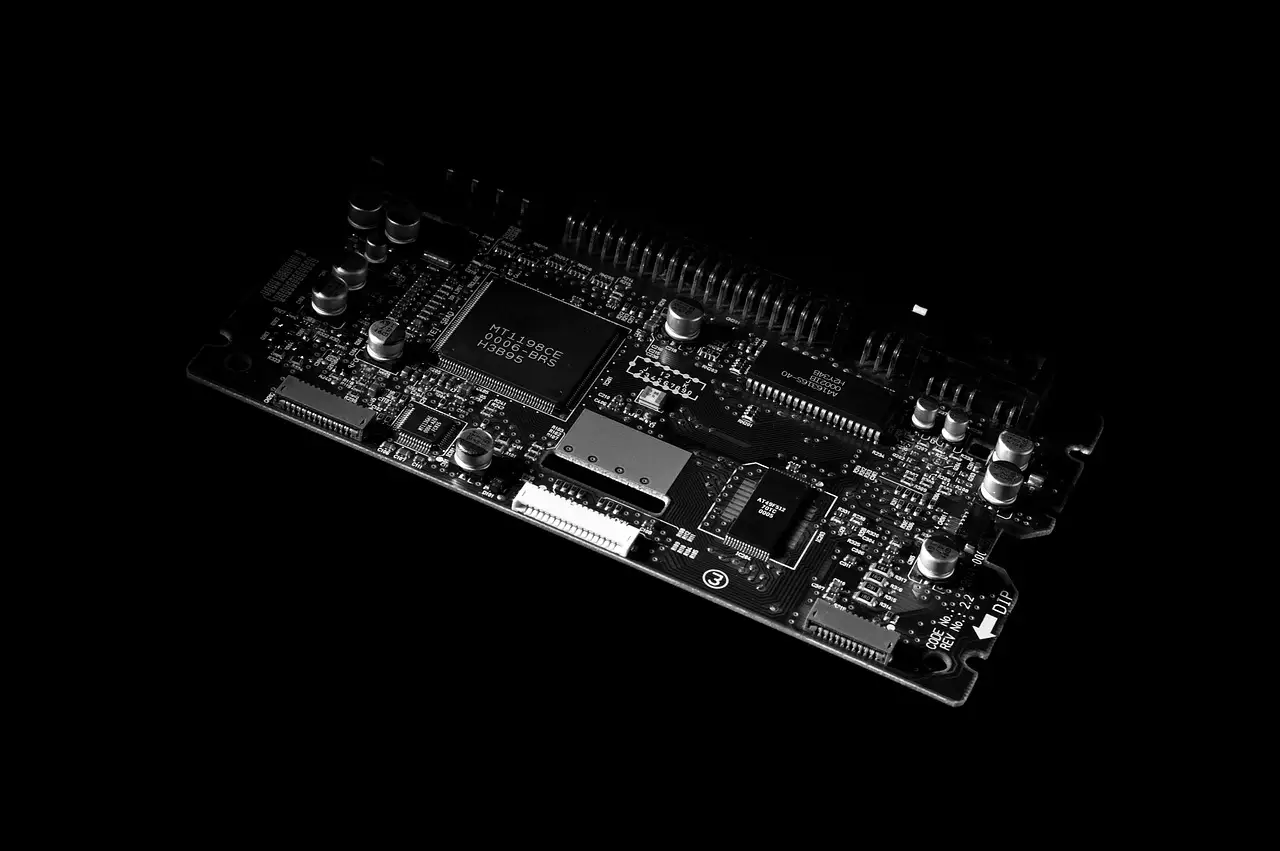
Automotive developers cannot use raw AI code generation and still certify systems to ISO 26262, because AI output behaves as an unmonitorable black box. TASKING industry specialist Gerard Vink has laid out a human-in-the-loop agentic AI workflow designed to accelerate verification of safety-critical multicore software without compromising certification.
The core problem is twofold. Developers must deliver reliable systems faster and at lower cost while satisfying ISO 26262. At the same time, multicore processor architectures introduce hidden timing coupling interference between cores, which can significantly increase worst-case execution time (WCET) and raise the risk of missing real-time deadlines.
Why Human-in-the-Loop Is Not Optional
Verification of functionally safe systems rests on requirements-based testing: the system must meet all design requirements plus relevant safety and security requirements. Requirements traceability therefore governs code implementation, test creation and the overall testing process.
Vink warns that AI code generation without oversight can fail catastrophically. A prompt such as "optimize this code to execute faster" invites the AI to delete compute-intensive parts of an algorithm. The code runs faster and completely misses the intended objective.
The same risk applies to AI-written tests. Each generated test must itself be verified to confirm relevance, sufficient coverage, full exercise of the code and correct implementation of the requirements under verification. Vink said developers run the risk of spending more time reviewing and correcting AI output than doing the work themselves, which can reduce overall efficiency, introduce additional risk and erode OEM confidence in the system.
What Does a Trusted Process Framework Look Like?
Vink's central principle is to avoid having to trust the AI at all. Instead of replacing developers, AI should amplify their capabilities by performing clearly defined tasks in a transparent, traceable and verifiable manner. The framework holds when three conditions are met:
- Tasks and processes are clearly defined in terms of what the AI is expected and allowed to do.
- Guardrails prevent the AI from extending beyond the scope of those tasks.
- A human remains responsible for system design and takes ownership of the AI's contribution.
One concrete application is test generation for timing-coupling evaluation in multicore systems. Testing every combination of possibilities is impossible, so developers select a representative subset. AI agents can suggest overlooked or unconsidered test cases, catching blind spots rather than replacing developer judgment. The developer reviews AI-suggested tests and adds relevant ones, producing a broader selection than the developer would make alone.
A second application is automation of complex manual process steps, where the AI reliably manages defined processes and can ask a human for help when an unexpected result occurs. A third is resolving well-defined problems during test campaigns: when a combination triggers a compilation error, an agentic AI can assess the problem, mitigate it to resume testing and log the incident for human oversight. That prevents simple errors from stalling overnight testing runs.
Why WCET Analysis Drives Certification
WCET analysis is a necessary part of ISO 26262 compliance. The standard expresses the obligation to show that safety-critical software components do not interfere with each other as Freedom from Interference (FFI). Coupling coverage analysis is the primary means of evidencing FFI at the software level, by showing that all identified coupling pathways — data, control and timing — have been exercised and behave consistently with safety requirements.
A task's WCET is the maximum time it could take across all possible inputs, all system states and all interference patterns from concurrently executing tasks. Vink stresses that WCET is not the longest time observed in testing; the actual WCET may be longer in untested circumstances. The gap between maximum observed execution time and actual WCET is where undetected deadline violations occur and represents the residual risk in the system.
Part 2 of the series will cover how to accurately assess WCET, how agentic AI automates iterative testing, and how the combined approach simplifies certification of complex automotive systems under strict safety standards.
youtu.be (Original)
More from Grace Kim
Show full bio
Market editor covering people, launches and day-to-day practice in Semiconductors, chip manufacturing, hardware, AI compute at Chip Dispatch.
1,147 articles