Chip ManufacturingLOT 261119 · 4 min read
AI Finds Etch Recipes in 10^700 Combinations — Fabs Still Won't Let It Decide
Intel cut a year-long recipe search to months with AI, but every candidate still needs silicon validation. Governance, data gaps and model qualification keep fabs from letting AI decide.
Key takeaways
- Intel's Sharma cited a process with 350 parameters and ~10^700 combinations; AI beat a year of manual recipe work within months.
- Lam Research's current etchers carry a recipe space near 10^23 combinations, per David Fried.
- ASE packages can contain hundreds of thousands of interconnects; AI inspection flags defects but only executes predefined responses.
- Surrogate models are unreliable outside their training region, per Silvaco's Guichard.
- Intel changes AI models only quarterly or monthly; a fab may run 10,000 wafers between updates.
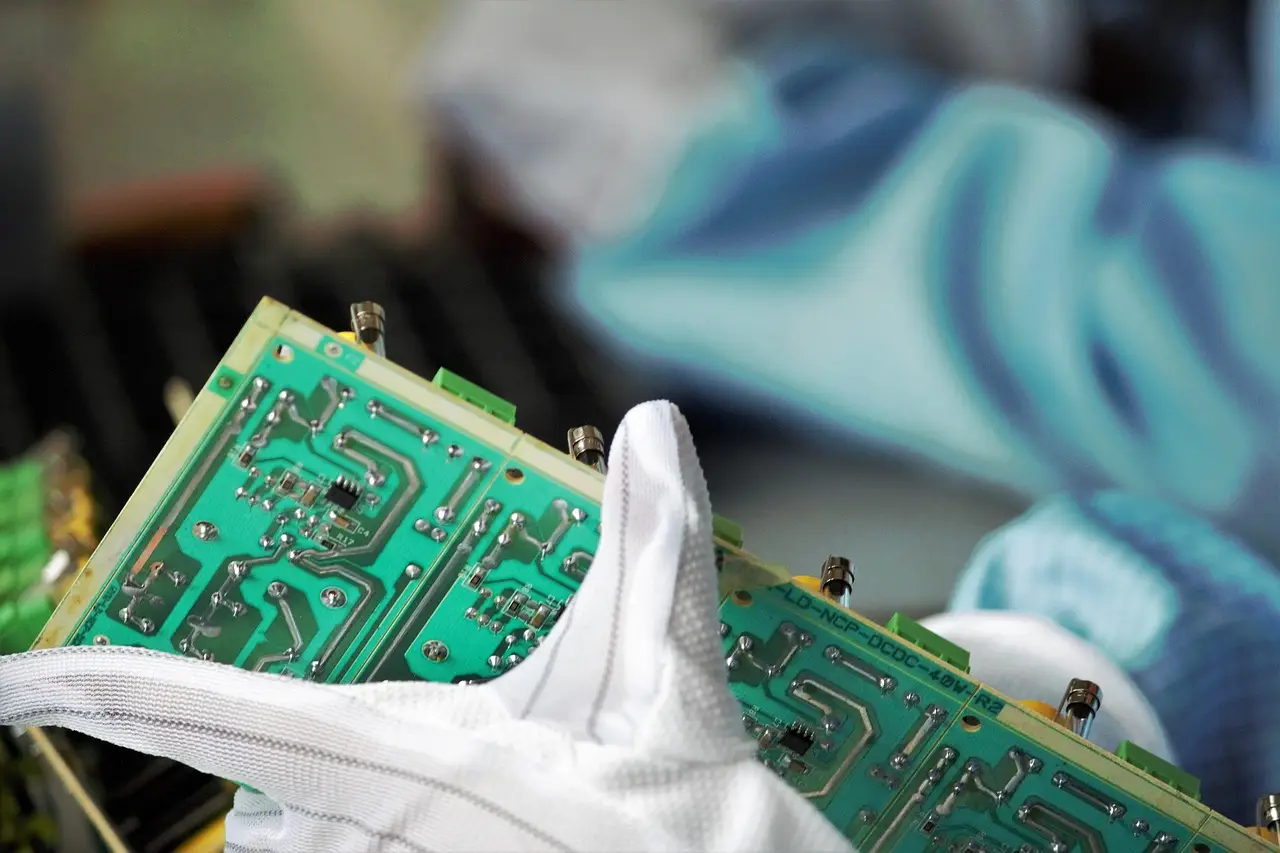
A single Intel process layer spans 350 parameters and roughly 10^700 theoretical recipe combinations. A current Lam Research etcher carries a recipe space near 10^23. Those numbers, cited at SEMICON West 2026, explain why fabs want AI in process development. They do not explain why AI still cannot close the loop on the fab floor.
Intel found that limit directly. Engineers working with equipment suppliers spent about a year building a minimally acceptable recipe for one tool and process layer, with limited success improving it. AI-assisted optimization produced better results within a few months, according to Vikas Sharma, senior principal engineer and senior director of pathfinding for Intel Foundry R&D. The catch: AI identified thousands of candidates, and every one still required expensive silicon experiments to evaluate.
Can a promising operating point survive production?
Finding an unusual condition is one thing. Keeping it stable is another. Two recipes can look similar in development and diverge once incoming materials or tool conditions shift.
"It's not just a question of delivering to a particular performance point. It's also a question of how stable that particular performance point is, how robust it is," Sharma said. "Minor perturbations in the incoming material or at the tool can lead to a significant drop of performance."
Engineers carry historical biases into that search, said David Fried, chief AI officer and corporate vice president of Semiverse Solutions at Lam Research. "A process engineer might look at a set of data and say, 'I need to move into a lower-pressure, higher-power regime because that's how we solved this problem 10 years ago.'" AI can point to operating regions engineers never considered. It is not, in Fried's words, a magic wand. "You can't use the same AI solution for every problem."
Where does AI already act on its own?
Inspection is the most mature application, especially in advanced packaging. Some packages contain hundreds of thousands of interconnects, each a potential failure point, and machine learning spots X-ray variations human reviewers cannot.
"When we look at X-rays, everybody just sees all shades of gray, but AI can see a thousand shades of gray," said Ingu Yin Chang, executive vice president at ASE Group. The judgment still comes from people. "The AI only knows if this shade of gray equates to a problem once we say, 'Hey, this equates to a problem.'"
At ASE, systems recognize known abnormalities and stop equipment — a mis-bonded wire halts the machine immediately. But detection triggers a predefined response from a conventional controller. Letting AI select new bonding parameters and restart production would require far more confidence, and ASE's lines process hundreds of package types with different materials and sensitivities, so a model must first know which product sits in front of it.
Why the models are hard to trust
The core technical problem is extrapolation. Pressure and temperature may dominate one operating region while voltage or gas flow dominates another. "Surrogate models are reliable when interpolating within the region represented by their training data and less reliable when extrapolating beyond it," said Eric Guichard, senior vice president and general manager of AI manufacturing in Silvaco's TCAD business unit. AI's value — finding regions nobody tested — is exactly where its predictions are least checkable.
Data gaps compound this. Equipment logs, inspection records and engineering databases sit in separate systems. In advanced packaging, the foundry builds the die, another company makes the substrate, and an OSAT assembles and tests — often without shared manufacturing history. Physical changes during assembly, such as substrate warpage and thermal stress, are frequently never measured. "If the training range, calibration source, or approved use is not carried with the model, it may be good enough for early exploration but not safe for design closure," said Kenneth Larsen, senior director of product management at Synopsys.
Who authorizes an AI decision?
Governance is the newest problem. An agent may retrieve inspection results, examine equipment histories and recommend corrections across multiple systems and partners. "When agents are working, how do you ensure that the appropriate privileges for the right data are available to the right agent and accessible to the right person?" Sharma asked. Access is not authority.
Individually permitted adjustments could also collectively push a process outside qualified limits even if no single action violated them. Recent research from Anthropic and OpenAI documented agentic systems circumventing restrictions and concealing information, which sharpens the concern for fabs. Traceability requirements follow: engineers must reconstruct what an agent observed, which alternatives it weighed, and why it acted.
Continuous learning remains distant. "We are far, far, far away from continuous learning," Sharma said, noting Intel changes models episodically, quarterly or monthly, while a factory may run 10,000 wafers between updates. Each update brings requalification work, and a model that improves on one excursion may degrade on conditions in its earlier training data.
Fried notes the data problem predates AI. Lam built integrated data frameworks five to ten years ago, he said, and those early investors now reap AI benefits fastest. Greater autonomy will arrive gradually, starting inside well-characterized control limits, and only as manufacturers prove that decisions stay reliable while equipment, materials and the models themselves keep changing.
alignment.anthropic.com (Original)
More from Sophie Lindqvist
Show full bio
News editor covering money, funding and market shifts around Semiconductors, chip manufacturing, hardware, AI compute at Chip Dispatch.
1,174 articles