Consumer TechLOT 261119 · 3 min read
Toyota’s new 1.5-liter hybrid targets 15% better fuel economy
Toyota’s new 1.5-liter hybrid system targets more than 15% better fuel economy and a shared BEV, PHEV and HEV architecture, backed by 35 million electrified vehicles sold.
Key takeaways
- Toyota targets more than 15% better fuel economy with its new hybrid system.
- The powertrain uses a four-cylinder 1.5-liter engine family in naturally aspirated and turbocharged versions.
- A common architecture spans BEV, PHEV and HEV models.
- Toyota has sold more than 35 million electrified vehicles worldwide.
- Toyota has made more than 24,000 advanced electrification patents freely available.
By Rebecca Stone
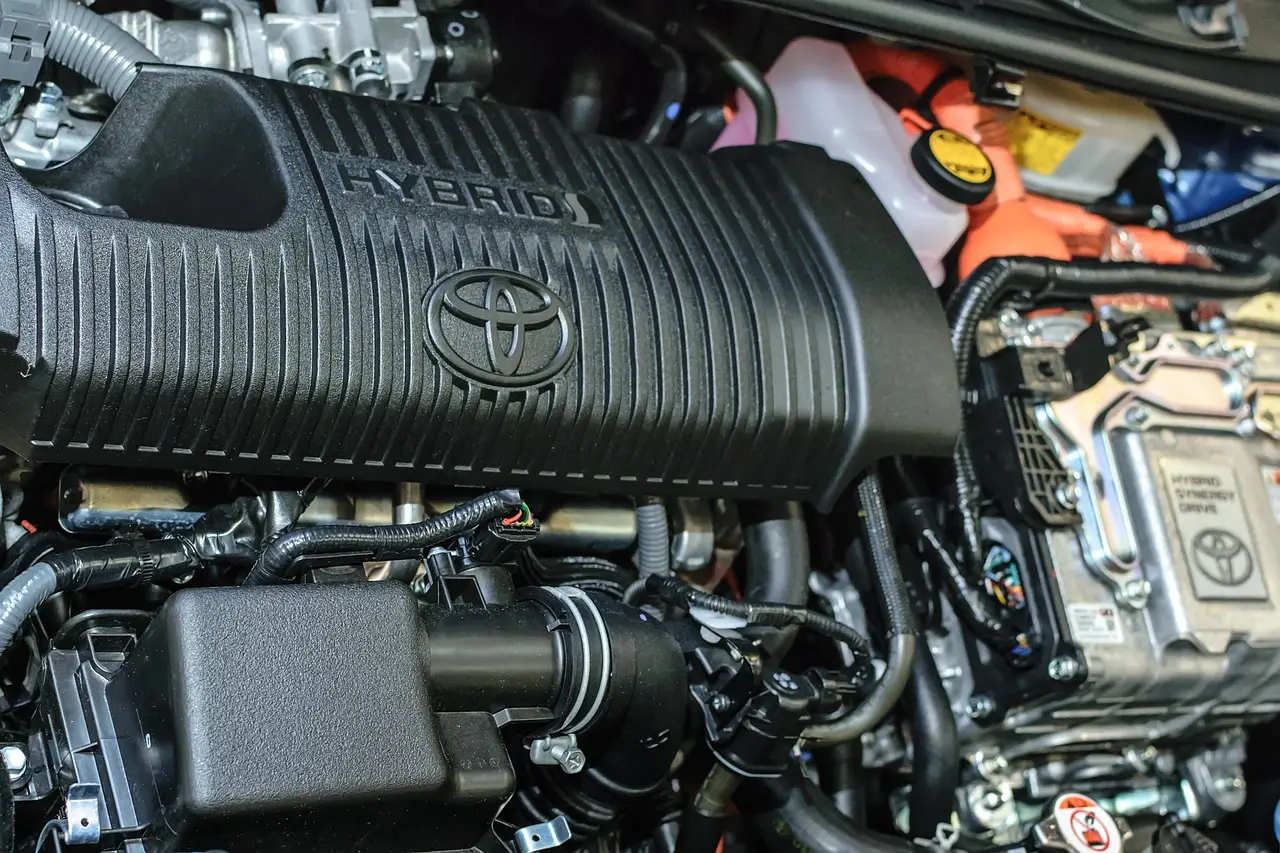
Toyota says its new 1.5-liter hybrid system can improve fuel economy by more than 15%, a company target rather than a confirmed production result.
At the center of the system sits an entirely new family of four-cylinder 1.5-liter engines, offered in naturally aspirated and turbocharged versions and designed from the ground up for electrification.
What changes in Toyota’s hybrid system?
- The naturally aspirated engine replaces the performance span of Toyota’s current 1.8-liter engines and 1.5-liter three-cylinder engines, according to the company.
- Toyota has developed lighter, more compact electric motors, power control units and inverters for the hybrid powertrain.
- Toyota develops the engine, electric motors, power control units and inverters together as one compact unit to reduce electrical and mechanical losses.
- The company targets more than 15% better fuel economy through lower friction, improved thermal management, reduced electrical losses and lower aerodynamic drag, reflected in a lower drag coefficient.
Toyota describes the resulting package as much smaller than its previous hybrid hardware. The system is designed to improve battery-electric vehicle performance while allowing sleeker, more stylish vehicle designs.
That hardware forms the foundation of Toyota’s “multi-pathway” strategy, which combines battery-electric vehicles with combustion-based hybrids rather than committing every factory and model to one powertrain format.
Why share one architecture across BEV, PHEV and HEV?
The smaller, lower-profile package fits into a common architecture shared by BEV, PHEV and HEV models. Toyota says this arrangement creates financial and engineering economies of scale across three propulsion types.
The architecture supports lower hood lines and more dynamic vehicle proportions without sacrificing interior space, cabin capability or BEV performance. Packaging the hybrid components in one low-profile unit gives vehicle designers more room to shape the vehicle around those proportions.
At the manufacturing level, Toyota intends factories to alter production mixes as customer demand changes. The common architecture lets plants shift output among BEV, PHEV and HEV versions without requiring an entirely different vehicle platform for each route.
Why does Toyota still need multiple powertrain paths?
Toyota argues that electrification’s pace and direction remain constrained by consumer reluctance tied to range anxiety, high vehicle cost and insufficient charging-infrastructure readiness. Energy conditions and customer preferences also differ by region.
Heavy-duty vehicles remain a priority in some markets, particularly the United States, where nearly half of the population drives a pickup truck. Toyota therefore says automakers need a full array of powertrain choices if they are to reach carbon neutrality.
That portfolio spans six broad routes:
- Battery-electric vehicles, or BEVs.
- Plug-in hybrid electric vehicles, or PHEVs.
- Conventional hybrid electric vehicles, or HEVs.
- Internal-combustion engines optimized for carbon-neutral fuels.
- Hydrogen-engine vehicles.
- Fuel-cell electric vehicles, or FCEVs.
Together, the options support Toyota’s stated aim of providing practical, accessible vehicles that can contribute to carbon reduction. The company is also developing the new combustion-based system to operate with renewable and carbon-neutral fuels.
What will determine the strategy’s commercial traction?
Toyota reports that it has sold more than 35 million electrified vehicles worldwide. It has also made more than 24,000 patents covering advanced electrification technologies freely available, including core systems used across electric and hybrid vehicle types.
The vehicle-sales and patent figures are historical company totals; the more-than-15% fuel-economy improvement and planned expansion of external engine and hybrid sales remain forward-looking targets.
Toyota plans to increase external sales of its new engine and hybrid technologies in the coming years. The announcement does not specify model names, production dates, factory capacity figures or pricing.
The commercial test is whether Toyota can put the shared package into volume production while meeting the more-than-15% fuel-economy target. Its intent to shift BEV, PHEV and HEV output as demand changes could shape cost and pricing; the planned external-sales push will show whether that flexibility becomes an advantage against competitors serving different regional powertrain preferences.
Electronic Design (Source)
More from Rebecca Stone
Show full bio
Correspondent covering technology and product news in Semiconductors, chip manufacturing, hardware, AI compute at Chip Dispatch.
1,175 articles