Trump Announces $21 Billion Japanese-Funded Chip Plants in New York
Trump announced $21 billion in Japanese-funded semiconductor plants for New York. No investor, node, or timeline was disclosed. Here is what the claim does and does not establish.
- By
- Sophie Lindqvist
- Filed
- Channel
- Chip Manufacturing
- Read
- 3 min read
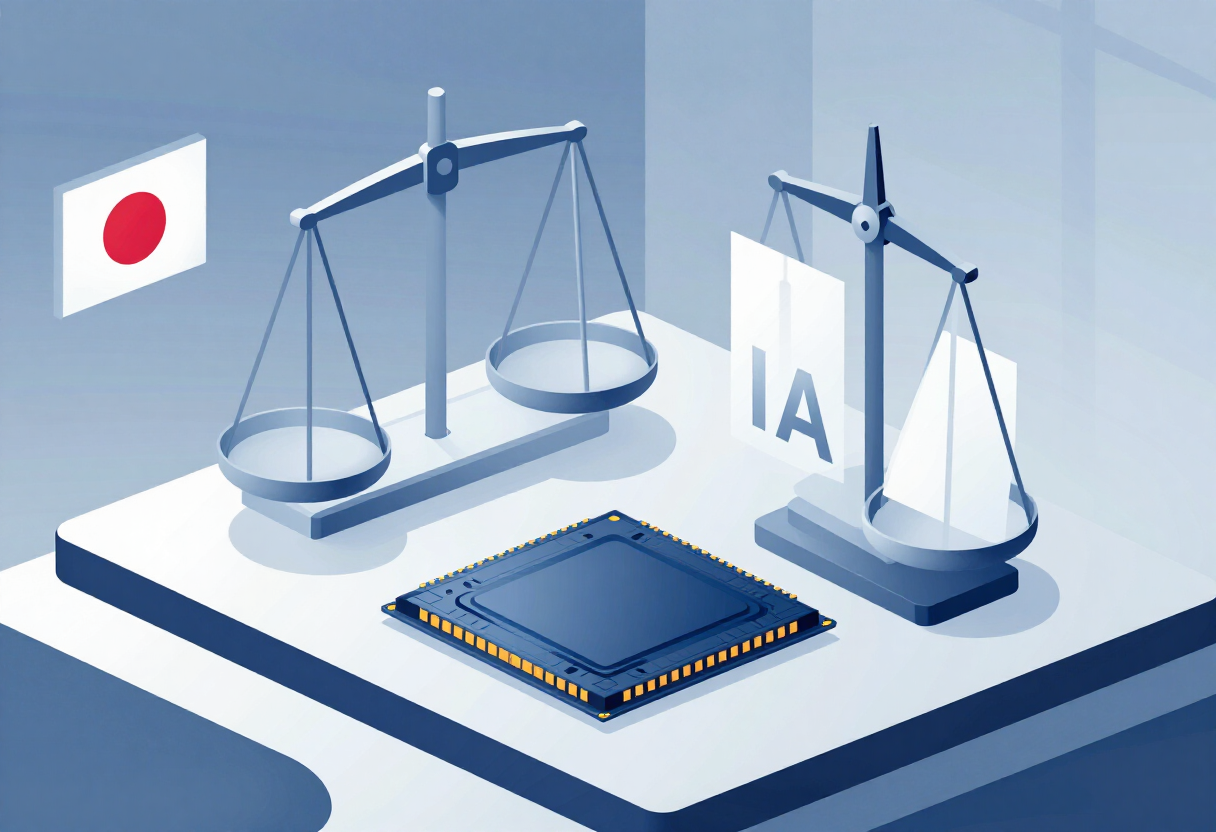
President Donald Trump has announced a $21 billion commitment from Japanese investors to build semiconductor plants in New York, according to a report by Florida's Voice. The figure is the single hardest number in the announcement. Everything else remains unstated.
The claim is large but thin. The report names the investment amount, the funding nationality, and the location. It does not name the Japanese companies involved, the process nodes they intend to run, the wafer sizes, the fab count, or a construction timetable. Each of those omissions matters. A $21 billion figure without a node or capacity target cannot yet be scored against comparable U.S. projects.
What does the announcement actually contain?
The confirmed elements, as reported by Florida's Voice, are these:
- $21 billion in Japanese-funded investment.
- Semiconductor fabrication plants as the stated purpose.
- New York as the location.
- Trump as the announcing authority.
That is the full ledger. No corporate partner appears in the disclosure. No jobs figure, no timeline, no capacity in wafers per month, and no product family appear either. Readers should treat the $21 billion as an announced intention, not a signed capital expenditure plan, until companies or regulators confirm it.
Why the gaps matter
Semiconductor investment announcements have a mixed record of converting into operating fabs. The industry norm is a phased commitment: an initial figure covers shell construction and early tooling, while full capacity arrives years later and often at higher cost. Without a named investor, there is no way to check the figure against a company's stated capital budget or balance sheet.
New York itself carries relevant history. The state hosts GlobalFoundries' Fab 8 in Malta, and it competed aggressively for the Micron-led megafab in Clay, near Syracuse. A second large-scale Japanese-funded project in the same state would compound demand for the region's scarce inputs: skilled trades, ultra-pure water, and grid capacity. The announcement, as reported, does not say whether the new plants would complement or compete with those existing commitments.
Japan's role is the geopolitical thread worth watching. Japanese suppliers — Tokyo Electron in deposition and etch equipment,SCREEN in wet processing, JSR in photoresists — already anchor the U.S. toolchain, but Japanese-owned fabrication on U.S. soil is far rarer. A $21 billion production commitment would mark a shift from supplying American fabs to operating them. The report does not confirm any of these companies as participants. That is an inference, not a disclosure.
What is not said
The skeptics' checklist on this announcement runs longer than the announcement itself. There is no:
- Named Japanese investor or consortium.
- Process node or wafer size.
- Site, county, or acreage.
- Groundbreaking or production start date.
- Statement on CHIPS Act funding, tax treatment, or state incentives.
- Capacity or revenue projection.
Every one of those blanks will be filled, or left conspicuously open, in the weeks after the announcement. The incentive question deserves particular scrutiny, because New York has previously offered multi-billion-dollar subsidy packages, and federal chips funding has its own conditions on any award.
The bar the project must clear
A $21 billion figure, if fully deployed, would place this project in the same weight class as major U.S. fab complexes now under construction in Arizona, Ohio, and Texas. That comparison only holds if the money is real, phased, and committed to fabrication rather than packaging or research.
For now, the announcement stands as a number with a flag on it. The test will come when a Japanese corporate name attaches to the money, a site plan is filed in New York, and equipment orders surface in supplier disclosures. Until then, the $21 billion remains a promise from a podium, and the semiconductor industry has learned to price those carefully.
Source: Google News: semiconductors
More from Sophie Lindqvist
Show full bio
News editor covering money, funding and market shifts around Semiconductors, chip manufacturing, hardware, AI compute at Chip Dispatch.
468 articles
Related articles
japan-and-us-weigh-19-billion-chip-plant-in-tariff-investment-pact-8dcdcf17
Japan and US Weigh $19 Billion Chip Plant in Tariff Investment Pact
japan-and-us-in-talks-over-chip-fab-under-550-billion-investment-plan-a855977a
Japan and US in Talks Over Chip Fab Under $550 Billion Investment Plan
japan-to-put-up-to-21-billion-into-two-us-chip-factories-run-by-globalfoundries-bb088056
Japan to Put Up to $21 Billion Into Two US Chip Factories Run by GlobalFoundries
sia-backs-globalfoundries-expansion-under-u-s-japan-chip-initiative-a4c20cad
SIA Backs GlobalFoundries Expansion Under U.S.-Japan Chip Initiative