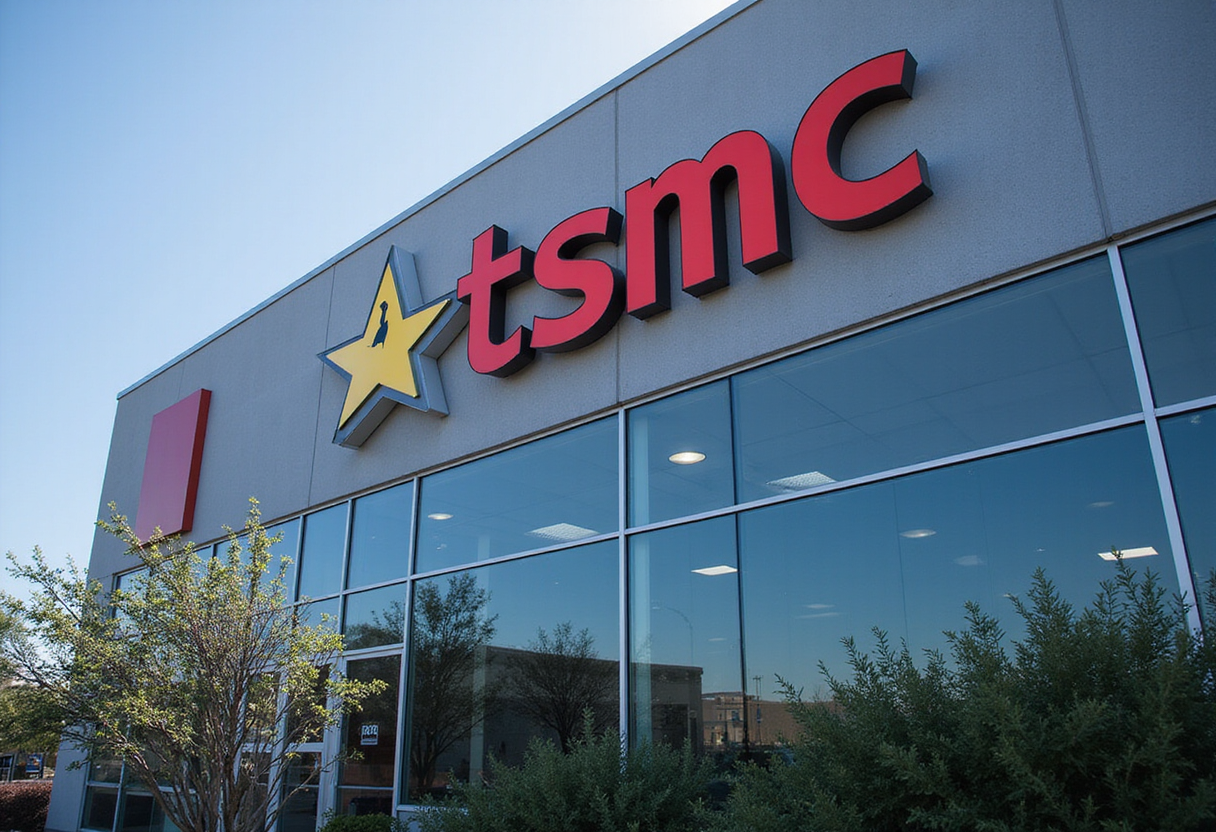
Trump Says TSMC Arizona Site Will Double, Eyes 50% US Chip Share
Trump says TSMC's Arizona fab will double in size as he targets 50% of the U.S. chip market before leaving office; TSMC has yet to confirm the figures.
- By
- Nathan Brooks
- Filed
- Channel
- Chips & Policy
- Read
- 3 min read
President Donald Trump said TSMC's Arizona fabrication complex will double in size, part of what he described as a push to bring roughly 50% of the U.S. chip market onshore before he leaves office, according to a report by finance.biggo.com.
The claim, framed by the outlet as a "bombshell," attaches an aggressive target to the world's largest contract chipmaker's existing U.S. footprint. TSMC operates its Fab 21 site in Phoenix, where it has committed to multiple phases of advanced-node capacity across 300mm wafers. The president did not specify, in the reported remarks, which phases or additional fabs the doubling would cover.
What did Trump actually announce?
The reported statement contains two headline elements:
- A doubling of the Arizona plant's scale, implying a significant expansion beyond TSMC's currently announced Phoenix phases.
- A goal of reaching 50% U.S. chip market share in domestic production before the end of Trump's term.
The report attributes both figures to the president's remarks. It does not cite a corresponding TSMC announcement, a capital expenditure figure, a timeline by phase, or a process-node breakdown for the added capacity. Investors and supply-chain planners should treat the 50% figure as a political target rather than a confirmed corporate roadmap.
Where does TSMC's U.S. footprint stand now?
TSMC's Arizona project has already grown substantially from its original single-fab plan. The company has announced successive phases at the Phoenix site covering advanced logic production, with capacity phased in over several years and serving customers including Apple and Nvidia. Any further doubling, if confirmed, would represent one of the largest greenfield advanced-logic expansions on U.S. soil.
The absence of a dollar figure or wafer-per-month number in the reported remarks leaves the commercial scale of the claim unverified. TSMC typically discloses capacity and capex details in quarterly earnings calls and official investment announcements, not through presidential statements.
Why the 50% target matters commercially
A 50% domestic share for U.S.-made chips would mark a dramatic shift from today's structure, in which the majority of leading-edge logic output is manufactured in Taiwan. For TSMC customers, expanded U.S. capacity reduces geographic concentration risk; for U.S. policy, it advances reshoring goals tied to chip subsidies and tariff leverage.
Trump has previously used tariff threats and funding conditions to pressure semiconductor makers into larger U.S. commitments. The reported Arizona doubling fits that pattern: a public presidential statement that raises the stated ambition ahead of any formal corporate confirmation.
What to watch next
Confirmation is likely to come, if it comes, from TSMC itself — through an updated capex plan, an Arizona phase announcement, or a revised capacity schedule in an earnings call. Until then, the doubling claim stands as an unverified presidential assertion layered on an already expanding Phoenix complex, and the 50% pre-exit target remains a political benchmark against which the pace of U.S. fab buildouts will now be measured.
Source: Google News: chip factory investment
More from Nathan Brooks
Show full bio
Senior reporter covering industry trends and analytics at Chip Dispatch.
300 articles
Related articles
tsmc-reportedly-weighs-texas-expansion-on-top-of-arizona-buildout-6050da7b
TSMC Reportedly Weighs Texas Expansion on Top of Arizona Buildout
tsmc-evaluates-potential-texas-investment-sources-say-8df51fa6
TSMC Evaluates Potential Texas Investment, Sources Say
tsmc-weighs-texas-fab-investment-beyond-265-billion-arizona-base-490f5684
TSMC Weighs Texas Fab Investment Beyond $265 Billion Arizona Base
tsmc-weighs-multibillion-dollar-chip-campus-in-texas-d291cae6
TSMC Weighs Multibillion-Dollar Chip Campus in Texas