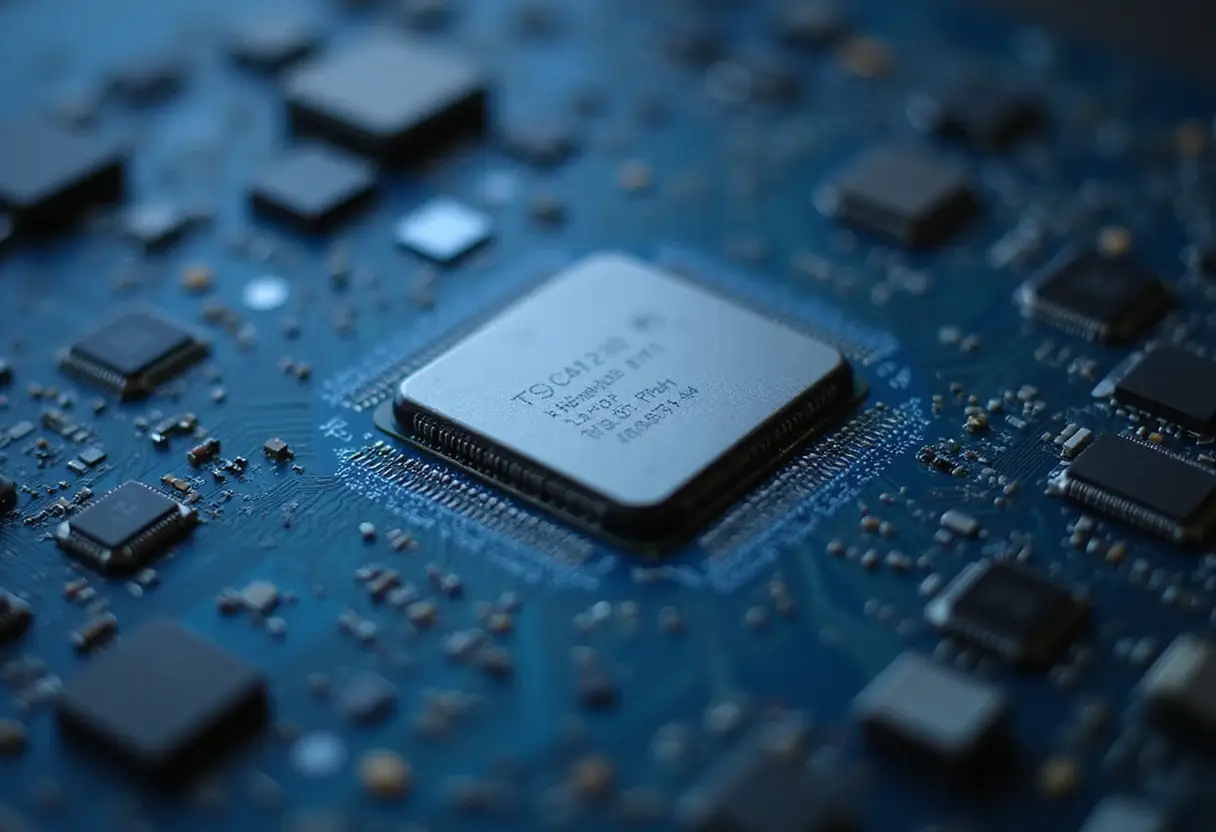
TSMC Denies 3D DRAM Plans Reportedly Requested by Nvidia
TSMC denies a report it is exploring 3D DRAM at Nvidia's request, insisting it stays a pure-play logic foundry as memory shortages reshape the AI supply chain.
- By
- Tom Whitfield
- Filed
- Channel
- Memory & Storage
- Read
- 4 min read
TSMC has flatly denied a report that it is exploring 3D DRAM production at the request of Nvidia, its largest customer. A company spokesperson told Tom's Hardware: "Please note that TSMC focuses on our core business at all times, which is dedicated IC foundry. Our mission is to be the trusted technology and capacity provider of the global logic IC industry for years to come."
The denial addresses a report from The Information, which cited two people familiar with the initiative. According to those sources, TSMC has begun preparing plans for 3D DRAM manufacturing following a request from Nvidia as surging AI hardware demand strains global DRAM supplies and pushes prices higher. The effort is reportedly overseen by Hsu Kuo-chin, TSMC's vice president responsible for advanced packaging and former head of Micron's Taiwanese operations.
If the project were real, it would open a new, cyclical business for TSMC and greatly expand its role in the AI supply chain. For now, the official position is that TSMC remains a pure-play logic foundry.
Why would TSMC even consider making DRAM?
Memory shortages have turned DRAM from a commodity into a strategic asset. Access to memory can now determine whether a company ships products to customers at all. That pressure explains why Nvidia, which depends on vast quantities of high-bandwidth memory, might ask its most important manufacturing partner to enter the business.
Yet the practical barriers are severe. TSMC works closely with DRAM producers because it packages memory into system-in-packages for customers, but it lacks both the expertise and the production capacity to make DRAM. DRAM production requires entirely different manufacturing processes from logic, and TSMC would have to develop them from nothing.
The timing problem is worse. 3D DRAM is years away even for the major memory makers, so pursuing it cannot solve today's shortages for at least five years.
What makes 3D DRAM so hard?
Conventional DRAM arranges memory cells in a single plane. 3D DRAM stacks multiple levels of cells vertically to increase capacity per wafer. All three leading DRAM makers — Micron, Samsung and SK hynix — are working on their own 3D DRAM projects. Even so, Micron's roadmap includes at least four more planar DRAM process technologies before 3D DRAM becomes a reality.
Building 3D DRAM requires fabrication techniques entirely distinct from those used to construct multiple memory-cell layers while controlling defects and maintaining acceptable yields. It is hardly possible to develop a 3D DRAM process without a competitive planar DRAM process first, and TSMC does not have one.
One route into the business would be acquiring a small specialty memory producer with its own fabs. That would give TSMC a credible entry point without developing memory technology and IP from scratch. But small makers lack leading-edge commodity DRAM nodes, so TSMC would still need to invest billions of dollars and years of R&D to reach a competitive process.
What are the commercial and regulatory risks?
Memory shortages frequently encourage capacity expansions that eventually create oversupply, depressing prices and profitability. That cyclicality alone could make TSMC hesitate. Entering DRAM would also strain its relationships with the big memory makers, and with SK hynix in particular: the two companies partnered in 2024 to manufacture logic base dies for next-generation HBM products.
Antitrust questions would likely follow. TSMC combines a dominant position in leading-edge logic with a leading position in advanced packaging, and adding ramping memory production could prompt regulators to examine whether such vertical integration would let the foundry favor its own memory or disadvantage competitors. On the other hand, a fourth DRAM supplier could strengthen competition in a market dominated by three manufacturers.
Can TSMC profit from DRAM without making it?
TSMC does not need to manufacture DRAM to capture value from it. It can produce sophisticated logic base dies for HBM, integrate memory with processors using its SoIC hybrid bonding technology, and develop customized memory solutions with partners such as GUC and established DRAM manufacturers. That path expands its presence in advanced memory without billions of dollars of process development or tens of billions in new fabs.
Unless the supply picture changes dramatically, TSMC's stated course — staying a logic foundry while capturing memory value through packaging and integration — remains the commercially safer bet.
Source: Tom's Hardware
More from Tom Whitfield
Show full bio
Staff writer covering companies, deals and strategy in Semiconductors, chip manufacturing, hardware, AI compute at Chip Dispatch.
700 articles
Related articles
samsung-to-build-nvidia-s-next-gen-memory-on-tsmc-process-report-says-eb913bb2
Samsung to Build Nvidia's Next-Gen Memory on TSMC Process, Report Says
samsung-to-build-nvidia-ai-memory-on-tsmc-3nm-report-says-d1a5ed3d
Samsung to Build Nvidia AI Memory on TSMC 3nm, Report Says
tsmc-q3-revenue-rises-51-to-48-4b-as-ai-chip-demand-holds-a433de00
TSMC Q3 Revenue Rises 51% to $48.4B as AI Chip Demand Holds
nvidia-s-jensen-huang-explains-why-tsmc-builds-every-flagship-ai-chip-e9cfffa2
Nvidia's Jensen Huang Explains Why TSMC Builds Every Flagship AI Chip