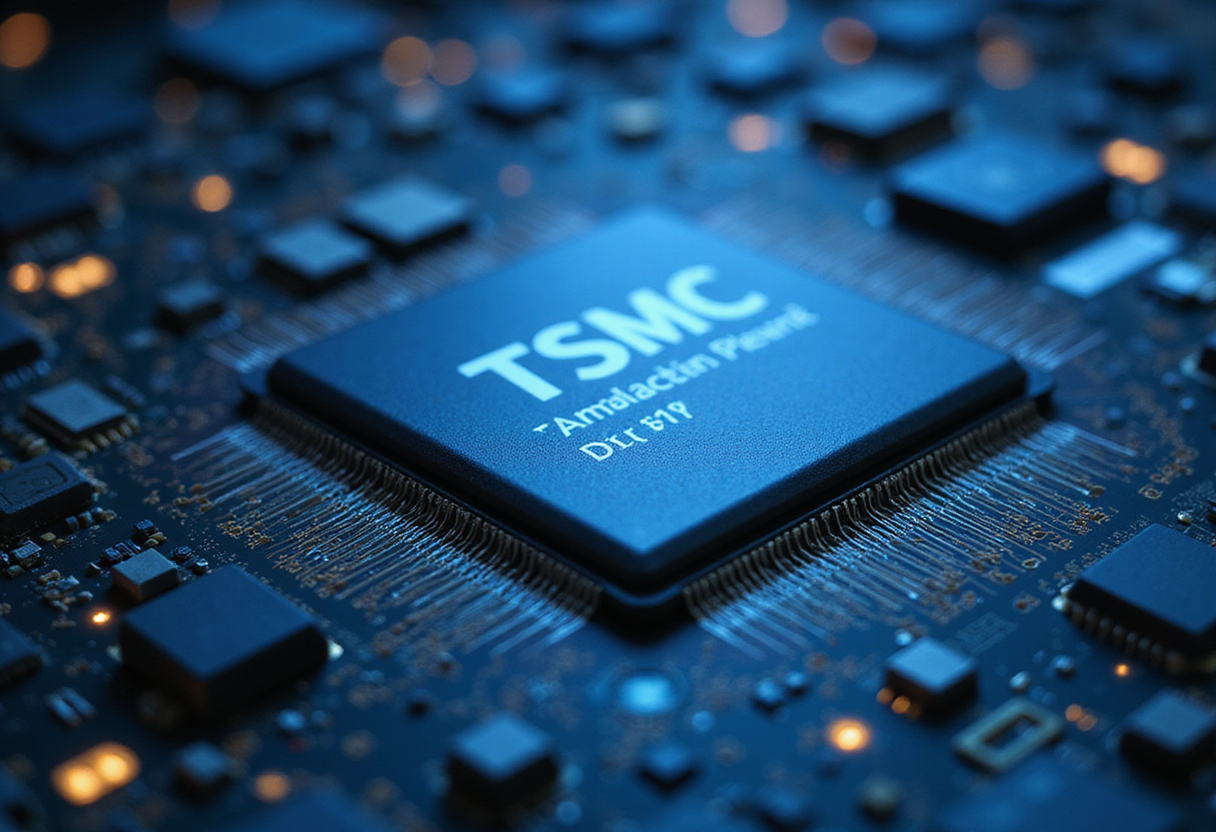
TSMC Puts Another $100 Billion Behind Arizona Fab Expansion
TSMC is adding $100 billion to accelerate its Arizona fab expansion, deepening US onshore chipmaking and intensifying the foundry race on American soil.
- By
- Rebecca Stone
- Filed
- Channel
- Chip Manufacturing
- Read
- 3 min read
TSMC is adding $100 billion to its Arizona fab expansion, accelerating a build-out that already ranks among the largest single-company manufacturing commitments in the semiconductor industry's history. Cleanroom Technology reported the move, which pushes the foundry's US investment drive onto a faster timeline at a moment when Washington and its allies are scrambling to onshore advanced chipmaking capacity.
The number lands hard. A hundred billion dollars buys fabs, cleanrooms, tool installations and the long tail of support infrastructure that surrounds a modern wafer plant. It signals conviction.
What does the additional $100 billion buy?
By Cleanroom Technology's account, the money accelerates the expansion of TSMC's Arizona campus, where the foundry has been erecting production facilities aimed at bringing its leading-edge manufacturing onto American soil. The report frames the new commitment as an acceleration — not a new site announcement — meaning the funds flow into the existing expansion program and speed up its execution.
For TSMC's customers, that distinction matters. Acceleration pulls volume forward. Any capacity that arrives earlier eases the supply crunches that have periodically squeezed chip buyers since the pandemic-era shortages, and it does so on US territory rather than across the Pacific.
The investment also deepens TSMC's entanglement with the American semiconductor ecosystem. Suppliers of lithography equipment, specialty gases, cleanroom materials and ultra-pure water systems all follow fab dollars. Each new tool order ripples outward into contracts across the equipment and materials supply chain.
Why accelerate now?
The timing tracks with the political currents running through the chip industry. The United States has spent the past several years pressing for domestic advanced manufacturing, tying incentives to concrete factory commitments, and leaning on allied foundries to build within its borders. TSMC sits at the center of that push.
Accelerating an Arizona expansion serves several masters at once. It answers Washington's demand for onshore capacity. It hedges the geopolitical risk that hangs over Taiwan, where TSMC concentrates the bulk of its leading-edge production. And it positions the foundry closer to American customers who want — or, increasingly, need — a domestic source of advanced silicon.
Cleanroom Technology's report does not break the $100 billion into line items, and TSMC has not, in the reporting available, detailed which specific facilities or process stages the acceleration touches. What is confirmed is the headline figure and its direction: more money, faster, into Arizona.
How does this reshape the supply picture?
An accelerated expansion tightens the race for construction crews, cleanroom builders and process engineers in the American Southwest — resources already stretched by Intel's own Arizona build-outs and by new plants rising in Texas, Ohio and Idaho. Labor and equipment lead times, not capital, have often been the binding constraint on US fab timelines.
For rival foundries, the message is blunt. TSMC intends to defend its lead on US soil as aggressively as it does in Taiwan, and it has the balance sheet to do so. Customers weighing second sources for advanced nodes now face a supplier pouring an additional $100 billion into the exact market those rivals are courting.
Arizona, meanwhile, consolidates its claim as the beating heart of American chipmaking. Every accelerated dollar TSMC commits there raises the odds that the suppliers, schools and specialist contractors a fab cluster needs will settle nearby and stay.
Whether the acceleration translates into earlier wafer output will show up in TSMC's capacity disclosures over the coming quarters — the first test of whether $100 billion more can compress a timeline the industry has struggled to shorten.
Source: Google News: chip factory investment
More from Rebecca Stone
Show full bio
Correspondent covering technology and product news in Semiconductors, chip manufacturing, hardware, AI compute at Chip Dispatch.
352 articles
Related articles
tsmc-commits-100-billion-to-expand-arizona-chip-production-f96976e8
TSMC Commits $100 Billion to Expand Arizona Chip Production
tsmc-adds-100-billion-to-arizona-plan-as-q2-profit-jumps-77-43a13106
TSMC Adds $100 Billion to Arizona Plan as Q2 Profit Jumps 77%
tsmc-evaluates-potential-texas-investment-sources-say-8df51fa6
TSMC Evaluates Potential Texas Investment, Sources Say
tsmc-prepares-to-pour-265-billion-into-u-s-fab-buildout-762fb55c
TSMC Prepares to Pour $265 Billion Into U.S. Fab Buildout