TSMC Turns to GlobalFoundries for $2 Billion in U.S.-Made AI Chip Components
TSMC has agreed to a $2 billion deal for GlobalFoundries to supply U.S.-made components for AI chips, linking two rival foundries inside America's subsidized fab buildout.
- By
- Rebecca Stone
- Filed
- Channel
- Chip Manufacturing
- Read
- 4 min read
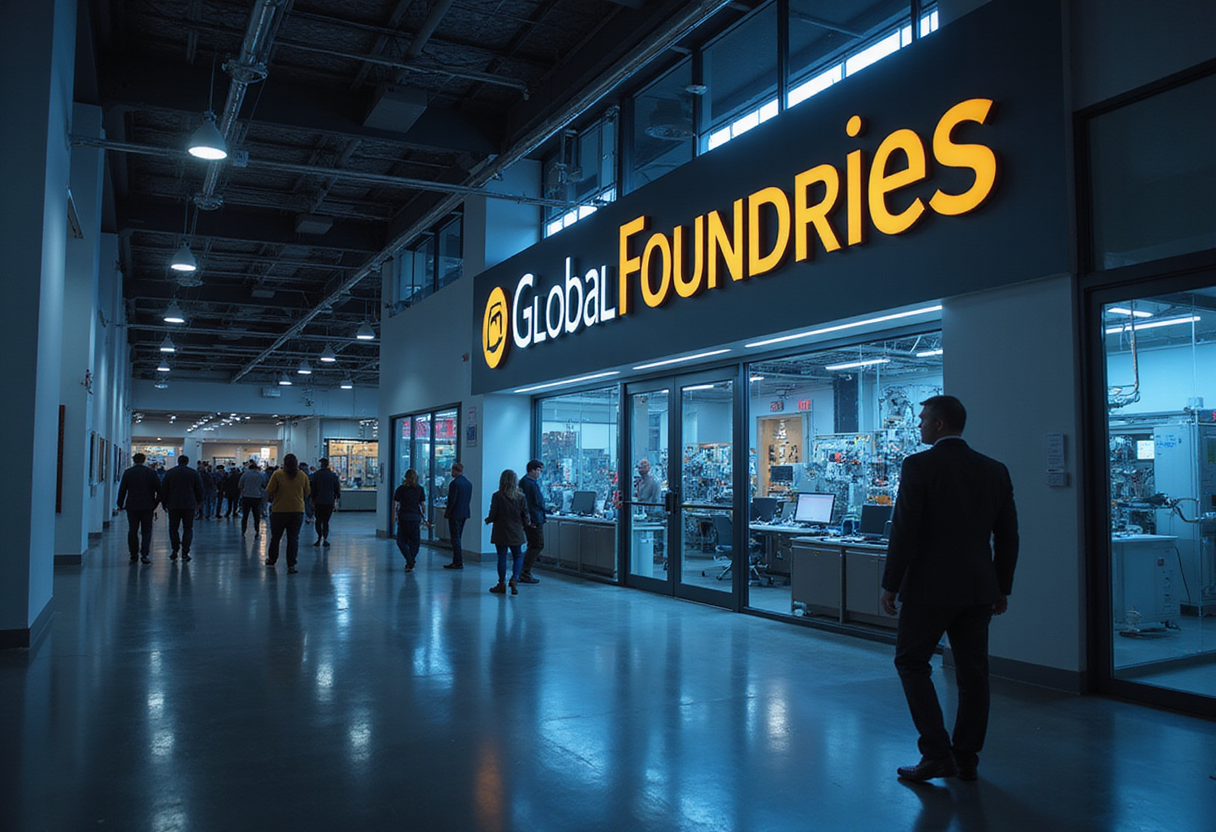
TSMC has struck a deal worth $2 billion under which GlobalFoundries will supply U.S.-made components feeding TSMC's AI chip production, according to a report from the Seoul Economic Daily. The figure alone makes this one of the largest publicly reported procurement agreements between two merchant foundries — businesses that ordinarily compete for the same customers rather than buy from each other.
The headline fact is straightforward: $2 billion in AI chip parts, manufactured by GlobalFoundries in the United States, flowing into TSMC's supply chain. What it signals is less straightforward, and it touches both companies' competitive positions and Washington's industrial policy.
Why would TSMC buy from a rival foundry?
Merchant foundries rarely source wafers or components from one another. TSMC operates the industry's most advanced logic fabs in Taiwan and is building leading-edge capacity in Arizona; GlobalFoundries exited the leading-edge race years ago and specializes in mature and specialty nodes at facilities including its Malta, New York fab and Burlington, Vermont plant.
That complementarity is precisely what makes a transaction of this kind plausible. TSMC's AI accelerator business — dominated by NVIDIA, AMD and a growing set of custom-silicon customers — does not run on leading-edge logic alone. AI systems also need:
- Power management and analog components
- Interposers, substrates and packaging-related parts
- Specialty-node chips that neither benefit from nor require 3-nanometer-class lithography
GlobalFoundries' mature-node portfolio covers exactly this layer of the stack. If confirmed in detail, the deal would let TSMC bolt a U.S.-made supply of those components onto its AI platform without dedicating its own leading-edge lines to them.
What does the deal mean for U.S. manufacturing policy?
The commercial logic is inseparable from the political one. The $2 billion agreement puts GlobalFoundries' American fabs inside the supply chain of the world's dominant AI chipmaker at a moment when Washington is pressing for exactly that outcome.
Both companies are beneficiaries of U.S. industrial policy. TSMC has committed more than $65 billion to its Arizona fab complex and stands among the largest recipients of CHIPS Act funding; GlobalFoundries has received federal support for its New York and Vermont operations. A procurement link between the two converts that subsidy-driven capacity expansion into interlinked domestic supply — the stated goal of the legislation.
For GlobalFoundries specifically, a $2 billion commitment from TSMC would represent anchor-customer validation of its U.S. footprint. Mature-node foundries live and die by utilization; a multi-billion-dollar order from the industry's revenue leader lifts utilization at Malta and Burlington and strengthens the case for further expansion there.
How does it fit TSMC's AI supply strategy?
TSMC's AI business is capacity-constrained at the leading edge, where CoWoS advanced packaging has been the most cited bottleneck for the past two years. Offloading non-critical component supply to a U.S.-based partner frees TSMC's own capacity — in Taiwan and Arizona — for the high-margin logic and packaging work that customers are queuing for.
The deal also hedges geographic risk. TSMC's concentration in Taiwan remains the single largest systemic exposure in the global chip supply chain, and its customers' customers — the hyperscalers — have made supply-chain diversification a procurement requirement, not a preference. Sourcing from GlobalFoundries' U.S. fabs gives TSMC an American content story it can present to Washington and to customers auditing their own exposure.
What remains unconfirmed?
The Seoul Economic Daily report establishes the headline value — $2 billion — and the purpose: U.S.-made parts for AI chips. As of publication, neither TSMC nor GlobalFoundries has publicly detailed:
- Which product families or process nodes the agreement covers
- The contract's duration and shipment schedule
- Whether the deal involves wafers, finished components, or packaging-related parts
Those details will determine whether this is a tactical sourcing arrangement or a structural feature of TSMC's U.S. supply chain. A multi-year commitment covering power and analog components would point to the latter.
The competitive read
The deal also redraws lines between nominal rivals. GlobalFoundries gains a customer that could anchor its U.S. utilization for years; TSMC gains domestic supply and political capital without diverting leading-edge capacity. The losers, implicitly, are the standalone specialty-component suppliers that would otherwise compete for that $2 billion — and mature-node rivals such as UMC and SMIC, for whom TSMC's endorsement of GlobalFoundries' U.S. fabs strengthens a competitor positioned closest to the AI demand pool.
If the agreement holds and expands, expect follow-on orders and deeper packaging cooperation as TSMC's Arizona complex ramps — with GlobalFoundries increasingly positioned as the U.S. component layer of the AI hardware stack.
Source: Google News: TSMC
More from Rebecca Stone
Show full bio
Correspondent covering media and advertising at Chip Dispatch.
285 articles
Related articles
tsmc-signs-2-billion-u-s-chip-deal-with-globalfoundries-9deada08
TSMC Signs $2 Billion U.S. Chip Deal With GlobalFoundries
globalfoundries-to-manufacture-key-ai-chip-component-for-tsmc-46e9e28e
GlobalFoundries to Manufacture Key AI Chip Component for TSMC
globalfoundries-stock-rallies-on-2-billion-tsmc-agreement-0bce6f41
GlobalFoundries Stock Rallies on $2 Billion TSMC Agreement
tsmc-s-265-billion-arizona-bet-reshapes-enterprise-chip-sourcing-bdccc3b6
TSMC's $265 Billion Arizona Bet Reshapes Enterprise Chip Sourcing