TSMC Turns to GlobalFoundries for CoWoS Interposer Supply
TSMC is sourcing CoWoS interposers from GlobalFoundries, per EE Times Asia — a pragmatic pairing that eases the packaging bottleneck capping AI accelerator shipments.
- By
- Rebecca Stone
- Filed
- Channel
- Chip Manufacturing
- Read
- 2 min read
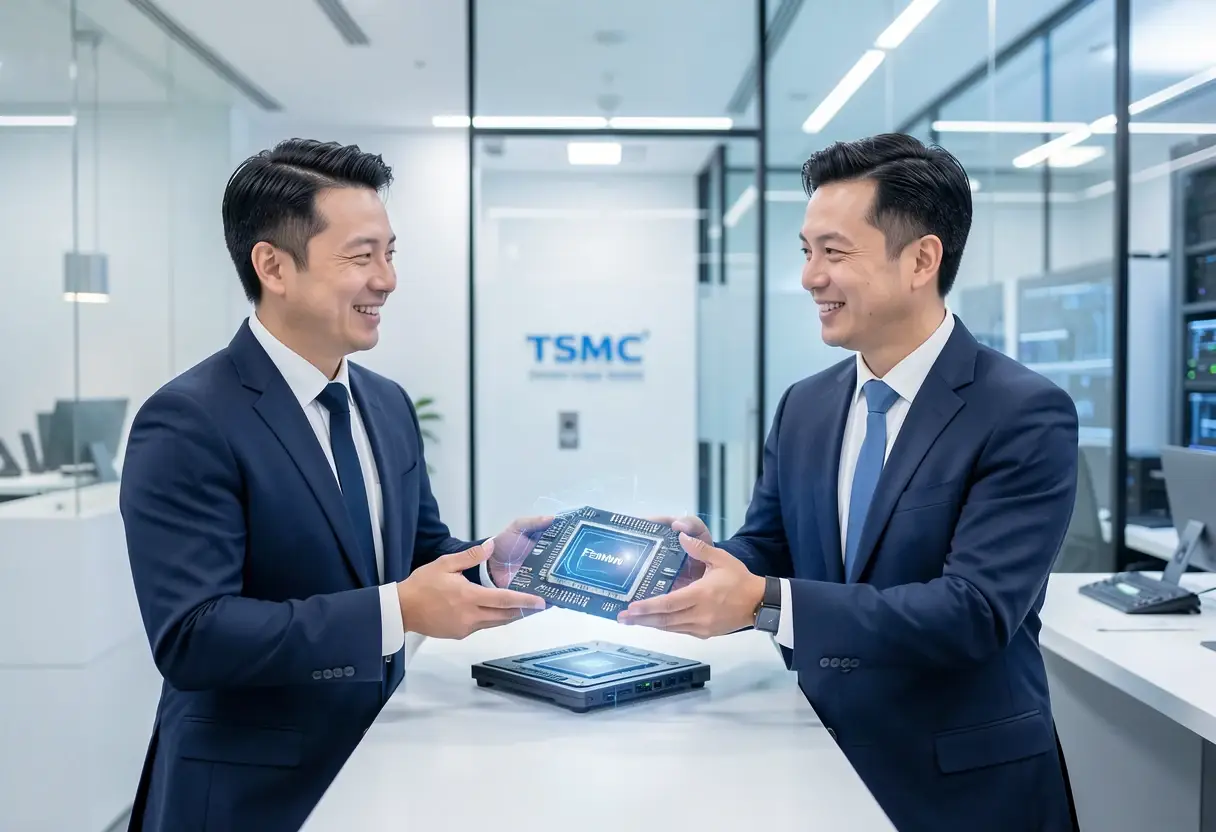
TSMC has started working with GlobalFoundries to supply interposers for its CoWoS advanced packaging line, according to a report from EE Times Asia. The deal pairs the world's largest contract chipmaker with one of its oldest rivals to feed the packaging technology behind high-end AI accelerators.
CoWoS — chip-on-wafer-on-substrate — stacks logic dies and high-bandwidth memory side by side on a silicon interposer. That interposer has become a choke point. Demand for AI processors has outrun TSMC's ability to expand packaging capacity fast enough, and interposers consume wafers that could otherwise serve other customers.
Why outsource interposers to a rival?
GlobalFoundries exited the leading-edge logic race years ago, dropping its 7nm program in 2018. What it kept is mature-node capacity on 300mm wafers — exactly the kind of line that can produce the passivation and interposer wafers CoWoS requires. Interposers don't need cutting-edge transistors. They need volume, yield and available tooling.
For TSMC, sourcing interposers externally frees internal wafers for more valuable work. For GlobalFoundries, it's incremental business on existing fabs with no new capital race. The arrangement, as described by EE Times Asia, is a supply move, not a technology transfer of TSMC's core process nodes.
What's at stake for AI packaging?
CoWoS output has shaped the AI accelerator market for the past two years. Nvidia's top data-center GPUs depend on it, and every major AI chip designer booking capacity at TSMC has felt the packaging squeeze. When CoWoS supply tightens, shipments slip — regardless of how fast front-end wafer fabrication runs.
Bringing a second foundry into the interposer chain effectively widens that bottleneck. It also signals how the industry now treats advanced packaging: no longer an afterthought behind lithography, but a capacity constraint that dictates who ships how many AI chips, and when.
A rare instance of foundry cooperation
Direct supply arrangements between TSMC and GlobalFoundries are uncommon. The two compete for customers across mature nodes, and GlobalFoundries has previously pursued litigation against TSMC over trade secrets — a dispute the companies settled in 2019 with a ten-year cross-license.
A commercial deal on interposers sits in different territory. GlobalFoundries supplies a component; TSMC keeps the integrated CoWoS process and the customer relationship. Still, it marks a pragmatic shift: when packaging capacity caps revenue, even fierce rivals become suppliers.
The report doesn't specify interposer volumes, financial terms or a production start date. What it does establish is direction — TSMC is sourcing outside its own walls to keep CoWoS output growing, and GlobalFoundries is monetizing mature capacity in a market it had no direct path into. Expect further announcements on interposer volumes and additional packaging partners as AI chip demand keeps pressing against TSMC's expansion schedule.
Source: Google News: TSMC
More from Rebecca Stone
Show full bio
Correspondent covering technology and product news in Semiconductors, chip manufacturing, hardware, AI compute at Chip Dispatch.
651 articles
Related articles
globalfoundries-to-build-silicon-interposers-for-tsmc-6d577db4
GlobalFoundries to Build Silicon Interposers for TSMC
globalfoundries-wins-2-billion-tsmc-order-adds-first-us-cowos-interposer-capacit-1bdb3dd6
GlobalFoundries Wins $2 Billion TSMC Order, Adds First US CoWoS Interposer Capacity
tsmcglobalfoundries-interposer-deal-redraws-us-ai-chip-supply-chain-f5bbfae5
TSMC–GlobalFoundries Interposer Deal Redraws US AI Chip Supply Chain
globalfoundries-to-manufacture-key-ai-chip-component-for-tsmc-46e9e28e
GlobalFoundries to Manufacture Key AI Chip Component for TSMC