TSMC Weighs 3D DRAM Entry After Report of NVIDIA Request
TSMC is reportedly planning 3D DRAM production for NVIDIA at the chipmaker's request, despite a public denial. The foundry guides to $60 billion to $64 billion in 2026 capex.
- By
- Grace Kim
- Filed
- Channel
- Memory & Storage
- Read
- 3 min read
Grace Kim
TSMC has begun planning production of vertically stacked 3D DRAM for NVIDIA, according to two sources cited by The Information. The foundry started the work in response to a request from NVIDIA, its largest customer.
How large is NVIDIA's memory pull?
NVIDIA needs more memory than incumbents can easily supply. Its supply obligations rose to $279.00 billion, largely tied to memory procurement for Vera Rubin production. That figure describes supply commitments rather than revenue. Data Center revenue reached $89.02 billion last quarter. NVIDIA also signed a multiyear technology partnership with SK hynix for next-generation memory.
Jensen Huang described the demand backdrop:
"The AI infrastructure buildout is at full steam. Vera Rubin, now in full production, was built to power exactly this moment."
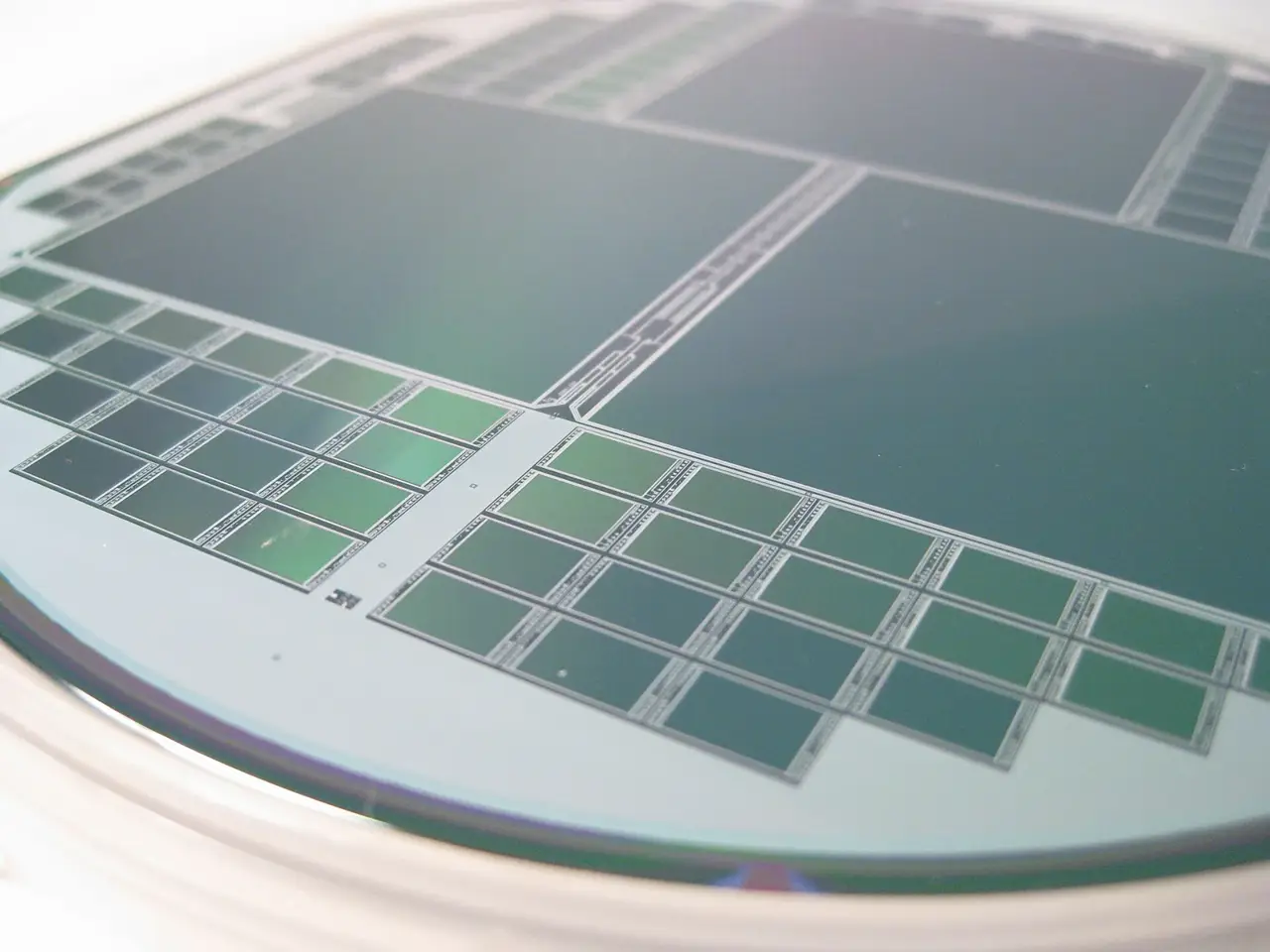
Conventional DRAM places cells in one layer, while 3D DRAM stacks them vertically, like floors in a tower, to raise the amount of memory a single chip can hold. An AI-driven shortage has pushed memory prices higher.
TSMC shares traded at $385.30. They fell 18.4% over the past month but stayed up 27.77% year to date.
What did TSMC say in public?
TSMC made no memory announcement on its October earnings call. The call did not address the reported NVIDIA request. HBM surfaced only in a Citi analyst question about supply bottlenecks. Chairman and CEO C.C. Wei said CoWoS remained the number-one choice for customers. TSMC already packages AI accelerators with high-bandwidth memory through that platform.
Posts on X relaying TSMC's response said the company rejected reports that it is exploring 3D DRAM production at NVIDIA's request, reiterating its commitment to logic chip manufacturing. The conflict with The Information's account remains unresolved. The report gave no process node, wafer size or investment figure for any memory line.
At TSMC's April symposium, SK hynix presented a session titled Overcoming Technological Limits Requires the Integration of Memory and Logic. The title captured the overlap between foundry work and memory work.
What would the incumbents face?
Samsung, SK hynix and Micron dominate memory manufacturing. All three are developing 3D DRAM themselves. Micron Technology is the only U.S.-listed pure-play memory maker. Fiscal 2026 revenue reached $133.188 billion. Fiscal Q4 non-GAAP gross margin hit 87.0%, against 66.4% at TSMC in Q3.
Micron already ships HBM4. HBM4E volume production follows in calendar 2027 on the company's roadmap. CEO Sanjay Mehrotra said memory has become a strategic asset for customers as Micron invests in its global manufacturing footprint. A serious TSMC entry would challenge that pricing power, although years of accumulated DRAM process know-how remain the incumbents' strongest defense against a new foundry entrant.
Can TSMC fund a move without losing capacity?
TSMC has the financial resources.
- Q3 revenue: $46.72 billion.
- EPS: $4.60, above the $4.46 consensus estimate.
- Q4 revenue guidance: $52.3 billion to $54.3 billion.
- 2026 capital expenditure: $60 billion to $64 billion, company expectation.
Wei said: "Demand is still far above our capability to supply today." He also said TSMC has no intention of leaving demand uncaptured. Management expects overseas-fab margin dilution to extend to 3%–4%.
Capacity, not cash, sets the limit on any move: diverting fabs to memory would compete with the N2 ramp and A14, which is scheduled for volume production in 2028.
A formal TSMC statement or a capex reallocation would be the first hard evidence of a shift. Until then, 3D DRAM remains an option in planning, and Micron and SK hynix keep their lead in the most profitable corner of the AI supply chain.
Source: 247wallst.com
More from Grace Kim
Show full bio
Market editor covering people, launches and day-to-day practice in Semiconductors, chip manufacturing, hardware, AI compute at Chip Dispatch.
795 articles
Related articles
tsmc-q3-revenue-rises-51-to-48-4b-as-ai-chip-demand-holds-a433de00
TSMC Q3 Revenue Rises 51% to $48.4B as AI Chip Demand Holds
tsmc-denies-3d-dram-plans-reportedly-requested-by-nvidia
TSMC Denies 3D DRAM Plans Reportedly Requested by Nvidia
tsmc-rises-30-as-valuation-falls-below-its-five-year-average
TSMC rises 30% as valuation falls below its five-year average
tsmc-september-revenue-jumps-54-6-to-16-03b-on-ai-demand-e3688a46
TSMC September Revenue Jumps 54.6% to $16.03B on AI Demand