TSMC’s Arizona expansion reshapes homes and strains resources
TSMC’s reported $265 billion Arizona program has lifted nearby home prices 53% in six years and cut industrial vacancy to 8%, but hiring, water and community conflicts remain unresolved.
- By
- Sophie Lindqvist
- Filed
- Channel
- Chip Manufacturing
- Read
- 5 min read
By Sophie Lindqvist
TSMC’s reported $265 billion Arizona investment has coincided with a 53% rise in nearby Phoenix home prices over six years, according to Zillow data. The headline total does not show how much capital has already reached the desert.
What has TSMC committed in Arizona?
Taiwan Semiconductor Manufacturing (TSMC; 2330.TW) chose Phoenix in 2020 as its U.S. advanced-process manufacturing base. The first fab is operating, and two more are expected by 2030.
This year, TSMC announced an additional $100 billion, equivalent to about NT$3.3 trillion. The published total for Arizona reaches $265 billion, or NT$8.6 trillion, and is presented as the largest foreign investment in U.S. history.
That total lacks a fab-by-fab spending schedule, installed wafer capacity, production timetable and revenue forecast. The report also identifies no process node, wafer size or product family. A new Texas plant remains under evaluation in market reports, without a disclosed site, budget or capacity commitment.
How much has the fab changed nearby real estate?
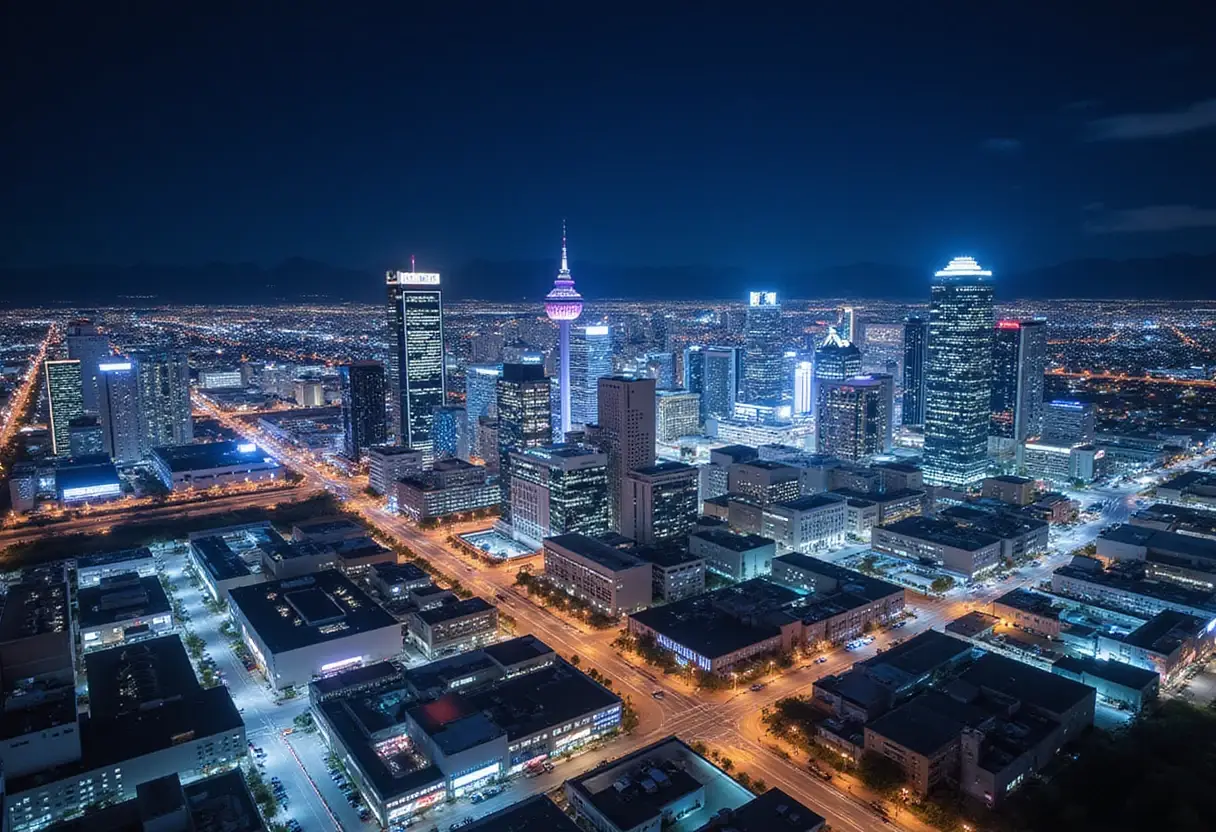
Zillow data show average home prices in North Gateway and Desert View, both adjacent to the fab, rose about 53% over six years. Phoenix gained 42% citywide, while properties near TSMC proved more resilient during the post-pandemic housing correction.
The figures show co-movement, not proof that TSMC caused every increase. Still, the report describes the desert north of Phoenix as a closely watched U.S. real-estate investment hotspot.
Industrial demand rose as semiconductor suppliers relocated to northwestern Phoenix, particularly for warehouses and manufacturing space. Colliers International says local industrial vacancy fell from 16% a year earlier to 8% in June this year.
That eight-percentage-point decline outpaced a roughly two-point drop across the Phoenix market. The data support a sharp tightening around the fab, although they do not identify which suppliers or facilities drove it.
Taylor Morrison and Lennar continue expanding residential projects. Howard Hughes is accelerating Teravalis in western Phoenix, a master-planned community designed for more than 110,000 homes and 60 million square feet of commercial space.
Howard Hughes CEO David O’Reilly said the company was already bullish, but TSMC “was the inflection point that changed the timeline for commercial development.” The community remains a long-term plan, not completed housing.
Who is following TSMC’s capital?
The Greater Phoenix Economic Council says Taiwanese investors deployed more than $500 million, about NT$16 billion, in local real estate since 2021. That total is comparable to Canadian investment, according to the council.
Washington-based Taicoon Property Partners paid $88 million, roughly NT$2.9 billion, for two parcels about a ten-minute drive from TSMC. The purchase beat offers from established local developers.
Taicoon plans about $1 billion, or NT$33 billion, for a mixed-use project with employee housing and multistory retail. Planned tenants include Din Tai Fung and Eslite Bookstore. The report gives no financing schedule or construction timetable.
Taicoon CEO Wang Hai-Chien said Taiwanese investors recognize that housing near TSMC plants often outperforms, including markets in Taiwan. CBRE Phoenix executive vice president Kevin Calihan said Taiwanese investors with direct experience of the “TSMC effect” remain more optimistic than established Arizona and U.S. investors.
“They are catching up now, but Taiwanese investors are still far ahead,” Calihan said. His observation tracks capital flows, but it does not establish future appreciation or occupancy.
Business links have expanded alongside the property cycle. STARLUX Airlines and China Airlines now operate regular direct flights between Taipei and Phoenix. Taiwan opened an economic and cultural office in Phoenix this year, following Arizona’s trade office in Taiwan in 2023.
The report offers no passenger volumes, office staffing or investment totals for these links. Its Tainan comparison therefore remains a narrative rather than a tested forecasting model.
Can hiring, water and politics keep pace?
TSMC employs about 3,500 people in Arizona and plans to hire 2,500 more. Local semiconductor talent remains insufficient, so the company must bring some Taiwanese workers through the visa system.
A former employee filed a class-action lawsuit alleging that TSMC favors East Asian workers in hiring. TSMC declined to comment on the litigation but said it values a diverse workforce and that recruitment and promotion do not differentiate by gender, religion, race, nationality or political stance.
The company also said many overseas employees are only on short-term assignments. It continues to work with major U.S. universities and local semiconductor training programs, although the report gives no trainee count or training timetable.
Water and land now constrain expansion alongside the labor market. Arizona groundwater-use restrictions bring residential construction and industrial development into conflict. After TSMC acquired about 900 acres in the NorthPark development area, planned residential scale fell roughly 20%, prompting resident opposition.
Arizona State University professor Li Wei, who studies immigration, said TSMC still enjoys bipartisan U.S. support and bilateral Taiwan-U.S. backing. He called the current period a possible “honeymoon period,” while warning that tighter U.S. immigration policy and local conflicts could end it.
Much of the regional case rests on planned investment, not delivered output. TSMC must still deliver two additional fabs, recruit 2,500 workers, secure water and resolve community objections. If those inputs lag, future fab capacity could remain constrained and the 53% home-price run could cool, while a potential Texas plant competes for the same capital and labor.
Source: Google News: TSMC
More from Sophie Lindqvist
Show full bio
News editor covering money, funding and market shifts around Semiconductors, chip manufacturing, hardware, AI compute at Chip Dispatch.
758 articles
Related articles
tsmc-pours-record-money-into-arizona-while-china-pressures-taiwan-8a891185
TSMC Pours Record Money Into Arizona While China Pressures Taiwan
tsmc-evaluates-potential-texas-investment-sources-say-8df51fa6
TSMC Evaluates Potential Texas Investment, Sources Say
tsmc-reportedly-weighs-texas-expansion-on-top-of-arizona-buildout-6050da7b
TSMC Reportedly Weighs Texas Expansion on Top of Arizona Buildout
tsmc-weighs-texas-expansion-beyond-265-billion-arizona-buildout-c49d930c
TSMC Weighs Texas Expansion Beyond $265 Billion Arizona Buildout