Science & Technology · 3 min read
Volvo puts Hexagon's AEON humanoids to work in Ghent from mid-2027
Volvo Cars is training Hexagon's AEON humanoids at its Ghent plant via imitation learning, with a 2027 factory pilot and real production work from mid-2027 alongside existing automation.
Key takeaways
- Volvo Cars began training Hexagon AEON humanoids at its Ghent, Belgium plant, announced Nov. 26; production work planned from mid-2027.
- AEON is 1.65 m tall, weighs 60 kg, rolls at up to 2.4 m/s and carries up to 10 kg; Hexagon launched it in June 2025.
- First training task: placing components into two fixtures with high precision, taught via imitation learning by Volvo's own team.
- BMW has been piloting AEON at its Leipzig plant since March 2026 on high-voltage battery assembly.
- Boston Dynamics' Atlas will be tested at GlobalFoundries fabs from early 2027; XPeng plans IRON mass production in January 2027.
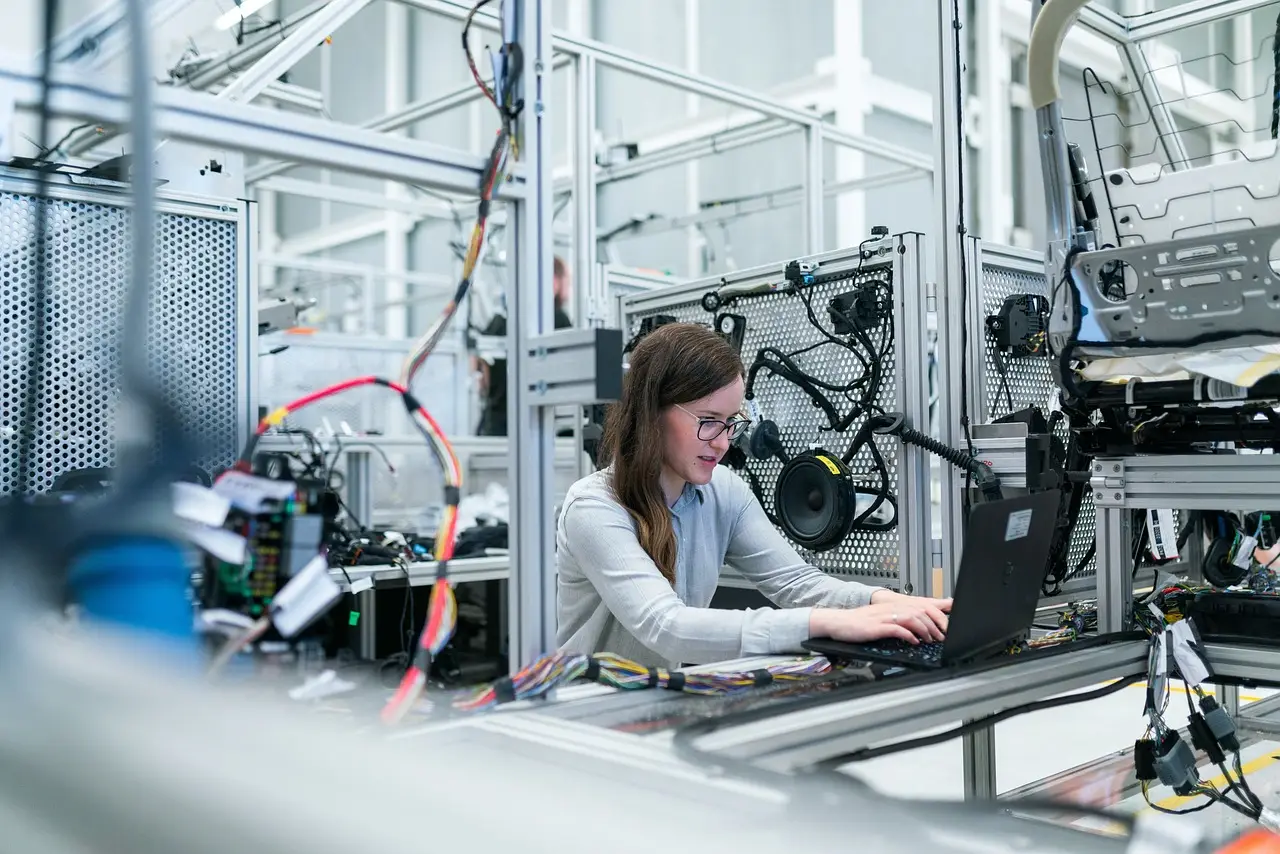
Volvo Cars confirmed on Thursday, Nov. 26, that it has begun training AEON humanoid robots from Hexagon Robotics at its Ghent plant in Belgium, with real production work planned from mid-2027. Ghent is the first Volvo Cars plant to host humanoid robots. The automaker did not disclose how many units are on site today or how many will arrive for the pilot.
The first cohort of AEON units reaches Ghent in the first half of 2027 for a factory pilot, according to Volvo and reports by InsideEVs and Autotoday. The robots are then scheduled to operate in genuine production conditions from mid-2027. That timeline places Volvo roughly a year behind BMW, which said in March 2026 that it was piloting the same robot at its Leipzig plant for high-voltage battery assembly and component production.
Volvo frames the machines as support rather than replacement. The robots are being trained for industrial tasks that assist employees in repetitive and ergonomically demanding work, and the company said they will work alongside both staff and existing automation. It offered no unit counts, which is a familiar silence in this sector; the numbers, one suspects, are the part nobody wants on record yet.
How does the training actually work?
Volvo's own team teaches the robots through imitation learning, working closely with Hexagon Robotics, a division of Sweden's Hexagon. In imitation learning, the robot copies a worker performing the task rather than following hand-coded instructions. The curriculum is modest at first: picking up components and placing them into two fixtures with high precision.
Later stages escalate in scope. The plan adds handling several parts at once, moving around the production area, and interacting with the plant's existing automated systems. Component placement is a sensible first lesson; it is the industrial equivalent of learning scales before attempting a concerto.
Magnus Nilsson, Volvo Cars' chief manufacturing officer, gave the project its clearest rationale. "Our aim is for humanoid robots to take on some of the most physically demanding tasks," he said, adding that AEON's humanoid design means it can fit into production as it is today. That last point matters commercially: no retooling of lines or fixtures for a purpose-built machine.
Arnaud Robert, president of Hexagon Robotics, kept his statement strictly on the balance sheet. "The purpose of humanoid robotics is to deliver business value to our customers," he said. One executive speaks of spines and shoulders; the other of invoices. Both, presumably, are describing the same robot.
What kind of machine is AEON?
AEON stands 1.65 meters tall and weighs 60 kilograms, according to Volvo. It rolls on wheels rather than walking on legs, moves at up to 2.4 meters per second, and can carry up to 10 kilograms. Hexagon launched AEON in June 2025, meaning the design has moved from launch to two automotive production pilots in under two years.
The wheel choice is an engineering verdict, not a limitation. A wheeled platform trades the theater of bipedal walking for stability, speed and payload on flat factory floors, which describes Ghent reasonably well.
Is Ghent part of a wider shift?
It is. Carmakers and chipmakers are both moving humanoid trials onto factory floors. Boston Dynamics said last week that its Atlas humanoid will be tested at GlobalFoundries chip fabs from early 2027. XPeng, for its part, plans to start mass production of its IRON humanoid in January 2027.
Volvo's program, then, is not an outlier but the middle entry of a pattern: pilots in 2026 and 2027, production roles shortly after. Whether imitation-trained humanoids hold tolerance on a real line at cycle speed is the unanswered question, and Ghent from mid-2027 will be one of the first places it receives a public answer.
mlq.ai (Source)
More from Nathan Brooks
Show full bio
Senior reporter covering people, launches and day-to-day practice in Semiconductors, chip manufacturing, hardware, AI compute at Chip Dispatch.
1,284 articles