AI & Compute · 4 min read
AI Data Centers Burn 415 TWh a Year, and the Grid Is the Real Bottleneck
Data centers drew 415 TWh in 2024, and the IEA expects that to double by 2030. From Trump's fast-track order to Dutch moratoriums, the AI build-out now hinges on power, water and Gulf money.
Key takeaways
- Data centers consumed an estimated 415 TWh of electricity in 2024, about 1.5% of global use; IEA expects it to more than double by 2030.
- One Nvidia GB200 NVL72 rack draws about 120 kW, equal to the demand of one hundred American homes.
- Alphabet, Amazon, Meta and Microsoft plan roughly $725 billion in 2026 capex, mostly for AI infrastructure.
- Global data centers used almost 1.2 trillion gallons of water in 2025; UN projects nearly 2.5 trillion gallons annually by 2030.
- Trump's July 2025 executive order fast-tracks AI data center and power plant permits; the Netherlands banned new hyperscale centers in 2024.
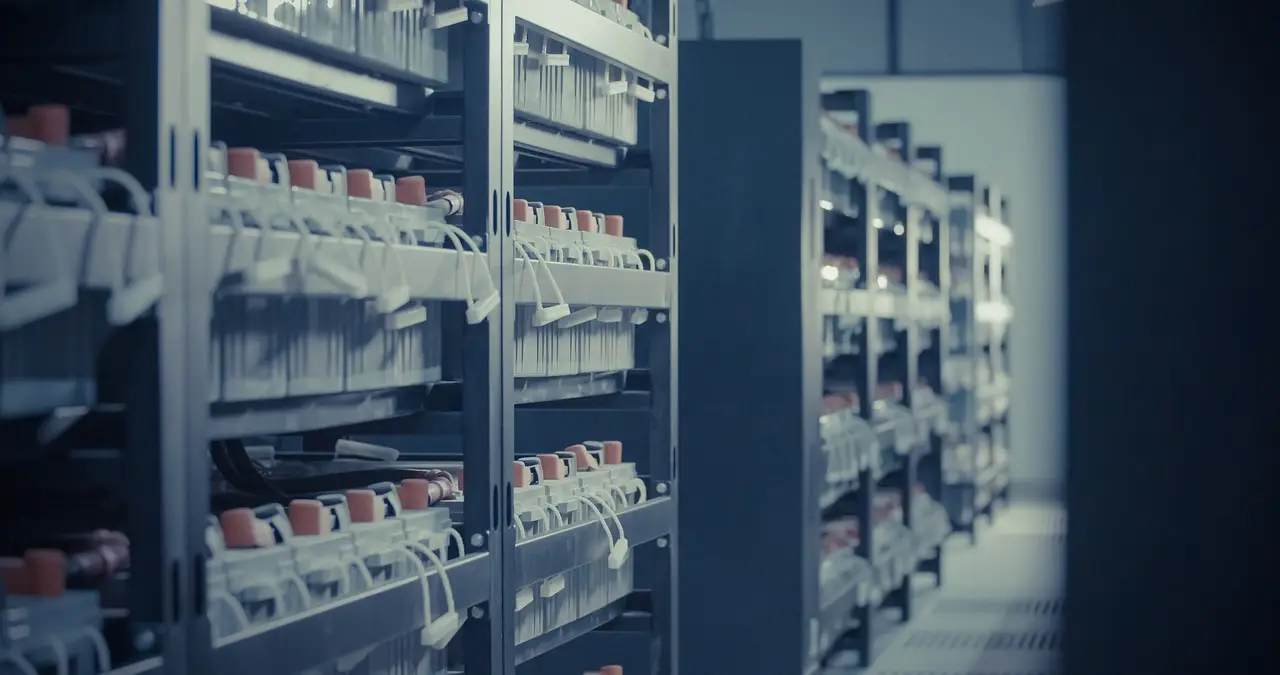
Data centers consumed an estimated 415 terawatt-hours of electricity in 2024, about 1.5 percent of global consumption, and the International Energy Agency expects that figure to more than double by 2030. The math behind the AI race now runs through power lines, water pipes, and sovereign wealth funds rather than through chip design alone.
A single rack of Nvidia's GB200 NVL72 system draws roughly 120 kilowatts, the average electricity demand of one hundred American homes. Traditional CPU-based halls were built for five to ten kilowatts per rack and cooled with air. AI facilities, running thousands of GPUs around the clock, pipe liquid coolant directly to the chips instead.
How big is the footprint?
The United States hosts more data centers than any other country, with more than five thousand operational and planned facilities listed by Data Center Map. Worldwide, over 13,000 planned or operational centers sit across more than 180 countries, clustered in European hubs such as France and Germany and in Asian markets led by China and India.
Water is the second bill. Global data centers used almost 1.2 trillion gallons in 2025, according to the United Nations University Institute for Water, Environment and Health — enough to meet the annual basic household needs of more than six hundred million people in sub-Saharan Africa. The UN projects AI-related consumption could reach nearly 2.5 trillion gallons annually by 2030. S&P Global estimates 43 percent of data centers worldwide face high water stress, including 38 percent in the United States and roughly 60 percent in China.
The health ledger is also filling in. Harvard researchers estimated that the power supply for a single data center in Loudoun County, Virginia — the self-declared data center capital of the world — could cause between $53 million and $99 million in annual health damages from air pollution. By 2030, land needed to power AI data centers globally could exceed 14,500 square kilometers.
Who is paying for it?
Alphabet, Amazon, Meta and Microsoft collectively plan roughly $725 billion in capital expenditures in 2026, most of it for AI infrastructure. A growing share arrives as debt, and lenders may grow cautious while AI returns remain unproven. "There's just too much uncertainty in the market," said Connor Martin, a CFR international affairs fellow.
Foreign money is doing heavy lifting. The UAE committed in 2025 to a ten-year, $1.4 trillion framework covering AI infrastructure, semiconductors and other U.S. sectors; Saudi Arabia struck a nearly $1 trillion investment deal. Martin noted those pledges predate the Iran war. "I wouldn't be surprised if some of their commitments don't end up materializing, or at least take longer to materialize than we thought," he said.
Emerging markets see opportunity in the gap. Africa's data center market is expected to attract $10–20 billion by 2030. Malaysia has drawn billions with cheap land and power, but data centers already average 7 percent of the country's electricity in 2026, a share projected to reach roughly one third by 2035.
Which governments are blocking, and which are fast-tracking?
The United States lets private companies choose locations. In July 2025, President Donald Trump signed an executive order directing agencies to fast-track permits for AI data centers and power plants, backed by federal loans, grants and tax incentives. "The private sector leads, and that's the source of our strength," Martin said, though he added that Washington has little leverage over where facilities land. Most cluster in Georgia, Texas, Virginia and Silicon Valley.
China runs the opposite playbook. Its 2022 East Data, West Computing project steers new centers to western provinces with large solar and wind farms. Power is not China's constraint, said CFR's David Hart. "Their big constraint on AI is chips," he said, while the United States has the chips but an aging grid. He called the U.S. utility and regulatory patchwork "falling short as a whole" and the administration's energy policy "sort of contradictory" for blocking wind projects that could come online quickly.
The Gulf is spending through sovereign funds. The UAE is reassessing the design of Stargate UAE, a U.S.-backed project projected to cost more than $30 billion, after strikes by Iran. Saudi Arabia plans tens of billions through HUMAIN, an AI company backed by its public investment fund, which manages over $1 trillion.
Europe and Southeast Asia ration instead. The Netherlands banned new hyperscale data centers nationwide in 2024. Ireland now requires new facilities to supply their own power. Singapore halted approvals from 2019 to 2022 and admits only centers meeting strict efficiency standards.
Microsoft, which promised to become carbon negative by 2030, saw emissions rise 25 percent in fiscal 2025, largely from data center development. AI-related carbon dioxide emissions could reach four hundred million tons annually by 2030 — roughly what the United Kingdom emitted in 2025. As David Hart put it, the backlash is less about energy or water than about AI itself: "if the data center is right there, then it's a much easier target." The facilities will keep going where the electrons are cheapest, and the electrons are increasingly the scarce input.
cfr.org (Source)
More from Nathan Brooks
Show full bio
Senior reporter covering people, launches and day-to-day practice in Semiconductors, chip manufacturing, hardware, AI compute at Chip Dispatch.
1,234 articles