Coherent Rises 8% as U.S. Presses Curbs on Chinese Optical Transceivers
Coherent rose 8% to $219 as Washington moves to restrict Chinese optical transceivers. Chinese firms hold two-thirds of the market, and U.S. capacity covers under 80% of demand.
- By
- Grace Kim
- Filed
- Channel
- Chips & Policy
- Read
- 4 min read
Coherent stock jumped 8% to $219.00 in morning trading on November 17 after a Reuters report that the Trump administration will press ahead with restrictions on Chinese optical transceivers. Applied Optoelectronics climbed 7% to $48.32. Lumentum gained 4% to $569.06.
The rally cut against broad weakness in technology shares. Bloomberg reported tech stocks extended a selloff ahead of NVIDIA's earnings report. Chip names are also absorbing a Commerce Department rule issued November 16 that requires licenses to ship advanced AI chips to data centers anywhere that would serve Chinese companies.
The Reuters report, published ahead of the November 17 open, cited three people familiar with the matter. Officials recently told industry figures the restrictions on imports of new models of Chinese data center optical transceivers will proceed. No date for a final rule was reported. The Federal Communications Commission has already sought to bar those imports on national security grounds.
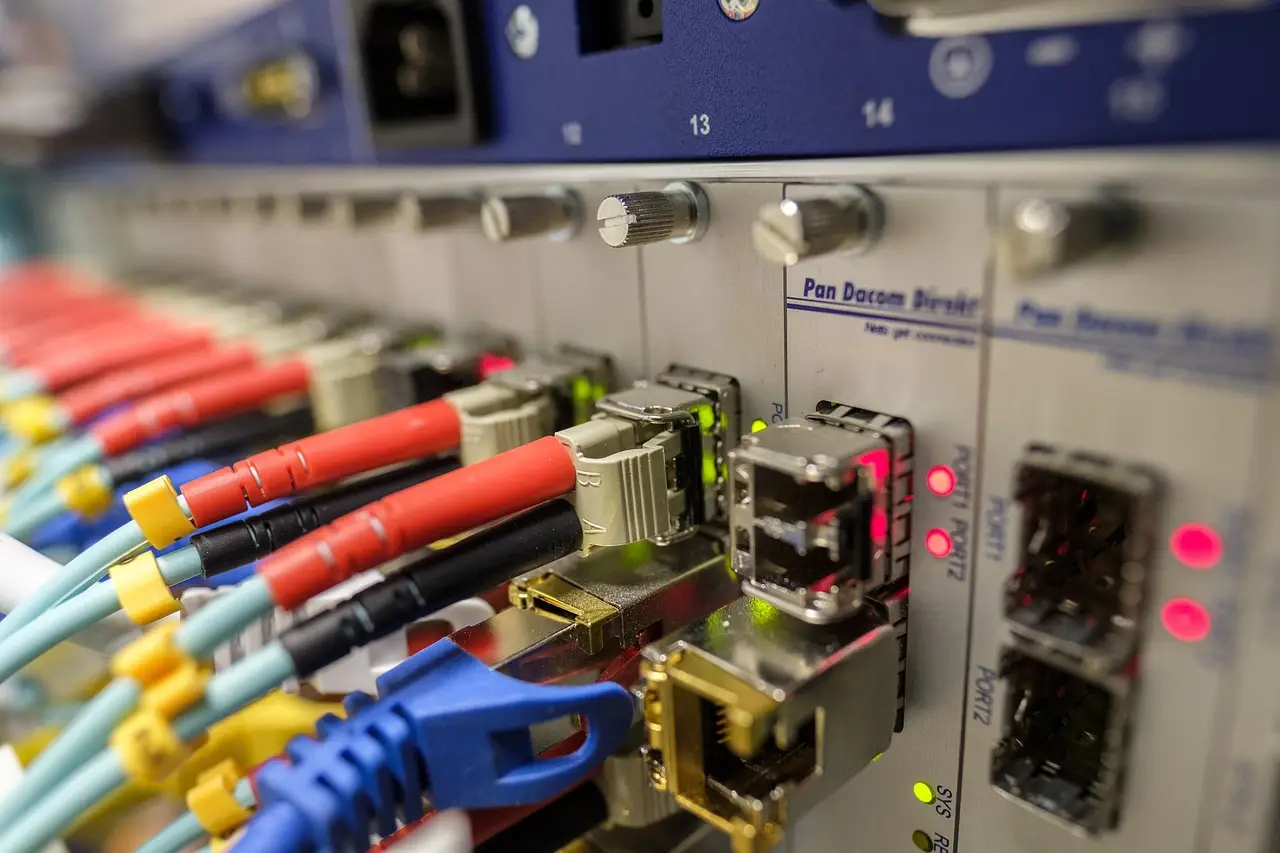
Transceivers convert electrical signals into light to move data between servers and switches. They are the heart of Coherent's datacenter business.
How strong is demand behind the rally?
Coherent's fundamentals support the move. In its first fiscal quarter of 2027, reported November 4, Datacenter and Communications segment revenue rose 79% to $1.95 billion.
Applied Optoelectronics posted similar momentum. Its data center transceiver sales more than tripled to $155.6 million in the third quarter of 2026.
Both stocks remain well below recent levels. Applied Optoelectronics is down 36% over the past month. Lumentum is down 31%. Lumentum's smaller gain on November 17 may reflect that its shares trade relative to the buyout offer from Marvell Technology.
Who opposed the restrictions?
Major cloud and networking companies, including CoreWeave, lobbied against the plan. They argued U.S. firms could need up to a decade to comply.
They also warned of retaliation. China could ban exports of indium phosphide, a material U.S. transceiver makers need for their own production.
The market share gap explains the concern. Counterpoint Research estimates Chinese suppliers hold two-thirds of the global optical transceiver market. A Foundation for American Innovation report cited by Reuters said Lumentum and Coherent compete with Chinese producers but lack the scale to replace them.
How do the three companies differ?
Coherent runs a vertically integrated photonics platform spanning materials, crystal growth, optics, lasers, transceivers and thermal products. In-house indium phosphide production gives it control over a key input. Its Industrial segment adds sales into semiconductor equipment and other markets.
CEO Jim Anderson framed the positioning on the November 4 earnings call: "For a lot of our customers, I think it's really important that they have an independent photonic optical supplier and partner."
Applied Optoelectronics is more concentrated. It builds 800G and 1.6T transceiver modules for hyperscalers plus a cable television business. Reliance on a small number of customers is a stated risk. Its plants span Sugar Land, Texas; Taipei; and Ningbo, China.
Lumentum splits its business between Components, led by pump lasers and lasers for co-packaged optics, and Systems, which includes optical circuit switches and transceivers. Hyperscaler design wins in near-packaged and co-packaged optics tie it more closely to a few large programs than Coherent's broader mix.
Coherent added a concrete expansion signal on August 12, when it broke ground on a Sherman, Texas, facility with NVIDIA.
Can U.S. suppliers replace Chinese modules?
Capacity is the central question. Applied Optoelectronics CEO Thompson Lin said on November 5 that the industry, including Lumentum and Coherent, could meet less than 80% of customer demand by the end of next year.
Coherent points to strong order visibility. Anderson said calendar 2027 "is basically booked out" and that customers "are booking out calendar 28 now."
The bear case centers on indium phosphide. A Chinese export ban on the material could pressure the very companies the restrictions are meant to help. Coherent has secured substrates and other critical inputs for its planned capacity ramp, which may reduce that exposure.
The indium phosphide supply question, and the pace of the U.S. capacity ramp against Chinese suppliers' two-thirds market share, will determine whether the restriction turns into durable share gains or a supply squeeze for American data center builders.
Source: 247wallst.com
More from Grace Kim
Show full bio
Market editor covering people, launches and day-to-day practice in Semiconductors, chip manufacturing, hardware, AI compute at Chip Dispatch.
1,062 articles
Related articles
lumentum-and-applied-optoelectronics-drop-4-as-microsoft-fights-transceiver-ban
Lumentum and Applied Optoelectronics Drop 4% as Microsoft Fights Transceiver Ban
us-to-curb-chinese-optical-transceivers-despite-big-tech-objections
US to Curb Chinese Optical Transceivers Despite Big Tech Objections
nvidia-supply-commitments-jump-to-279-billion-amid-governance-probe
Nvidia Supply Commitments Jump to $279 Billion Amid Governance Probe
microsoft-lobbying-against-fcc-ban-on-chinese-optical-transceivers
Microsoft Lobbying Against FCC Ban on Chinese Optical Transceivers